Polyclonal Antibodies
Anti-PI4KA Rabbit Polyclonal Antibody for WB, IF/ICC, ELISA - P42356
Item Number : CM0021971
Price varies based on specs and customizations
- Application
- WB, IF/ICC, ELISA
- Cross Reactivity
- Human, Mouse, Rat
- Protein Weight
- 237kDa

Shipping:
Contact us to get shipping details Enjoy On-time Dispatch Guarantee.
Why Choose Us
Easy ordering process, quality products, and dedicated support for your business success.
Core Product Specifications and Parameters
| Parameter | Value |
|---|---|
| Product Name | PI4KA Rabbit pAb |
| Remarks/Alias | SPG84; GIDID2; PIK4CA; PMGYCHA; pi4K230; PI4K-ALPHA; PI4KA |
| Species | Human |
| Gene ID (Human) | 5297 |
| Immunogen | Recombinant fusion protein containing a sequence corresponding to amino acids 1780-1860 of human PI4KA (P42356) |
| Source | Rabbit |
| Category | Polyclonal Antibodies |
| Application | WB, IF/ICC, ELISA |
| Cross Reactivity | Human, Mouse, Rat |
| SWISS | P42356 |
| Protein Weight | 237kDa |
| Shipping | Ice bag |
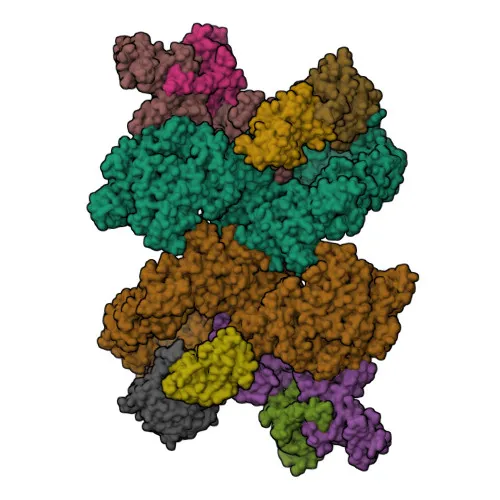
Biological Background: PI4KA Function and Localization
- PI4KA (Phosphatidylinositol 4-kinase alpha), also known as PIK4CA or PI4K-ALPHA, is a lipid kinase that catalyzes the phosphorylation of phosphatidylinositol to phosphatidylinositol 4-phosphate, the first committed step in generating the second messenger inositol-1,4,5-trisphosphate.
- This enzyme plays a central role in phosphoinositide signaling pathways, regulating membrane trafficking, cell proliferation, and intracellular calcium homeostasis.
- Multiple isoforms exist due to alternative splicing; the canonical isoform is a large protein with a molecular weight of approximately 237 kDa.
- PI4KA is primarily localized to the cytoplasm and cell membrane, where it associates with the plasma membrane to exert its kinase activity.
- Tissue expression is ubiquitous, with highest levels in placenta and brain; expression is low or absent in lung, liver, pancreas, testis, and leukocytes.
- The protein contains an ATP-binding domain and a lipid kinase domain, and its activity is regulated by phosphorylation.
- Mutations in PI4KA are associated with hereditary spastic paraplegia (SPG84) and other neurological disorders, highlighting its importance in neuronal function.
- Keywords from UniProt include alternative splicing, ATP-binding, disease variant, hereditary spastic paraplegia, kinase, lipid metabolism, membrane, neurodegeneration, and phosphoprotein.
Experimental Guidance and Technical Tips
- The immunogen corresponds to the C-terminal region (aa 1780-1860); the antibody may recognize epitopes in this segment, ensuring detection of full-length PI4KA.
- Due to the large protein size (237 kDa), use a low-percentage SDS-PAGE gel (e.g., 6-8%) and extended transfer times for Western blotting.
- For immunofluorescence/ICC, optimize fixation and permeabilization conditions; Triton X-100 or digitonin can be used to detect membrane-associated PI4KA.
- Validate antibody specificity in relevant cell lines (e.g., HeLa, SH-SY5Y) or tissues known to express PI4KA, and include a negative control such as lung or liver lysates where expression is low.
- For ELISA, consider using a recombinant PI4KA fragment as a standard to establish assay sensitivity and linear range.
CamelBio: Your One-Stop Sourcing Bridge
CamelBio supports diagnostic manufacturers and researchers by providing a comprehensive range of IVD raw materials, including validated antibody pairs, recombinant antigens, and bulk ancillary reagents. This PI4KA polyclonal antibody is ideal for developing assays in the areas of lipid kinase signaling and neurological disease diagnostics. With expertise in rare target sourcing and supply chain management, CamelBio streamlines your transition from concept to clinical application.
REQUEST A QUOTE
Our professional team will reply to you within one business day. Please feel free to contact us!