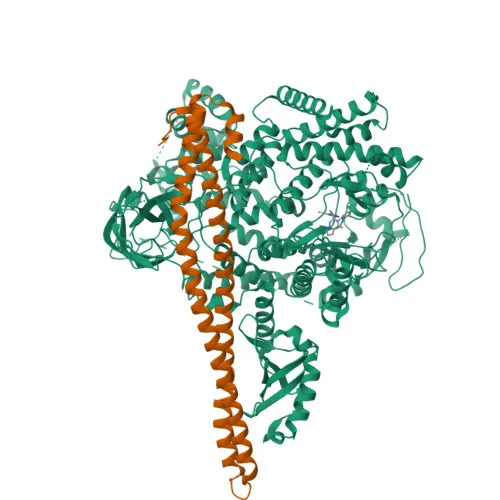
Monoclonal Antibodies
Anti-PI3 Kinase p85 alpha Rabbit Monoclonal Antibody for WB and ELISA - P27986
Item Number : CM0005199
Price varies based on specs and customizations
- Application
- WB, ELISA
- Cross Reactivity
- Human, Mouse, Rat
- Protein Weight
- 84kDa

Shipping:
Contact us to get shipping details Enjoy On-time Dispatch Guarantee.
Why Choose Us
Easy ordering process, quality products, and dedicated support for your business success.
Core Product Specifications and Parameters
| Parameter | Value |
|---|---|
| Product Name | PI3 Kinase p85 alpha Rabbit mAb |
| Remarks/Alias | p85; AGM7; GRB1; IMD36; p85alpha; p85-ALPHA |
| Species | Human |
| Gene ID (Human) | 5295 |
| Gene ID | 5295 |
| Source | Rabbit |
| Category | Monoclonal Antibodies |
| Application | WB, ELISA |
| Cross Reactivity | Human, Mouse, Rat |
| SWISS | P27986 |
| Protein Weight | 84kDa |
| Shipping | Ice bag |
Biological Background: PI3 Kinase p85 alpha Function and Localization
- PI3 Kinase p85 alpha is the regulatory subunit of class IA PI3K, encoded by PIK3R1, and is essential for recruiting the p110 catalytic subunit to the plasma membrane upon receptor tyrosine kinase activation.
- Through its SH2 domain, it binds phosphorylated tyrosine residues on activated receptors such as insulin receptor, FGFRs, PDGFR, and KIT, triggering downstream PI3K/AKT signaling.
- It is necessary for insulin-stimulated glucose uptake and glycogen synthesis in insulin-sensitive tissues, playing a critical role in metabolic regulation.
- The protein mediates signaling downstream of FGFR1-4, KITLG/SCF-KIT, PDGFRA/PDGFRB, and integrin ITGB2, impacting cell proliferation, survival, and migration. Related references: PMID:17626883, PMID:19805105, PMID:7518429
- It modulates ER stress responses by promoting nuclear translocation of XBP1 isoform 2 in liver during metabolic overload, thus contributing to glucose tolerance. Related references: PMID:20348923
- Subcellularly, p85 alpha is primarily localized to the cytoplasm, translocating to the plasma membrane upon activation.
- Isoform 2 is specifically expressed in skeletal muscle and brain, with lower levels in kidney and cardiac muscle; isoforms 2 and 4 are detected at protein level in skeletal muscle.
- Post-translational modifications include phosphorylation, acetylation, and ubiquitination; the protein contains SH2 and SH3 domains facilitating signal transduction.
Experimental Guidance and Technical Tips
- For Western blot, the predicted molecular weight is 84 kDa; include appropriate positive controls from human, mouse, or rat tissues/cell lines.
- For ELISA, pairing with a suitable detection antibody may enhance sensitivity; validate with recombinant p85 alpha or cell lysates.
- Given its role in insulin signaling, consider using insulin-stimulated samples to study phosphorylation-dependent interactions.
- Because p85 alpha interacts with multiple receptors, test in cell lines expressing FGFR, PDGFR, or insulin receptor to confirm specificity.
CamelBio: Your One-Stop Sourcing Bridge
CamelBio serves as a dedicated one-stop sourcing partner for IVD raw materials, streamlining your development from discovery to commercialization. For PI3K/AKT signaling pathway research, we supply optimized antibody pairs, validated monoclonal/polyclonal antibodies, and ancillary reagents to support your assay development. Our procurement expertise extends to rare target raw materials, ensuring you receive consistent, high-quality supplies for diagnostic manufacturing.
Product Datasheet
Anti-PI3 Kinase p85 alpha Rabbit Monoclonal Antibody for WB and ELISA - P27986
REQUEST A QUOTE
Our professional team will reply to you within one business day. Please feel free to contact us!