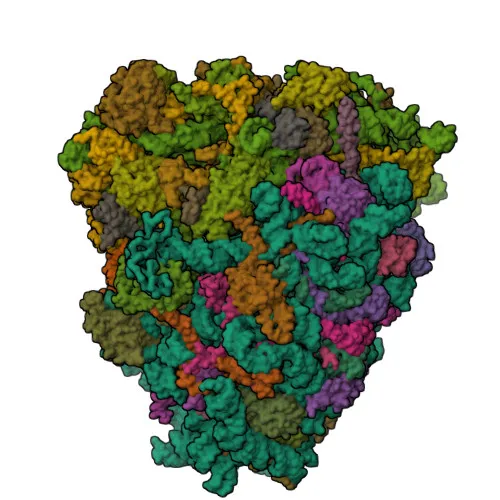
Phosphorylated Antibodies
Anti-Phospho-Ubiquitin-Ser65 Rabbit Polyclonal Antibody for WB, ELISA - P62979 / P62987 / P0CG47 / P0CG48
Item Number : CM0001301
Price varies based on specs and customizations
- Application
- WB, ELISA
- Cross Reactivity
- Human
- Protein Weight
- 18kDa/15kDa/77kDa

Shipping:
Contact us to get shipping details Enjoy On-time Dispatch Guarantee.
Why Choose Us
Easy ordering process, quality products, and dedicated support for your business success.
Core Product Specifications and Parameters
| Parameter | Value |
|---|---|
| Product Name | Phospho-Ubiquitin-Ser65 Rabbit pAb |
| Remarks/Alias | UBC; S27A; CEP80; UBA80; HEL112; UBCEP1; UBCEP80; L40; CEP52; RPL40; HUBCEP52; HEL-S-50; HMG20; Phospho-Ubiquitin-Ser65 |
| Species | Human |
| GeneID (Human) | 6233/7311/7314/7316 |
| GeneID | 6233/7311/7314/7316 |
| Immunogen | Synthetic peptide: A synthetic phosphorylated peptide around S65 of human Ubiquitin (NP_002945.1). |
| Source | Rabbit |
| Category | Phosphorylated Antibodies |
| Application | WB, ELISA |
| Cross Reactivity | Human |
| SWISS | P62979/P62987/P0CG47/P0CG48 |
| Protein Weight | 18kDa/15kDa/77kDa |
| Shipping | Ice bag |
Biological Background: Ubiquitin Function and Localization
- Ubiquitin is a highly conserved 76-amino acid protein expressed from four genes (RPS27A, UBA52, UBB, UBC), yielding fusion proteins (e.g., ubiquitin-ribosomal protein eS31 and eL40) and polyubiquitin precursors.
- It acts as a post-translational modifier by covalent conjugation to lysine residues of target proteins, forming monomeric or polyubiquitin chains. Different linkage types (Lys-6, -11, -29, -33, -48, -63 and linear) dictate diverse cellular outcomes, including proteasomal degradation (Lys-48), DNA repair (Lys-6/63), endocytosis and NF-κB signaling (Lys-63).
- As a fusion with ribosomal protein eS31, ubiquitin is integral to the 40S ribosomal subunit and essential for small subunit processome assembly and ribosome biogenesis. Related references: PMID:23636399 PMID:9582194 PMID:34516797
- Ubiquitin localizes predominantly in the cytoplasm and nucleus, including the nucleolus, consistent with its roles in protein degradation, signaling, and ribosome biogenesis.
- Post-translational modifications, including phosphorylation at Ser65, acetylation, and ADP-ribosylation, regulate ubiquitin's structure and function. Phosphorylation at Ser65 specifically modulates ubiquitin chain assembly and is implicated in mitophagy and innate immune signaling.
Experimental Guidance and Technical Tips
- For Western blot, consider using phosphatase inhibitors in lysis buffers to preserve phosphorylation at Ser65.
- Validate phospho-specificity by treating samples with lambda phosphatase; the signal should disappear upon dephosphorylation.
- Include appropriate positive and negative controls (e.g., stimulated vs. unstimulated cells) to confirm antibody specificity.
- For ELISA, optimize coating antigen concentration and antibody dilution to achieve optimal signal-to-noise ratio.
- Note that the antibody may recognize ubiquitin from all four genes due to conserved sequence around Ser65; consider using gene-specific knockdowns if needed.
CamelBio: Your One-Stop Sourcing Bridge
CamelBio is your one-stop partner for IVD raw materials, providing validated antibodies, bulk ancillary reagents, and rare target sourcing to support diagnostic development from concept to clinic. The Phospho-Ubiquitin-Ser65 antibody is a valuable tool for studying ubiquitination and phosphorylation-dependent signaling pathways. Explore our comprehensive catalog for optimized antibody pairs, monoclonal and polyclonal antibodies, and customized raw-material solutions for your research and diagnostic needs.
REQUEST A QUOTE
Our professional team will reply to you within one business day. Please feel free to contact us!