Phosphorylated Antibodies
Anti-Phospho-TSC2-T1462 Rabbit Polyclonal Antibody for WB - P49815
Item Number : CM0000696
Price varies based on specs and customizations
- Application
- WB, ELISA
- Cross Reactivity
- Human, Mouse
- Protein Weight
- 201kDa

Shipping:
Contact us to get shipping details Enjoy On-time Dispatch Guarantee.
Why Choose Us
Easy ordering process, quality products, and dedicated support for your business success.
Core Product Specifications and Parameters
| Parameter | Value |
|---|---|
| Product Name | Phospho-TSC2-T1462 Rabbit pAb |
| Remarks/Alias | LAM; TSC4; PPP1R160; Phospho-TSC2-T1462 |
| Species | Human |
| Gene ID (Human) | 7249 |
| Gene ID | 7249 |
| Immunogen | A synthetic phosphorylated peptide around T1462 of human TSC2 (NP_000539.2) |
| Source | Rabbit |
| Category | Phosphorylated Antibodies |
| Application | WB, ELISA |
| Cross Reactivity | Human, Mouse |
| SWISS | P49815 |
| Protein Weight | 201kDa |
| Shipping | Ice bag |
Biological Background: TSC2 (Tuberin) Function and Localization
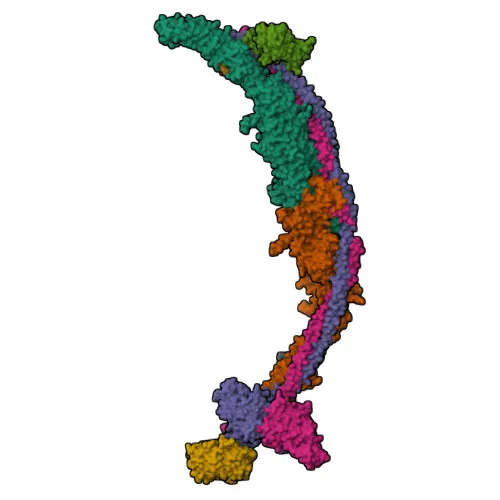
- TSC2 encodes tuberin, a tumor suppressor and key component of the TSC-TBC complex, also known as tuberous sclerosis 2 protein (alternative names: LAM, TSC4, PPP1R160).
- Tuberin functions as a GTPase-activating protein (GAP) for the small GTPase RHEB, thereby negatively regulating the mTORC1 signaling pathway. Under nutrient-deprived conditions, the TSC-TBC complex inhibits mTORC1, preventing phosphorylation of downstream targets such as ribosomal protein S6 kinase and 4E-BP1; this inhibition is relieved upon nutrient availability. Related references: PMID:12172553, PMID:12271141, PMID:12842888, PMID:12820960, PMID:24529379
- Additionally, tuberin stimulates the intrinsic GTPase activity of RAP1A and RAB5, suggesting roles in other signaling pathways.
- Subcellular localization includes the lysosome membrane, cytoplasm, and cytosol, where it dynamically shuttles to regulate mTORC1 in response to cellular cues.
- Tuberin is broadly expressed, with high levels detected in liver, brain, heart, lymphocytes, fibroblasts, biliary epithelium, pancreas, skeletal muscle, kidney, lung, and placenta.
- As a phosphoprotein, tuberin undergoes phosphorylation at multiple residues, including T1462, which modulates its GAP activity and subcellular localization.
- Mutations in TSC2 are linked to tuberous sclerosis complex (TSC), an autosomal dominant disorder characterized by the growth of benign tumors (hamartomas) and neurological symptoms such as epilepsy.
Experimental Guidance and Technical Tips
- The antibody was raised against a synthetic phospho-peptide corresponding to T1462; to preserve phosphorylation signals, include phosphatase inhibitors in lysis buffers during sample preparation.
- For western blotting, the expected molecular weight of TSC2 is approximately 201 kDa; use appropriate gel percentages and transfer conditions for high-molecular-weight proteins.
- This antibody has been tested for WB and ELISA; for other applications like ICC, IHC, or IP, further validation by the end user is recommended.
- Cross-reactivity is reported for human and mouse; performance in other species should be verified experimentally.
CamelBio: Your One-Stop Sourcing Bridge
CamelBio partners with diagnostic manufacturers and researchers worldwide, offering a one-stop supply chain for IVD raw materials. This phospho-TSC2 antibody supports investigations into mTOR signaling and tumor suppression mechanisms. With validated antibody pairs, optimized monoclonal and polyclonal antibodies, and bulk ancillary reagents, CamelBio accelerates your path from concept to clinic.
REQUEST A QUOTE
Our professional team will reply to you within one business day. Please feel free to contact us!