Phosphorylated Antibodies
Anti-Phospho-TSC2 (S1387) Rabbit Polyclonal Antibody for WB and ELISA - P49815
Item Number : CM0001821
Price varies based on specs and customizations
- Application
- WB, ELISA
- Cross Reactivity
- Human, Mouse, Rat
- Protein Weight
- 201kDa

Shipping:
Contact us to get shipping details Enjoy On-time Dispatch Guarantee.
Why Choose Us
Easy ordering process, quality products, and dedicated support for your business success.
Core Product Specifications and Parameters
| Parameter | Value |
|---|---|
| Product Name | Phospho-TSC2-S1387 Rabbit pAb |
| Remarks/Alias | LAM; TSC4; PPP1R160; Phospho-TSC2-S1387 |
| Species | Human |
| GeneID (Human) | 7249 |
| GeneID | 7249 |
| Immunogen | Synthetic peptide |
| Source | Rabbit |
| Category | Phosphorylated Antibodies |
| Application | WB, ELISA |
| Cross Reactivity | Human, Mouse, Rat |
| SWISS | P49815 |
| Protein Weight | 201kDa |
| Shipping | Ice bag |
Biological Background: Tuberin (TSC2) Function and Localization
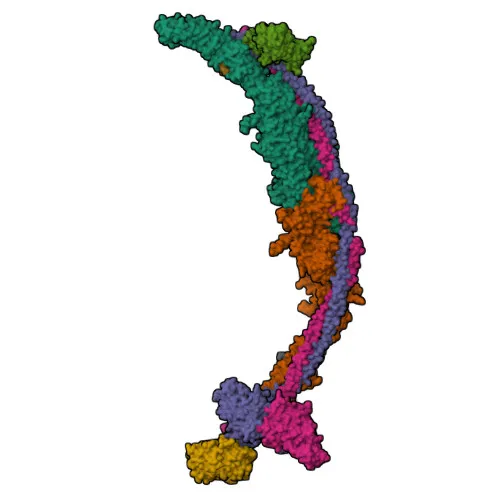
- Tuberin (TSC2) is the catalytic component of the TSC-TBC complex, a key negative regulator of the mTORC1 signaling pathway that controls cell growth and metabolism (PubMed:12172553, PubMed:12271141, PubMed:12842888). Related references: PMID:12172553, PMID:12271141, PMID:12842888
- TSC2 functions as a GTPase-activating protein (GAP) for the small GTPase RHEB, promoting its inactive GDP-bound state and inhibiting mTORC1 kinase activity (PubMed:12172553, PubMed:12820960, PubMed:12842888). Related references: PMID:12172553, PMID:12820960, PMID:12842888
- TSC2 is a phosphoprotein; phosphorylation at multiple residues including Ser1387 modulates its GAP activity and subcellular localization in response to upstream signals.
- The TSC-TBC complex localizes to the lysosome membrane and cytosol, and its activity is inhibited by nutrient availability to activate mTORC1 (PubMed:12172553, PubMed:24529379). Related references: PMID:12172553, PMID:24529379
- Widely expressed in tissues including brain, heart, kidney, liver, lung, pancreas, skeletal muscle, and placenta.
- Germline mutations in TSC2 cause tuberous sclerosis complex, characterized by benign tumors and neurological disorders, highlighting its role as a tumor suppressor.
Experimental Guidance and Technical Tips
- The immunogen is a synthetic phosphopeptide around Ser1387; for Western blot, consider using phosphatase inhibitors during sample preparation to preserve phosphorylation.
- Validate antibody specificity by performing Western blot on stimulated vs. untreated cell lysates and, if possible, using a non-phospho-specific TSC2 antibody as control.
- Cross-reactivity with mouse and rat TSC2 has been confirmed; verify in the appropriate tissue or cell line before large-scale experiments.
- For ELISA, optimize coating antigen and detection conditions using the phosphorylated peptide or cell extracts with known TSC2 phosphorylation status.
CamelBio: Your One-Stop Sourcing Bridge
CamelBio supports diagnostic manufacturers and research laboratories with integrated access to validated IVD raw materials. This anti-phospho-TSC2 antibody is part of our expanding catalog of phospho-specific antibodies for mTOR signaling and tumor suppressor research. We also supply optimized monoclonal/polyclonal antibody pairs, bulk ancillary reagents, and can assist with rare target raw-material sourcing—backed by technical consulting from concept to clinic.
Product Datasheet
Anti-Phospho-TSC2 (S1387) Rabbit Polyclonal Antibody for WB and ELISA - P49815
REQUEST A QUOTE
Our professional team will reply to you within one business day. Please feel free to contact us!