Phosphorylated Antibodies
Anti-Phospho-STING1 (pS366) Rabbit Monoclonal Antibody for WB, ELISA - Q86WV6
Item Number : CM0001989
Price varies based on specs and customizations
- Application
- WB, ELISA
- Cross Reactivity
- Human
- Protein Weight
- 42kDa

Shipping:
Contact us to get shipping details Enjoy On-time Dispatch Guarantee.
Why Choose Us
Easy ordering process, quality products, and dedicated support for your business success.
Core Product Specifications and Parameters
| Parameter | Value |
|---|---|
| Product Name | Phospho-STING/TMEM173-S366 Rabbit mAb |
| Remarks/Alias | ERIS; MITA; MPYS; SAVI; NET23; STING; hMITA; hSTING; TMEM173; STING-beta; Phospho-STING/TMEM173-S366 |
| Species | Human |
| Gene ID (Human) | 340061 |
| Gene ID | 340061 |
| Immunogen | Synthetic peptide: A synthetic phosphorylated peptide around S366 of human STING1 (NP_938023.1). |
| Source | Rabbit |
| Category | Phosphorylated Antibodies |
| Application | WB, ELISA |
| Cross Reactivity | Human |
| SWISS | Q86WV6 |
| Protein Weight | 42kDa |
| Shipping | Ice bag |
Biological Background: STING1 Function and Localization
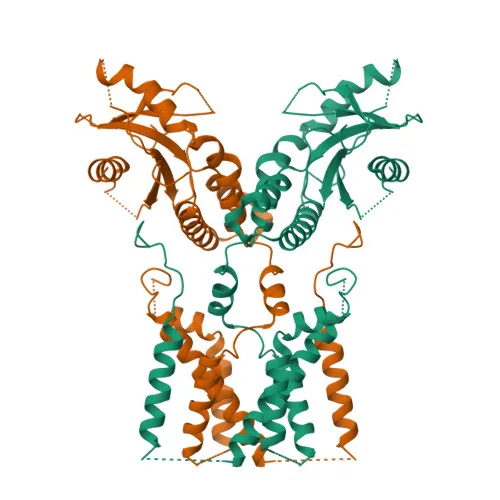
- STING1 protein identity and innate immune role: STING1 (Stimulator of interferon genes protein, also known as ERIS/MITA/MPYS/TMEM173) is a key facilitator of innate immune signaling, sensing cytosolic double-stranded DNA from bacteria and viruses to trigger type I interferon (IFN-alpha/beta) production. Related references: PMID:18724357, PMID:18818105, PMID:19433799
- Cyclic dinucleotide recognition and signaling: STING1 binds cyclic dinucleotides (c-di-GMP, 2'3'-cGAMP, cUAMP) with 2'3' linkage specificity, triggering oligomerization, translocation from the endoplasmic reticulum (ER) to the Golgi, and TBK1-mediated phosphorylation on the pLxIS motif (including Ser366). Related references: PMID:21947006, PMID:23258412, PMID:23707065, PMID:23910378, PMID:23747010, PMID:26300263, PMID:26150511
- Downstream IRF3 activation and antiviral response: Phosphorylated STING1 recruits and activates IRF3, driving transcription of type I interferons and establishing a potent antiviral state. Oncoproteins like HPV E7 and adenovirus E1A antagonize this pathway. Related references: PMID:22394562, PMID:25636800, PMID:29973723, PMID:26405230
- Autophagy regulation: Beyond interferon induction, STING1 mediates autophagy independently of TBK1. Upon cGAMP binding, it buds from the ER into COPII vesicles to form the ER-Golgi intermediate compartment (ERGIC), serving as a membrane source for LC3 lipidation and autophagosome formation that degrades cytosolic DNA/pathogens. It also acts as a proton channel to facilitate this process. Related references: PMID:30568238, PMID:30842662, PMID:37535724, PMID:41639454, PMID:41639452
- Subcellular localization: STING1 localizes to multiple membranes, including the endoplasmic reticulum, ERGIC, Golgi apparatus, autophagosomes, mitochondrial outer membrane, and cell membrane, shuttling between them during activation.
- Tissue expression: Ubiquitously expressed, with notable presence in skin endothelial cells, alveolar type 2 pneumocytes, bronchial epithelium, and alveolar macrophages.
Experimental Guidance and Technical Tips
- The immunogen is a synthetic phosphopeptide corresponding to residues around Ser366 of human STING1; the antibody is expected to specifically recognize the phosphorylated form. For WB, use appropriate phosphatase inhibitors during sample preparation to preserve phosphorylation.
- Validate antibody specificity in your experimental system by comparing signals with and without phosphatase treatment, or by performing peptide competition assays using the immunogen phosphopeptide.
- For ELISA applications, consider detecting phosphorylated STING1 in cell lysates or other relevant samples. Confirm cross-reactivity and optimal dilution under your own assay conditions.
CamelBio: Your One-Stop Sourcing Bridge
CamelBio offers this anti-phospho-STING1 antibody as part of a comprehensive portfolio of IVD raw materials, supporting diagnostics development and innate immunity research. Our one-stop sourcing covers validated antibody pairs, optimized monoclonal/polyclonal antibodies, bulk ancillary reagents, and custom rare-target procurement. From concept to clinic, CamelBio streamlines your supply chain with reliable, high-quality raw materials.
Product Datasheet
Anti-Phospho-STING1 (pS366) Rabbit Monoclonal Antibody for WB, ELISA - Q86WV6
REQUEST A QUOTE
Our professional team will reply to you within one business day. Please feel free to contact us!