Phosphorylated Antibodies
Anti-Phospho-SMO (S611/S615) Rabbit Polyclonal Antibody for WB, ELISA - Q99835
Item Number : CM0001414
Price varies based on specs and customizations
- Application
- WB, ELISA
- Cross Reactivity
- Human
- Protein Weight
- 86kDa

Shipping:
Contact us to get shipping details Enjoy On-time Dispatch Guarantee.
Why Choose Us
Easy ordering process, quality products, and dedicated support for your business success.
Core Product Specifications and Parameters
| Parameter | Specification |
|---|---|
| Product Name | Phospho-SMO-S611/615 Rabbit pAb |
| Remarks/Alias | Gx; CRJS; PHLS; SMOH; FZD11; Phospho-SMO-S611/615 |
| Species | Human |
| GeneID (Human) | 6608 |
| GeneID | 6608 |
| Immunogen | Synthetic peptide |
| Source | Rabbit |
| Category | Phosphorylated Antibodies |
| Application | WB, ELISA |
| Cross Reactivity | Human |
| SWISS | Q99835 |
| Protein Weight | 86kDa |
| Shipping | Ice bag |
Biological Background: SMO Function and Localization
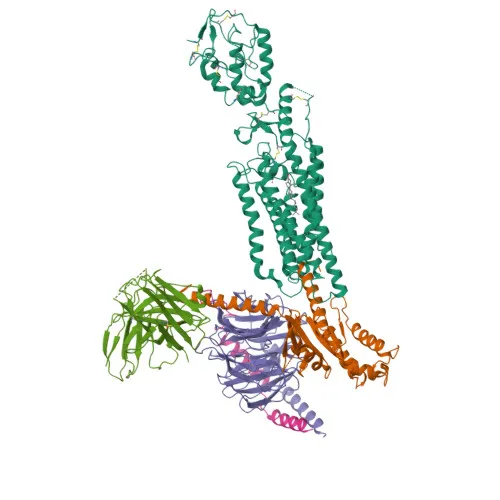
- SMO (smoothened) is a G protein-coupled receptor and a pivotal transducer of the Hedgehog signaling pathway, essential for embryonic development and adult tissue homeostasis.
- In the absence of Hedgehog ligands, SMO is inhibited by the patched receptor (PTCH1/PTCH2), which restricts cholesterol access to SMO; Hedgehog binding to patched relieves this inhibition, allowing SMO translocation to the primary cilium and activation by cholesterol. Related references: PMID:27437577 PMID:28344083 PMID:32929279
- Upon activation, SMO couples to G protein G(i), inhibiting adenylate cyclase and reducing cAMP levels; this derepresses protein kinase A (PKA), leading to stabilization and activation of GLI transcription factors. Related references: PMID:28344083 PMID:31168089
- Active SMO can also directly inhibit PKA by sequestering its catalytic subunit PRKACA at the cell membrane, preventing phosphorylation and processing of GLI transcription factors. Related references: PMID:36202993 PMID:39138140
- SMO localizes primarily to the cell membrane and the primary cilium membrane, a key compartment for Hedgehog signaling.
- The antibody specifically recognizes phosphorylation at serine residues 611 and 615, post‑translational modifications that likely influence SMO conformation, activity, or trafficking.
- Mutations in SMO are implicated in various developmental disorders and cancers, underscoring its critical regulatory role.
Experimental Guidance and Technical Tips
- The immunogen is a synthetic phosphorylated peptide around Ser611/Ser615 of human SMO; for Western blot, a band near 86 kDa is expected. To confirm phospho-specificity, consider treating samples with lambda phosphatase or using a non‑phosphopeptide competitor.
- Because SMO phosphorylation states can be dynamic, using phosphatase inhibitor cocktails during lysis is advisable; also include appropriate positive and negative controls (e.g., Hedgehog‑stimulated vs. unstimulated cells).
- Western blot detection may require optimization of blocking and antibody dilution; test a range of concentrations and validate in human cell lines or tissues with active Hedgehog signaling (e.g., SHH‑treated fibroblasts).
- For ELISA, the antibody may be suitable for detecting phosphorylated SMO peptides or cell lysates; confirm binding with a phospho‑specific peptide and a non‑phospho control to assess specificity.
CamelBio: Your One-Stop Sourcing Bridge
CamelBio supports diagnostic manufacturers and researchers with a comprehensive portfolio of IVD raw materials, including this anti-phospho-SMO antibody for Hedgehog pathway studies. Beyond single antibodies, we offer validated antibody pairs, optimized monoclonals and polyclonals, bulk ancillary reagents, and tailored sourcing for rare targets. Partner with us to streamline your concept-to-clinic journey with reliable, scalable raw material solutions.
Product Datasheet
Anti-Phospho-SMO (S611/S615) Rabbit Polyclonal Antibody for WB, ELISA - Q99835
REQUEST A QUOTE
Our professional team will reply to you within one business day. Please feel free to contact us!