Phosphorylated Antibodies
Anti-Phospho-PTEN (Ser380) Rabbit Polyclonal Antibody for WB and ELISA - P60484
Item Number : CM0000651
Price varies based on specs and customizations
- Application
- WB, ELISA
- Cross Reactivity
- Human, Mouse, Rat
- Protein Weight
- 47kDa

Shipping:
Contact us to get shipping details Enjoy On-time Dispatch Guarantee.
Why Choose Us
Easy ordering process, quality products, and dedicated support for your business success.
Core Product Specifications and Parameters
| Parameter | Value |
|---|---|
| Product Name | Phospho-PTEN-S380 Rabbit pAb |
| Remarks/Alias | BZS; DEC; CWS1; GLM2; MHAM; TEP1; MMAC1; PTEN1; 10q23del; PTENbeta; Phospho-PTEN-S380 |
| Species | Human |
| Gene ID (Human) | 5728 |
| Gene ID | 5728 |
| Immunogen | A synthetic phosphorylated peptide around S380 of human PTEN (NP_000305.3) |
| Source | Rabbit |
| Category | Phosphorylated Antibodies |
| Application | WB, ELISA |
| Cross Reactivity | Human, Mouse, Rat |
| SWISS | P60484 |
| Protein Weight | 47kDa |
| Shipping | Ice bag |
Biological Background: PTEN Function and Localization
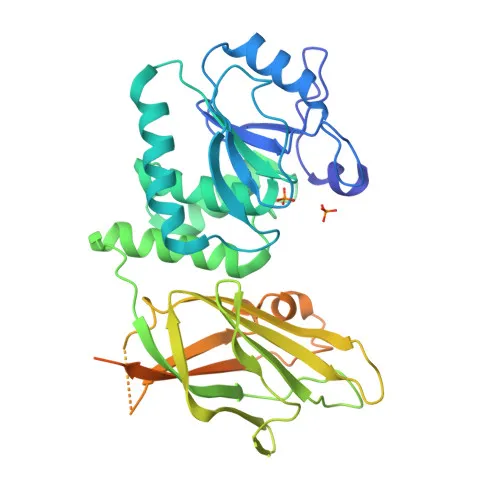
- PTEN is a dual-specificity phosphatase that dephosphorylates both protein and lipid substrates; it acts on tyrosine-, serine-, and threonine-phosphorylated proteins and on phosphatidylinositol phosphates, with a preference for PtdIns(3,4,5)P3. Related references: PMID:9187108, PMID:9256433, PMID:9616126, PMID:16824732, PMID:26504226, PMID:9593664
- As a critical tumor suppressor, PTEN negatively regulates the PI3K-AKT/mTOR signaling pathway, controlling cell proliferation, survival, and metabolism. Related references: PMID:31492966, PMID:37279284
- Phosphorylation at the C-terminal tail, including Ser380, modulates PTEN’s conformation and its interactions with partners such as p85 and DLC1, influencing cell migration. Related references: PMID:26166433
- PTEN is expressed in all adult tissues and localizes to multiple subcellular sites, including cytoplasm, nucleus, PML bodies, dendritic spines, postsynaptic density, and is also secreted.
- In the nervous system, PTEN regulates synaptic plasticity, dendritic development, and adult neurogenesis; it is recruited to postsynaptic membranes upon NMDA receptor activation and is required for long-term depression.
- Alternative splicing and alternative initiation generate PTEN isoforms with distinct functions; a kinase-active isoform also contributes to mitochondrial energy metabolism by enhancing COX activity and ATP production.
Experimental Guidance and Technical Tips
- For Western blotting, a band at approximately 47 kDa is expected for endogenous PTEN; use broad-range molecular weight markers for confirmation and include phosphatase inhibitors in the lysis buffer to preserve phosphorylation.
- The phospho-specific nature of this antibody means dephosphorylation controls (e.g., λ‑phosphatase treatment) or phosphopeptide competition can help confirm signal specificity.
- Although cross-reactivity is reported for human, mouse, and rat PTEN, verify species reactivity in your experimental system, as detection may vary across cell lines and tissues.
- For ELISA applications, the synthetic phosphopeptide immunogen can serve as a positive control; compare binding to a non‑phosphorylated peptide to assess specificity.
CamelBio: Your One-Stop Sourcing Bridge
CamelBio is a one-stop sourcing partner for diagnostic manufacturers and research laboratories, offering validated antibodies like this phospho‑PTEN (Ser380) rabbit polyclonal antibody alongside complementary reagents for PI3K/AKT pathway investigations. Our supply network encompasses optimized monoclonal and polyclonal antibodies, bulk ancillary reagents, and custom sourcing for rare targets, helping you bridge from early‑stage concept to clinical application with efficient, reliable raw‑material acquisition.
REQUEST A QUOTE
Our professional team will reply to you within one business day. Please feel free to contact us!