Phosphorylated Antibodies
Anti-Phospho-PLK1-T210 Rabbit Monoclonal Antibody for WB and ELISA - P53350
Item Number : CM0000858
Price varies based on specs and customizations
- Application
- WB, ELISA
- Cross Reactivity
- Human
- Protein Weight
- 68 kDa

Shipping:
Contact us to get shipping details Enjoy On-time Dispatch Guarantee.
Why Choose Us
Easy ordering process, quality products, and dedicated support for your business success.
Core Product Specifications and Parameters
| Parameter | Value |
|---|---|
| Product Name | Phospho-PLK1-T210 Rabbit mAb |
| Remarks/Alias | PLK; STPK13; Phospho-PLK1-T210 |
| Species | Human |
| Gene ID | 5347 (Human) |
| Immunogen | A synthetic phosphorylated peptide around T210 of human PLK1 (P53350) |
| Source | Rabbit |
| Category | Phosphorylated Antibodies |
| Application | WB, ELISA |
| Cross Reactivity | Human |
| SWISS | P53350 |
| Protein Weight | 68 kDa |
| Shipping | Ice bag |
Biological Background: PLK1 Function and Localization
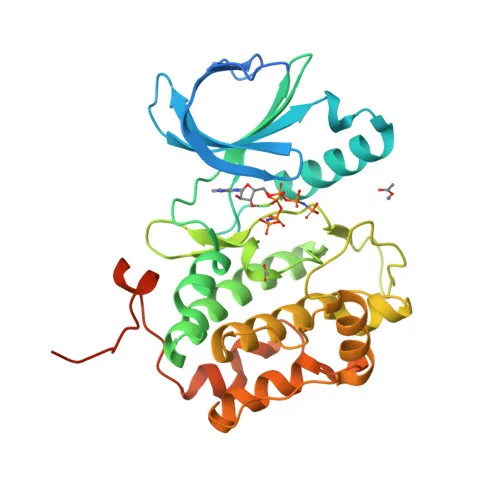
- Serine/threonine-protein kinase PLK1, also known as polo-like kinase 1 and STPK13, is a master regulator of multiple events during mitosis, including centrosome maturation, spindle assembly, G2/M transition, kinetochore function, sister chromatid cohesion, mitotic exit, and cytokinesis. Related references: PMID:11202906, PMID:12207013, PMID:12447691
- At the centrosome, PLK1 phosphorylates key substrates such as KIZ, NEDD1, and NINL to promote γ-tubulin ring complex recruitment and bipolar spindle formation. Related references: PMID:16980960, PMID:19509060, PMID:12852856
- During mitotic exit and cytokinesis, PLK1 creates its own docking sites on central spindle proteins (PRC1, KIF20A/MKLP2) and phosphorylates ECT2, CEP55, and RACGAP1 to orchestrate cleavage furrow formation. Related references: PMID:12939256, PMID:16247472, PMID:17351640, PMID:19468300, PMID:19468302
- A critical G2/M checkpoint regulator, PLK1 activates CDK1 by phosphorylating CDC25C, cyclin B1, and the transcription factor FOXM1, while simultaneously inhibiting the negative regulators WEE1 and PKMYT1/MYT1. Related references: PMID:11202906, PMID:12447691, PMID:12524548, PMID:19160488
- At the kinetochore, PLK1 maintains spindle assembly checkpoint signaling and sister chromatid cohesion by phosphorylating BUB1B/BUBR1, FBXO5/EMI1, STAG2/SA2, and SGO1. Related references: PMID:15148369, PMID:15469984, PMID:17376779, PMID:18331714
- Beyond mitosis, PLK1 contributes to DNA damage recovery and checkpoint silencing by phosphorylating MRE11, RAD51, POLQ, and RHNO1, and negatively regulates p53 stability via TOPORS signaling. Related references: PMID:18615013, PMID:18662541, PMID:37440612, PMID:37674080, PMID:19473992
- PLK1 localizes to the nucleus, centrosome, kinetochore, spindle, and midbody during cell division, and is highly expressed in placenta and colon. It is classified as a phosphoprotein and a serine/threonine-protein kinase with roles in cell cycle and cell division (UniProt KB - P53350).
Experimental Guidance and Technical Tips
- This antibody was raised against a synthetic phosphopeptide around Thr210; thus, it specifically recognizes the phosphorylated form of PLK1. Confirm signal specificity by treating lysates with λ-phosphatase or by using non‑phosphorylatable Thr210 mutants.
- For Western blotting, the predicted molecular weight is ~68 kDa, but mitotic phospho‑PLK1 may exhibit mobility shifts. Use lysates from cells arrested in mitosis (e.g., nocodazole treatment) as a positive control, and interphase cells as a negative control.
- In ELISA applications, the antibody can serve as a capture or detection reagent to quantify phospho‑PLK1 (Thr210) levels. Optimize coating buffer, antibody concentration, and detection substrate for your specific plate format.
- Cross‑reactivity has been validated only with human PLK1. When working with other species, check sequence homology around the Thr210 epitope and verify reactivity experimentally.
- To preserve phospho‑epitope integrity, handle samples with phosphatase inhibitors and avoid prolonged storage of phospho‑enriched lysates.
CamelBio: Your One-Stop Sourcing Bridge
CamelBio empowers diagnostic manufacturers and research laboratories with a seamless supply of premium IVD raw materials, including this phospho‑specific anti‑PLK1 (Thr210) monoclonal antibody for cell cycle and mitosis-focused assays. From validated antibody pairs and bulk ancillary reagents to tailored sourcing of rare-target raw materials, we offer end‑to‑end support to accelerate your assay development from concept to clinic.
REQUEST A QUOTE
Our professional team will reply to you within one business day. Please feel free to contact us!