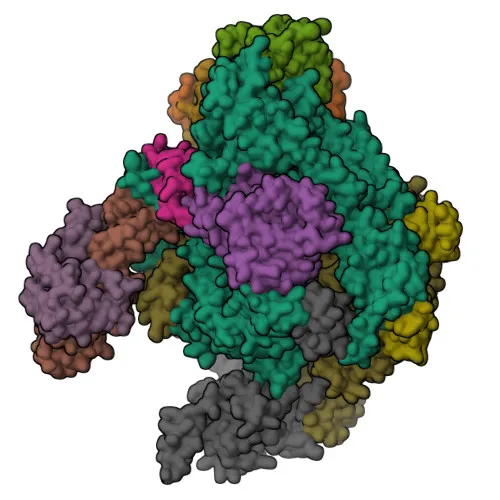
Phosphorylated Antibodies
Anti-Phospho-p53 (T81) Rabbit Polyclonal Antibody for WB, ELISA - P04637
Item Number : CM0001836
Price varies based on specs and customizations
- Application
- WB, ELISA
- Cross Reactivity
- Human, Rat
- Protein Weight
- 44kDa

Shipping:
Contact us to get shipping details Enjoy On-time Dispatch Guarantee.
Why Choose Us
Easy ordering process, quality products, and dedicated support for your business success.
Core Product Specifications and Parameters
| Parameter | Value |
|---|---|
| Product Name | Phospho-p53-T81 Rabbit pAb |
| Remarks/Alias | P53, BCC7, LFS1, BMFS5, TRP53, Phospho-p53-T81 |
| Species | Human |
| GeneID (human) | 7157 |
| GeneID | 7157 |
| Immunogen | A synthetic phosphorylated peptide around T81 of human TP53 (NP_000537.3) |
| Source | Rabbit |
| Category | Phosphorylated Antibodies |
| Application | WB, ELISA |
| Cross Reactivity | Human, Rat |
| SWISS | P04637 |
| Protein Weight | 44kDa |
| Shipping | Ice bag |
Biological Background: p53 Function and Localization
- Encoded by the TP53 gene, the Cellular tumor antigen p53 (also known as phosphoprotein p53, tumor suppressor p53, antigen NY-CO-13) is a 43.7 kDa multifunctional transcription factor with a central role in maintaining genomic stability.
- p53 acts as a critical tumor suppressor by inducing cell cycle arrest, DNA repair, or apoptosis upon binding to its target DNA sequences, thereby negatively regulating cell division. Related references: PMID:11025664 PMID:12524540 PMID:12810724
- Apoptosis is promoted through upregulation of BAX and FAS antigen expression or repression of Bcl-2, while pro-apoptotic activity is enhanced by interactions with ASPP1/ASPP2 and inhibited by iASPP. Related references: PMID:12524540 PMID:17189187
- p53 dynamically localizes to the nucleus, cytoplasm, PML nuclear bodies, endoplasmic reticulum, mitochondrial matrix, and centrosomes, enabling context-dependent signaling.
- The protein undergoes extensive post-translational modifications including phosphorylation at Thr81, acetylation, methylation, ubiquitination, and ISGylation, and is classified under keywords such as apoptosis, cell cycle, DNA-binding, transcriptional regulation, and tumor suppressor.
- Multiple isoforms arise from alternative splicing and promoter usage; for example, isoform 2 enhances transcriptional activation, isoform 4 suppresses activity, and isoform 7 inhibits apoptosis.
- p53 participates in circadian clock regulation by repressing CLOCK-BMAL1-mediated transcriptional activation of PER2, linking circadian rhythms to DNA damage responses. Related references: PMID:24051492
Experimental Guidance and Technical Tips
- The immunogen is a synthetic phosphopeptide around Thr81 of human p53; consider validating phosphorylation status in your samples using phosphatase inhibitors during preparation.
- For Western blotting, a band near 44 kDa is expected, though post-translational modifications may cause slight shifts; verify by phosphatase treatment or phospho‑specific controls.
- Cross-reactivity is reported for human and rat; for other species, perform a pilot study to confirm suitability.
- As a rabbit polyclonal antibody, lot-to-lot consistency may vary; include appropriate positive and negative controls in each experiment.
CamelBio: Your One-Stop Sourcing Bridge
CamelBio offers a streamlined sourcing experience for IVD raw materials, including this anti-phospho-p53 (T81) antibody for oncology and apoptosis research. Our supply capabilities encompass validated antibody pairs, optimized monoclonal and polyclonal antibodies, and bulk ancillary reagents to accelerate diagnostic development. We also source rare-target reagents, ensuring a reliable pipeline from concept to clinic.
REQUEST A QUOTE
Our professional team will reply to you within one business day. Please feel free to contact us!