Phosphorylated Antibodies
Anti-Phospho-p38 MAPK (T180/Y182) Rabbit Monoclonal Antibody for WB and ELISA - Q15759 / P53778 / O15264 / Q16539
Item Number : CM0000843
Price varies based on specs and customizations
- Application
- WB, ELISA
- Cross Reactivity
- Human, Mouse, Rat
- Protein Weight
- 29kDa/34kDa/35kDa/41kDa

Shipping:
Contact us to get shipping details Enjoy On-time Dispatch Guarantee.
Why Choose Us
Easy ordering process, quality products, and dedicated support for your business success.
Core Product Specifications and Parameters
| Parameter | Specification |
|---|---|
| Product Name | Phospho-p38 MAPK-T180/Y182 Rabbit mAb |
| Remarks/Alias | MAPK14; CSBP; CSBP1; CSBP2; CSPB1; EXIP; Mxi2; PRKM14; PRKM15; RK; SAPK2A; p38; p38ALPHA; p38 MAPK; Phospho-p38 MAPK-T180/Y182 |
| Species | Human |
| GeneID (Human) | 5600/6300/5603/1432 |
| GeneID | 5600/6300/5603/1432 |
| Immunogen | Synthetic peptide: A synthetic phosphorylated peptide around T180 & Y182 of human MAPK (NP_002742.3) |
| Source | Rabbit |
| Category | Phosphorylated Antibodies |
| Application | WB, ELISA |
| Cross Reactivity | Human, Mouse, Rat |
| SWISS | Q15759/P53778/O15264/Q16539 |
| Protein Weight | 29kDa/34kDa/35kDa/41kDa |
| Shipping | Ice bag |
Biological Background: Phospho-p38 MAPK (T180/Y182) Function and Localization
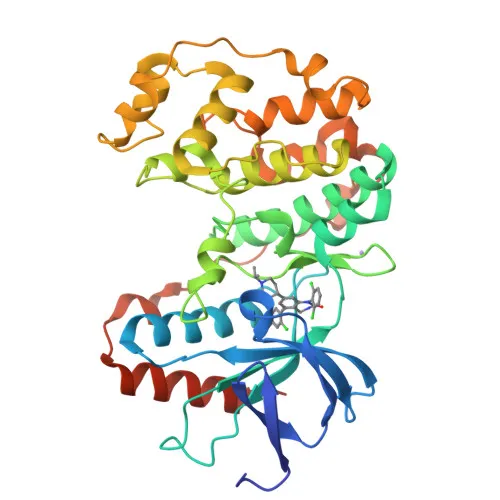
- Mitogen-activated protein kinase 11 (MAPK11), also known as p38 beta, is a serine/threonine kinase and an essential component of the MAP kinase signal transduction pathway, responding to extracellular stimuli like pro-inflammatory cytokines or stress (PubMed:12452429, PubMed:20626350, PubMed:35857590). Related references: PMID:12452429, PMID:20626350, PMID:35857590
- It belongs to the p38 MAPK family, which includes four isoforms: p38 alpha (MAPK14), p38 beta (MAPK11), p38 gamma (MAPK12), and p38 delta (MAPK13). Their functions are largely redundant with MAPK14.
- p38 MAPKs phosphorylate a broad range of substrates (estimated 200–300 each), including downstream kinases like MAPKAPK2/MK2 and MAPKAPK3/MK3, which regulate gene expression post-transcriptionally, and RPS6KA5/MSK1 and RPS6KA4/MSK2, which activate transcription factors directly and phosphorylate histone H3 (PubMed:9687510). Related references: PMID:9687510
- Key substrates include transcription factors (ATF1, ATF2, ATF6, ELK1, p53, MEF2C) (PubMed:10330143, PubMed:15356147, PubMed:9430721), chromatin modifiers (DOT1L) (PubMed:38270553), and proteins involved in mRNA stability (ZFP36), translation (EIF4E2 via MKNK1/2) (PubMed:11154262), and protein turnover (CFLAR, ADAM17). Related references: PMID:10330143, PMID:15356147, PMID:9430721, PMID:38270553, PMID:11154262
- In the nucleus, p38 MAPK-dependent phosphorylation of histone H3 on Ser-10 (H3S10ph) enhances accessibility of NF-kappa-B binding sites, promoting inflammatory gene expression.
- MAPK11 is localized in both cytoplasm and nucleus, and is expressed at highest levels in brain and heart, with additional expression in placenta, lung, liver, skeletal muscle, kidney, and pancreas.
- Phosphorylation at T180 and Y182 within the activation loop (TxY motif) is required for kinase activation. This antibody specifically recognizes the dually phosphorylated active form.
- Keywords: ATP-binding, kinase, stress response, transcription regulation, phosphoprotein.
Experimental Guidance and Technical Tips
- The immunogen is a synthetic phosphorylated peptide around T180/Y182 of human MAPK; thus, the antibody is expected to detect phosphorylated p38 MAPK isoforms. For WB, consider using phosphatase inhibitors in lysis buffers to preserve phosphorylation states.
- Validate the antibody in cell lines or tissues stimulated with known p38 activators (e.g., anisomycin, TNF-alpha, or osmotic stress) to confirm specificity. Use appropriate positive and negative controls.
- For ELISA, the antibody may be used as a capture or detection reagent; standardize with phosphorylated peptide or stimulated cell lysates.
- Cross-reactivity with mouse and rat has been observed, but performance should be verified in the relevant sample systems due to potential species-specific differences.
- As a rabbit monoclonal antibody, it offers high specificity and lot-to-lot consistency; follow standard protocols for optimal results.
CamelBio: Your One-Stop Sourcing Bridge
CamelBio is a one-stop IVD raw-material sourcing partner, providing diagnostic manufacturers, laboratories, and research institutes with validated antibodies like this phospho-p38 MAPK (T180/Y182) rabbit mAb for developing sensitive and reproducible assays targeting stress and inflammatory signaling pathways. Our comprehensive portfolio includes optimized monoclonal/polyclonal antibodies, validated antibody pairs, bulk ancillary reagents, and support for rare target raw-material sourcing. From initial concept to clinical application, CamelBio ensures a reliable supply chain and technical consulting tailored to your IVD development needs.
Product Datasheet
Anti-Phospho-p38 MAPK (T180/Y182) Rabbit Monoclonal Antibody for WB and ELISA - Q15759 / P53778 / O15264 / Q16539
REQUEST A QUOTE
Our professional team will reply to you within one business day. Please feel free to contact us!