Phosphorylated Antibodies
Anti-Phospho-Histone H3.3-T3 Rabbit Monoclonal Antibody for WB, ELISA - Q16695 / P68431
Item Number : CM0001484
Price varies based on specs and customizations
- Application
- WB, ELISA
- Cross Reactivity
- Human, Mouse, Rat, Other (Wide Range Predicted)
- Protein Weight
- 15kDa

Shipping:
Contact us to get shipping details Enjoy On-time Dispatch Guarantee.
Why Choose Us
Easy ordering process, quality products, and dedicated support for your business success.
Core Product Specifications and Parameters
| Parameter | Value |
|---|---|
| Product Name | Phospho-Histone H3.3-T3 Rabbit mAb |
| Remarks/Alias | H3F3; H3-3B; H3.3A; H3F3A; BRYLIB1; Phospho-Histone H3.3-T3 |
| Species | Human |
| GeneID (human) | H3 |
| GeneID | 8290/8350 |
| Immunogen | Synthetic phosphorylated peptide around T3 of human Histone H3 (P84243) |
| Source | Rabbit |
| Category | Phosphorylated Antibodies |
| Application | WB, ELISA |
| Cross Reactivity | Human, Mouse, Rat, Other (Wide Range Predicted) |
| SWISS | Q16695/P68431 |
| Protein Weight | 15kDa |
| Shipping | Ice bag |
Biological Background: Histone H3.1t Function and Localization
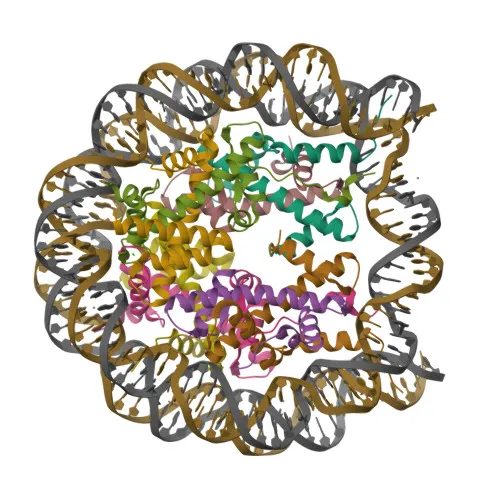
- Histone H3.1t (also designated H3/g or H3.4) is a core component of the nucleosome, wrapping and compacting DNA into chromatin, thereby restricting DNA accessibility to essential cellular machinery for processes such as transcription, replication, and repair.
- Nucleosomes play a central role in transcription regulation, DNA repair, DNA replication, and chromosomal stability by modulating DNA accessibility through a complex set of post-translational modifications, collectively known as the histone code, and nucleosome remodeling.
- H3.1t is a member of the histone H3 family and is specifically expressed in testicular cells, suggesting a specialized function in chromatin organization during spermatogenesis.
- The protein localizes exclusively to the nucleus and chromosomes, where it contributes to the structural maintenance and dynamic regulation of chromatin.
- Histone H3.1t is subject to numerous post-translational modifications, including acetylation, methylation, phosphorylation, citrullination, ADP-ribosylation, hydroxylation, and ubiquitination, which together orchestrate chromatin dynamics and epigenetic control.
- UniProt keywords highlight its involvement in nucleosome core formation, DNA binding, and a wide array of modifications, underscoring its pivotal role in epigenetic regulation and genome stability.
Experimental Guidance and Technical Tips
- The immunogen is a synthetic phosphorylated peptide encompassing the T3 phosphorylation site of human histone H3.3 (UniProt P84243); broad cross-reactivity with other H3 variants is predicted based on sequence homology.
- For western blotting, employ phosphatase inhibitors throughout lysis and sample preparation to preserve the phospho-Thr3 epitope. The expected migrating band corresponds to ~15 kDa.
- To confirm antibody specificity, consider peptide competition assays with phosphorylated versus non-phosphorylated peptides or treatment of samples with lambda protein phosphatase prior to detection.
- In ELISA applications, optimize coating conditions for the phosphorylated antigen and include rigorous controls for non-specific binding and matrix effects.
CamelBio: Your One-Stop Sourcing Bridge
CamelBio provides diagnostic manufacturers, labs, and research institutes with one‑stop access to IVD raw materials, technical services, and consulting—covering every stage from concept to clinic. For your histone modification and chromatin biology studies, we offer validated antibody pairs, optimized monoclonal and polyclonal antibodies, bulk ancillary reagents, and custom raw‑material sourcing to accelerate your assay development and production needs.
REQUEST A QUOTE
Our professional team will reply to you within one business day. Please feel free to contact us!