Phosphorylated Antibodies
Anti-Phospho-Histone H3-T6 Rabbit Polyclonal Antibody for WB, IHC-P, IF/ICC, ELISA - Q16695 / P68431
Item Number : CM0000928
Price varies based on specs and customizations
- Application
- WB, IHC-P, IF/ICC, ELISA
- Cross Reactivity
- Human, Mouse, Rat, Other (Wide Range Predicted)
- Protein Weight
- 15kDa

Shipping:
Contact us to get shipping details Enjoy On-time Dispatch Guarantee.
Why Choose Us
Easy ordering process, quality products, and dedicated support for your business success.
Core Product Specifications and Parameters
| Parameter | Value |
|---|---|
| Product Name | Phospho-Histone H3-T6 Rabbit pAb |
| Remarks/Alias | H3/A; H3C2; H3C3; H3C4; H3C6; H3C7; H3C8; H3FA; H3C10; H3C11; H3C12; HIST1H3A; Phospho-Histone H3-T6 |
| Species | Human |
| GeneID (Human) | H3 |
| GeneID | 8290/8350 |
| Immunogen | Synthetic peptide: A synthetic phosphorylated peptide around T6 of human (NP_003520.1). |
| Source | Rabbit |
| Category | Phosphorylated Antibodies |
| Application | WB, IHC-P, IF/ICC, ELISA |
| Cross Reactivity | Human, Mouse, Rat, Other (Wide Range Predicted) |
| SWISS | Q16695/P68431 |
| Protein Weight | 15kDa |
| Shipping | Ice bag |
Biological Background: Phospho-Histone H3-T6 Function and Localization
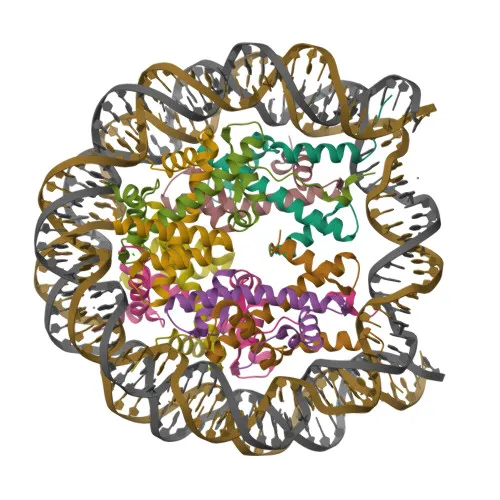
- Histone H3 is a core component of the nucleosome, wrapping and compacting DNA into chromatin to regulate transcription, DNA repair, replication, and chromosomal stability.
- Nucleosome structure limits DNA accessibility, and the dynamic regulation of chromatin is controlled by a complex set of post-translational modifications (PTMs), collectively known as the "histone code," including acetylation, methylation, phosphorylation, and others.
- The H3 family includes multiple variants; Q16695 (Histone H3.1t, also known as H3/g or Histone H3.4) is a testis-specific isoform encoded by the H3-4 gene.
- Histone H3.1t localizes to the nucleus and chromosome, consistent with its role in chromatin packaging.
- According to UniProt keywords, H3.1t is subject to diverse PTMs such as acetylation, methylation, phosphorylation, citrullination, ADP-ribosylation, and ubiquitination, which fine-tune chromatin structure and function.
- Tissue specificity: H3.1t is expressed in testicular cells, suggesting a specialized role in male germ cell chromatin.
- Mol weight: ~15.5 kDa.
Experimental Guidance and Technical Tips
- The immunogen is designed around threonine 6 phosphorylation; consider verifying antibody specificity by treating samples with lambda phosphatase or using non-phosphorylated peptide competition.
- For Western blot (WB), a band around 15 kDa is expected; ensure proper nuclear extraction and include both positive and negative controls (e.g., untreated vs. phosphatase-treated cell lysates).
- In immunohistochemistry (IHC-P) and immunofluorescence (IF/ICC), nuclear staining is anticipated; optimize antigen retrieval and blocking to reduce background.
- The antibody is predicted to react with human, mouse, and rat samples; however, sequence alignment of the immunogen region across species may be necessary for other organisms.
CamelBio: Your One-Stop Sourcing Bridge
CamelBio offers diagnostic manufacturers and researchers a comprehensive sourcing platform for high-quality IVD raw materials. This anti-Phospho-Histone H3-T6 antibody supports epigenetic and chromatin research applications. Through CamelBio, you can source validated antibody pairs, optimized polyclonal and monoclonal antibodies, bulk ancillary reagents, and even rare-target raw materials to accelerate your assay development.
REQUEST A QUOTE
Our professional team will reply to you within one business day. Please feel free to contact us!