Phosphorylated Antibodies
Anti-Phospho-Histone H1.3-T17/Histone H1.4-T17 Monoclonal Antibody for WB, ELISA - P16402 / P10412
Item Number : CM0001370
Price varies based on specs and customizations
- Application
- WB, ELISA
- Cross Reactivity
- Human, Mouse, Rat
- Protein Weight
- 30 kDa

Shipping:
Contact us to get shipping details Enjoy On-time Dispatch Guarantee.
Why Choose Us
Easy ordering process, quality products, and dedicated support for your business success.
Core Product Specifications and Parameters
| Parameter | Value |
|---|---|
| Product Name | Phospho-Histone H1.3-T17/Histone H1.4-T17 Rabbit mAb |
| Remarks/Alias | H1.3; H1D; H1F3; H1s-2; Phospho-Histone H1.3-T17/Histone H1.4-T17 |
| Species | Human |
| GeneID | 3007/3008 |
| Immunogen | Synthetic Peptide |
| Source | Rabbit |
| Category | Phosphorylated Antibodies |
| Application | WB, ELISA |
| Cross Reactivity | Human, Mouse, Rat |
| SWISS | P16402 / P10412 |
| Protein Weight | 30 kDa |
| Shipping | Ice bag |
Biological Background: Histone H1.3 and H1.4 Function and Localization
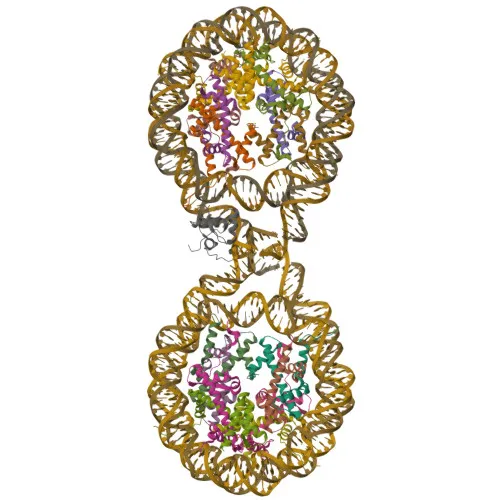
- Histone H1.3 (also known as Histone H1c or H1s-2) is a linker histone that binds to DNA between nucleosomes, facilitating the formation of higher-order chromatin fibers. Related references: PMID:37922872
- It is essential for the condensation of nucleosome chains and promotes the H3K27me3 mark via the PRC2/EED-EZH2 complex. Related references: PMID:40516528
- Histone H1.3 also regulates alternative splicing, particularly exon skipping and intron retention, by affecting RNA polymerase II elongation on intronic regions. Related references: PMID:37922872
- It functions in transcriptional regulation through chromatin remodeling, nucleosome spacing, and DNA methylation (By similarity).
- The protein localizes to the nucleus and chromosomes, consistent with its role in chromatin structure.
- Post-translational modifications include acetylation, citrullination, phosphorylation (e.g., T17), and hydroxylation, which may fine-tune its function.
- This antibody recognizes the phosphorylated T17 residue of both Histone H1.3 and H1.4, enabling study of cell cycle-dependent phosphorylation events.
Experimental Guidance and Technical Tips
- The immunogen is a synthetic phosphorylated peptide around T17 of human Histone H1.3; therefore, the antibody is specific to the phosphorylated epitope. Non-phosphorylated peptide blocking or phosphatase treatment of samples can help confirm specificity.
- For Western blot, a band around 30 kDa is expected; consider using nuclear extracts or whole cell lysates from cycling cells where H1 phosphorylation is enriched.
- For ELISA, coat with the phosphorylated peptide or nuclear extracts, and validate with appropriate positive and negative controls.
- Optimal working concentration should be determined empirically for each assay and sample type.
CamelBio: Your One-Stop Sourcing Bridge
CamelBio provides diagnostic manufacturers and research institutes with comprehensive access to IVD raw materials, bridging early-stage development to clinical application. This phosphorylated histone H1 targeting antibody supports chromatin biology, epigenetics, and oncology research, complementing our portfolio of validated antibody pairs, optimized monoclonal/polyclonal antibodies, and bulk ancillary reagents. For rare target sourcing or custom antibody development, CamelBio’s supply chain expertise ensures reliable procurement from concept to clinic.
Product Datasheet
Anti-Phospho-Histone H1.3-T17/Histone H1.4-T17 Monoclonal Antibody for WB, ELISA - P16402 / P10412
REQUEST A QUOTE
Our professional team will reply to you within one business day. Please feel free to contact us!