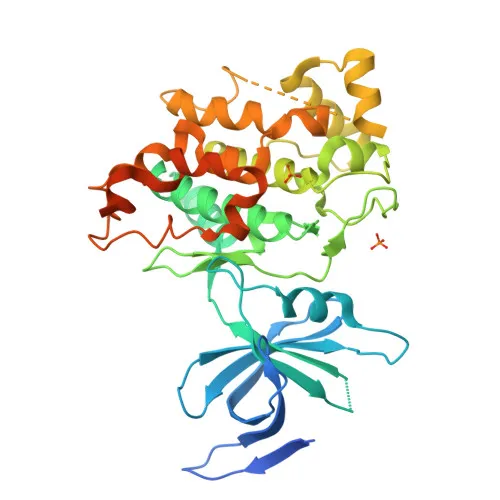
Phosphorylated Antibodies
Anti-Phospho-GSK3β-S9 Monoclonal Antibody for WB, ELISA - P49841
Item Number : CM0001502
Price varies based on specs and customizations
- Application
- WB, ELISA
- Cross Reactivity
- Human, Mouse, Rat
- Protein Weight
- 47kDa

Shipping:
Contact us to get shipping details Enjoy On-time Dispatch Guarantee.
Why Choose Us
Easy ordering process, quality products, and dedicated support for your business success.
Core Product Specifications and Parameters
| Parameter | Value |
|---|---|
| Product Name | Phospho-GSK3β-S9 Mouse mAb |
| Remarks/Alias | GSK3B; gsk-3β; Phospho-GSK3β-S9 |
| Species | Human |
| Gene ID (Human) | 2932 |
| Gene ID | 2932 |
| Immunogen | Synthetic Peptide|A phospho specific peptide corresponding to residues surrounding S9 of human GSK3β |
| Source | Mouse |
| Category | Phosphorylated Antibodies |
| Application | WB, ELISA |
| Cross Reactivity | Human, Mouse, Rat |
| SWISS | P49841 |
| Protein Weight | 47kDa |
| Shipping | Ice bag |
Biological Background: GSK3β Function and Localization
-
GSK3β functions as a constitutively active kinase that negatively regulates glycogen synthesis, protein synthesis, and Wnt signaling by phosphorylating key substrates such as GYS1, EIF2B, and CTNNB1/beta-catenin. Related references: PMID:11430833, PMID:12554650, PMID:8397507
-
In the Wnt pathway, GSK3β forms a destruction complex with APC and AXIN1, phosphorylating beta-catenin to promote its ubiquitin-dependent degradation, thereby inhibiting Wnt target gene expression. Related references: PMID:12554650
-
GSK3β phosphorylates MAPT/TAU on Thr-548, significantly reducing its ability to stabilize microtubules, and is involved in the formation of neurofibrillary tangles in Alzheimer disease. Related references: PMID:14690523
-
It is a key regulator of the circadian clock, phosphorylating and promoting the degradation of core clock components BMAL1, CLOCK, and PER2. Related references: PMID:19946213, PMID:28903391
-
The protein is predominantly cytoplasmic but also localizes to the nucleus and cell membrane.
-
GSK3β is expressed in various tissues including testis, thymus, prostate, ovary, and at lower levels in lung, brain, and kidney; it colocalizes with PKR and TAU in Alzheimer disease brain.
-
Additionally, GSK3β phosphorylates JUN (reducing its DNA affinity), NFATC1 (promoting nuclear export), and regulates apoptosis, insulin signaling, and neuronal development. Related references: PMID:1846781, PMID:9072970
Experimental Guidance and Technical Tips
- The immunogen used is a synthetic phospho-peptide surrounding Ser9 of human GSK3β. For Western blotting, it is advisable to include phosphatase inhibitors during cell lysis and to verify the molecular weight at approximately 47 kDa.
- To confirm phospho-specificity, consider treating cell lysates with λ‑phosphatase before analysis or performing peptide competition assays with the phospho‑ and non‑phospho‑peptide.
- For ELISA, ensure the plate‑coated antigen preserves the phospho‑epitope; a gentle coating buffer and optimized blocking conditions are recommended. Validate signal linearity and background in the relevant sample matrix.
CamelBio: Your One-Stop Sourcing Bridge
CamelBio connects diagnostic manufacturers and laboratories with a reliable supply of IVD raw materials, including validated antibody pairs, optimized monoclonal/polyclonal antibodies, and bulk ancillary reagents. This Phospho-GSK3β-S9 monoclonal antibody supports research into cell signaling, metabolic disorders, and neurodegeneration. For rare target sourcing, custom development, or technical consulting spanning concept to clinic, trust CamelBio as your comprehensive sourcing partner.
REQUEST A QUOTE
Our professional team will reply to you within one business day. Please feel free to contact us!