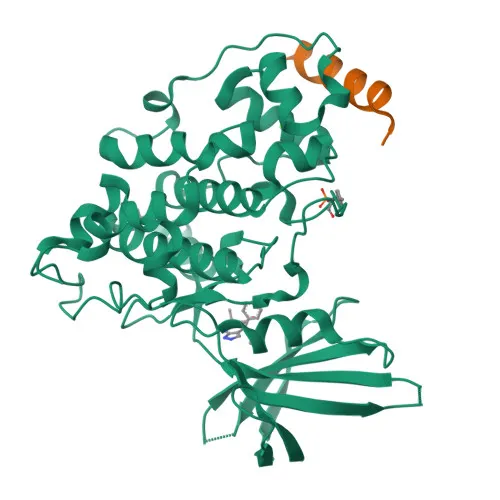
Phosphorylated Antibodies
Anti-Phospho-GSK3α (S21) Rabbit Polyclonal Antibody - P49840
Item Number : CM0000607
Price varies based on specs and customizations
- Application
- WB, IP, ELISA
- Cross Reactivity
- Human
- Protein Weight
- 51kDa

Shipping:
Contact us to get shipping details Enjoy On-time Dispatch Guarantee.
Why Choose Us
Easy ordering process, quality products, and dedicated support for your business success.
Core Product Specifications and Parameters
| Parameter | Value |
|---|---|
| Product Name | Phospho-GSK3α-S21 Rabbit pAb |
| Remarks/Alias | GSK3 alpha; GSK3A; Phospho-GSK3α-S21 |
| Species | Human |
| GeneID (Human) | 2931 |
| GeneID | 2931 |
| Immunogen | Synthetic peptide|A synthetic phosphorylated peptide around S21 of human GSK3α (NP_063937.2). |
| Source | Rabbit |
| Category | Phosphorylated Antibodies |
| Application | WB, IP, ELISA |
| Cross Reactivity | Human |
| SWISS | P49840 |
| Protein Weight | 51kDa |
| Shipping | Ice bag |
Biological Background: GSK3α Function and Localization
- GSK3α (Glycogen synthase kinase-3 alpha) is a constitutively active serine/threonine-protein kinase encoded by the GSK3A gene, acting as a negative regulator in multiple signaling pathways.
- In insulin signaling, GSK3α phosphorylates and inhibits glycogen synthase (GYS1) in the liver, reducing glycogen synthesis; its dysregulation is linked to insulin resistance through modulation of transcription factors. Related references: PMID:11749387 PMID:17478001 PMID:19366350 PMID:10868943
- Central to the Wnt signaling pathway, GSK3α phosphorylates β-catenin (CTNNB1), promoting its degradation and suppressing target gene transcription. Related references: PMID:17229088
- Facilitates amyloid precursor protein (APP) processing and contributes to the generation of amyloid plaques associated with Alzheimer’s disease. Related references: PMID:12761548
- Under starvation conditions, phosphorylates KAT5/TIP60, activating its acetyltransferase activity and promoting acetylation of autophagy regulators ULK1 and RUBCNL. Related references: PMID:30704899
- Phosphorylates mTORC2 component RICTOR at Thr-1695, leading to FBXW7-mediated ubiquitination and degradation of RICTOR. Related references: PMID:25897075
- Negatively regulates extrinsic apoptotic signaling by promoting anti-apoptotic complex formation at death receptors, especially effective with weak apoptotic stimuli (By similarity).
- Essential for neuronal polarity and axon outgrowth, and regulates glycogen metabolism specifically in the liver (By similarity).
- Post-translational modifications, including acetylation and phosphorylation at Ser21, modulate GSK3α activity and stability.
Experimental Guidance and Technical Tips
- The immunogen is a synthetic phosphorylated peptide around Ser21; the antibody is expected to specifically recognize GSK3α phosphorylated at this site. Validate specificity using phosphatase treatment or phospho-peptide competition.
- For Western blot, the predicted band size is ~51 kDa. Optimize blocking and antibody dilution to minimize non-specific binding.
- For immunoprecipitation, the antibody may be suitable for capturing phospho-GSK3α from human cell lysates; confirm efficiency with appropriate controls.
- In ELISA applications, consider using a standard curve with phospho-peptide to quantify phospho-GSK3α levels in biological samples.
CamelBio: Your One-Stop Sourcing Bridge
CamelBio is your trusted one-stop partner for IVD raw material sourcing, offering validated antibody pairs, optimized monoclonal and polyclonal antibodies, and bulk ancillary reagents. This anti-phospho-GSK3α (S21) antibody supports research in metabolic disorders, cancer, and neurodegenerative diseases. Our team assists with rare target procurement and technical consulting to accelerate your diagnostic development from concept to clinic.
REQUEST A QUOTE
Our professional team will reply to you within one business day. Please feel free to contact us!