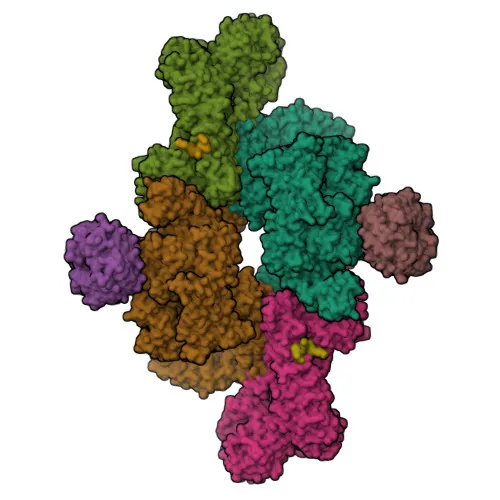
Phosphorylated Antibodies
Anti-Phospho-eIF4EBP1-T36 Polyclonal Antibody for WB, ELISA - Q13541
Item Number : CM0001342
Price varies based on specs and customizations
- Application
- WB, ELISA
- Cross Reactivity
- Human, Mouse, Rat
- Protein Weight
- 13kDa

Shipping:
Contact us to get shipping details Enjoy On-time Dispatch Guarantee.
Why Choose Us
Easy ordering process, quality products, and dedicated support for your business success.
Core Product Specifications and Parameters
| Parameter | Value |
|---|---|
| Product Name | Phospho-eIF4EBP1-T36 Rabbit pAb |
| Remarks/Alias | BP-1; 4EBP1; 4E-BP1; PHAS-I; Phospho-eIF4EBP1-T36 |
| Species | Human |
| GeneID (Human) | 1978 |
| Immunogen | Synthetic peptide: A synthetic phosphorylated peptide around T36 of human eIF4EBP1 (NP_004086.1) |
| Source | Rabbit |
| Category | Phosphorylated Antibodies |
| Application | WB, ELISA |
| Cross Reactivity | Human, Mouse, Rat |
| SWISS | Q13541 |
| Protein Weight | 13kDa |
| Shipping | Ice bag |
Biological Background: eIF4EBP1 Function and Localization
- Eukaryotic translation initiation factor 4E-binding protein 1 (eIF4EBP1), also known as PHAS-I, is a key repressor of cap-dependent translation initiation.
- In its hypophosphorylated state, eIF4EBP1 binds tightly to eIF4E, preventing the formation of the eIF4F complex and inhibiting translation.
- Phosphorylation at multiple sites, including Thr36, leads to hyperphosphorylated eIF4EBP1 that dissociates from eIF4E, thereby allowing translation to proceed.
- eIF4EBP1 integrates signals from various growth factors and hormones via the MAP kinase and mTORC1 pathways, regulating protein synthesis in response to extracellular stimuli.
- Subcellularly, eIF4EBP1 is found in both the cytoplasm and nucleus, shuttling between compartments to regulate eIF4E availability.
- Post-translational modifications include phosphorylation, acetylation, and ubiquitination, which modulate its activity and stability.
- As a critical node in the PI3K/AKT/mTOR signaling axis, eIF4EBP1 is implicated in cell growth, proliferation, and metabolism, making it a biomarker for cancer and metabolic disorders.
Experimental Guidance and Technical Tips
- Since the immunogen is a phosphopeptide specific to Thr36 of eIF4EBP1, verify phosphorylation-dependent binding by treating samples with phosphatase or using non-phosphorylated peptide competition.
- For Western blotting, a band at approximately 13-15 kDa may be detected; note that phosphorylation often induces multiple bands due to different phosphorylation states.
- Cross-reactivity with mouse and rat eIF4EBP1 is indicated; however, confirm sequence homology around Thr36 and validate in relevant cell lines or tissues.
- Consider including appropriate positive controls, such as lysates from insulin- or serum-stimulated cells, to observe phosphorylation-dependent signals.
- For ELISA, immobilization of phospho-peptide and detection with anti-rabbit secondary antibody may be optimized; ensure blocking steps reduce non-specific binding.
- Avoid freeze-thaw cycles and store antibody appropriately, as noted by ice bag shipping condition.
CamelBio: Your One-Stop Sourcing Bridge
CamelBio provides diagnostic manufacturers and research institutions with comprehensive access to IVD raw materials, from concept to clinic. This Phospho-eIF4EBP1-T36 antibody supports investigations into translation regulation and mTOR signaling pathways. Beyond this product, CamelBio offers validated antibody pairs, bulk ancillary reagents, and customized sourcing solutions for rare or challenging targets.
REQUEST A QUOTE
Our professional team will reply to you within one business day. Please feel free to contact us!