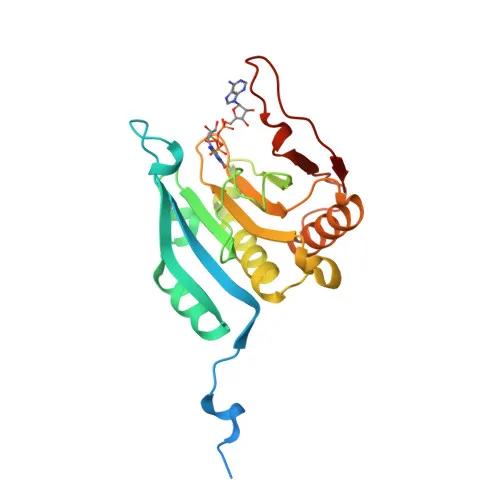
Phosphorylated Antibodies
Anti-Phospho-eIF4E-S209 Rabbit Monoclonal Antibody for WB, ELISA - P06730
Item Number : CM0001016
Price varies based on specs and customizations
- Application
- WB, ELISA
- Cross Reactivity
- Human, Rat
- Protein Weight
- 25 kDa

Shipping:
Contact us to get shipping details Enjoy On-time Dispatch Guarantee.
Why Choose Us
Easy ordering process, quality products, and dedicated support for your business success.
Core Product Specifications and Parameters
| Parameter | Value |
|---|---|
| Product Name | Phospho-eIF4E-S209 Rabbit mAb |
| Remarks/Alias | CBP; EIF4F; AUTS19; EIF4E1; eIF-4E; EIF4EL1; Phospho-eIF4E-S209 |
| Species | Human |
| GeneID (Human) | 1977 |
| GeneID | 1977 |
| Immunogen | Synthetic Peptide: A phospho specific peptide corresponding to residues surrounding S209 of human Phospho-eIF4E-S209 (NP_001959.1) |
| Source | Rabbit |
| Category | Phosphorylated Antibodies |
| Application | WB, ELISA |
| Cross Reactivity | Human, Rat |
| SWISS | P06730 |
| Protein Weight | 25 kDa |
| Shipping | Ice bag |
Biological Background: eIF4E Function and Localization
- Eukaryotic translation initiation factor 4E (eIF4E) is a 25 kDa mRNA cap-binding protein and the rate-limiting subunit of the eIF4F complex, which recognizes the 7-methylguanosine (m7G) cap and recruits ribosomes for cap-dependent translation initiation (PubMed:16271312, PubMed:22578813). Related references: PMID:16271312 PMID:22578813
- In the nucleus, eIF4E promotes the export of a subset of mRNAs, including CCND1, NOS2/iNOS, and MDM2, via an XPO1-dependent pathway, thereby influencing cell cycle progression and apoptosis (PubMed:23471078, PubMed:22684010). Related references: PMID:23471078 PMID:22684010
- eIF4E also regulates mRNA splicing, 3'-end processing, and steady-state capping by controlling the nuclear export and translation of splicing and capping machinery mRNAs (PubMed:11606200). Related references: PMID:11606200
- Together with EIF4G1, eIF4E antagonizes scanning and is required for TISU element-mediated translation, a cap-dependent but scanning-independent initiation mechanism (PubMed:29987188). Related references: PMID:29987188
- In the cytoplasm, eIF4E is a component of P-bodies and stress granules, where it participates in translational repression and mRNA storage, thereby regulating mRNA stability (PubMed:24335285). Related references: PMID:24335285
- eIF4E is subject to phosphorylation at multiple sites, including S209, which modulates its cap-binding affinity and translational activity; acetylation has also been reported.
- The protein is associated with autism spectrum disorder (AUTS19) and plays roles in host-virus interactions, underscoring its broad biological significance.
Experimental Guidance and Technical Tips
- This antibody was raised against a synthetic phospho-peptide corresponding to residues surrounding S209; it is recommended for detecting eIF4E phosphorylated at S209, not total eIF4E.
- For Western blotting, consider blocking with BSA rather than milk to reduce background from phospho-epitope interference. A positive control such as serum-stimulated cell lysates may be used.
- Treating cell lysates with lambda phosphatase can serve as a negative control to confirm phosphorylation-dependent signal.
- The antibody has been validated for ELISA; for quantitative assays, pairing with a total eIF4E antibody may provide a normalization reference.
CamelBio: Your One-Stop Sourcing Bridge
CamelBio provides diagnostic manufacturers and laboratories with streamlined access to a broad portfolio of IVD raw materials, including validated antibody pairs, monoclonal and polyclonal antibodies, and bulk ancillary reagents. For translation initiation and cancer research, our sourcing network covers phospho-specific eIF4E antibodies and rare-target reagents to support your assay development needs.
Product Datasheet
Anti-Phospho-eIF4E-S209 Rabbit Monoclonal Antibody for WB, ELISA - P06730
REQUEST A QUOTE
Our professional team will reply to you within one business day. Please feel free to contact us!