Phosphorylated Antibodies
Anti-Phospho-DRP1-S616 Polyclonal Antibody for WB and ELISA - O00429
Item Number : CM0000719
Price varies based on specs and customizations
- Application
- WB, ELISA
- Cross Reactivity
- Human
- Protein Weight
- 82 kDa

Shipping:
Contact us to get shipping details Enjoy On-time Dispatch Guarantee.
Why Choose Us
Easy ordering process, quality products, and dedicated support for your business success.
Easy Process
Quality Assured
Dedicated Support
Core Product Specifications and Parameters
| Parameter | Value |
|---|---|
| Product Name | Phospho-DRP1-S616 Rabbit pAb |
| Remarks/Alias | DLP1; DRP1; DVLP; EMPF; OPA5; EMPF1; DYMPLE; HDYNIV; Phospho-DRP1-S616 |
| Species | Human |
| GeneID (Human) | 10059 |
| GeneID | 10059 |
| Immunogen | Synthetic Peptide - A synthetic phosphorylated peptide around S616 of human DRP1 (NP_036192.2) |
| Source | Rabbit |
| Category | Phosphorylated Antibodies |
| Application | WB, ELISA |
| Cross Reactivity | Human |
| SWISS | O00429 |
| Protein Weight | 82 kDa |
| Shipping | Ice bag |
Biological Background: Dynamin-1-like Protein (DNM1L) Function and Localization
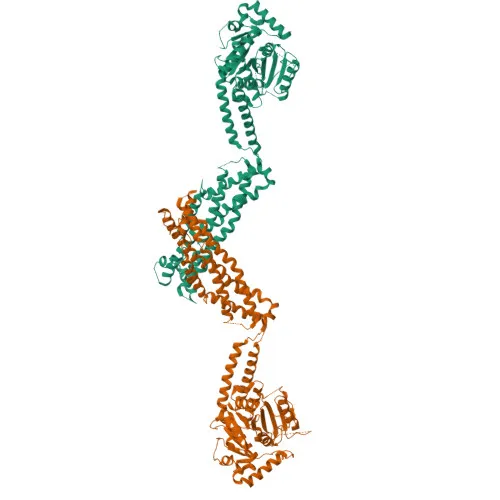
- DNM1L (also known as DRP1, DLP1, DVLP, Dymple, HdynIV, dynamin-related protein 1) is a member of the dynamin family of large GTPases, encoded by the DNM1L gene on human chromosome 12. It is ubiquitously expressed, with highest levels in skeletal muscle, heart, kidney, and brain. Multiple isoforms exist: isoform 1 is brain-specific, isoform 2 predominates in testis, isoform 3 in skeletal muscle, isoform 4 is weakly expressed in brain/heart/kidney, isoform 5 in liver/heart/kidney, and isoform 6 in neurons.
- The protein mediates mitochondrial and peroxisomal division by oligomerizing into helical structures that constrict and sever membranes in a GTP hydrolysis-dependent manner (PubMed:11514614, PubMed:12499366, PubMed:17301055, PubMed:23530241, PubMed:23584531, PubMed:33850055). Related references: PMID:11514614, PMID:12499366, PMID:17301055, PMID:23530241, PMID:23584531, PMID:33850055
- DNM1L recruitment to mitochondrial scission sites is promoted by membrane receptors such as MFF, MIEF1, and MIEF2 (PubMed:23283981, PubMed:23921378, PubMed:29899447). GTP hydrolysis induces dissociation from receptors and allows filament curling into closed rings that probably sever the double membrane (PubMed:29899447). Related references: PMID:23283981, PMID:23921378, PMID:29899447
- It plays an essential role in mitochondrial fission during mitosis (PubMed:19411255, PubMed:26992161, PubMed:27301544) and acts downstream of PINK1 to promote fission in a PRKN-dependent manner (PubMed:32484300). Related references: PMID:19411255, PMID:26992161, PMID:27301544, PMID:32484300
- DNM1L is required for normal brain development, including the cerebellum, and ensures survival of postmitotic neurons by suppressing oxidative damage (PubMed:17460227, PubMed:26992161, PubMed:27145208). It facilitates developmentally regulated apoptosis during neural tube formation. Related references: PMID:17460227, PMID:26992161, PMID:27145208
- The protein contributes to apoptosis by promoting cytochrome c release and caspase activation, and is required for programmed necrosis (PubMed:22265414). It also regulates synaptic vesicle membrane dynamics through association with BCL2L1 (PubMed:17015472, PubMed:23792689). Related references: PMID:22265414, PMID:17015472, PMID:23792689
- Rhythmic phosphorylation at Ser-637 provides circadian control of mitochondrial ATP production (PubMed:29478834). Related references: PMID:29478834
- Subcellular localization includes cytoplasm, mitochondrial outer membrane, peroxisomes, Golgi apparatus, clathrin-coated pits, and synaptic vesicles. It cycles between cytosolic and membrane-bound pools.
- Post-translational modifications include phosphorylation (e.g., Ser-616, Ser-637), acetylation, S-nitrosylation, and ubiquitin conjugation, which regulate its activity, stability, and interactions.
Experimental Guidance and Technical Tips
- This antibody was raised against a synthetic phospho-peptide corresponding to Ser-616 phosphorylation of human DRP1. For WB and ELISA applications, consider using samples where DRP1 S616 phosphorylation is expected, such as cells undergoing active mitochondrial fission or apoptosis.
- As a phospho-specific antibody, always include phosphatase inhibitors in lysis buffers and validate specificity by phosphatase treatment or non-phosphorylated peptide blocking.
- Optimize antibody dilution and incubation conditions in your relevant sample system (e.g., HeLa, HEK293, or tissue lysates); a typical starting range for WB may be 1:500–1:2000, but empirical testing is essential.
- For ELISA, confirm plate coating and detection protocols with your antigen; the immunogen peptide can serve as a positive control to assess assay performance.
CamelBio: Your One-Stop Sourcing Bridge
- CamelBio provides diagnostic manufacturers and research institutes with comprehensive access to IVD raw materials, including validated phospho-specific antibodies like this anti-DRP1 S616 pAb. Our portfolio covers a wide range of phosphorylated targets essential for mitochondrial dynamics and cell signaling research.
- Beyond individual antibodies, we supply matched antibody pairs, bulk ancillary reagents, and technical consultation to accelerate your assay development from concept to clinic. For rare or custom targets, our experienced sourcing team can help obtain difficult-to-find raw materials promptly, ensuring your project stays on track.
REQUEST A QUOTE
Our professional team will reply to you within one business day. Please feel free to contact us!