Polyclonal Antibodies
Anti-PHKA1 Polyclonal Antibody for WB, ELISA - P46020
Item Number : CM0021552
Price varies based on specs and customizations
- Application
- WB, ELISA
- Cross Reactivity
- Human, Mouse
- Protein Weight
- 137kDa

Shipping:
Contact us to get shipping details Enjoy On-time Dispatch Guarantee.
Why Choose Us
Easy ordering process, quality products, and dedicated support for your business success.
Core Product Specifications and Parameters
| Parameter | Value |
|---|---|
| Product Name | PHKA1 Rabbit pAb |
| Remarks/Alias | PHKA; PHKA1 |
| Species | Human |
| GeneID | 5255 |
| Immunogen | Recombinant fusion protein containing a sequence corresponding to amino acids 600-820 of human PHKA1 (NP_001116142.1) |
| Source | Rabbit |
| Category | Polyclonal Antibodies |
| Application | WB, ELISA |
| Cross Reactivity | Human, Mouse |
| SWISS | P46020 |
| Protein Weight | 137kDa |
| Shipping | Ice bag |
Biological Background: PHKA1 Function and Localization
- PHKA1 encodes the alpha regulatory subunit of phosphorylase b kinase (PhK), a complex that activates glycogen phosphorylase to initiate glycogen breakdown.
- Alternative splicing generates at least two isoforms: isoform 1 is predominant in skeletal muscle (e.g., vastus lateralis), while isoform 2 predominates slightly in heart and clearly in other tissues.
- The alpha subunit is believed to bind calmodulin, integrating calcium signaling with glycogenolysis, and PhK phosphorylates serine residues on substrates such as troponin I.
- Subcellular localization studies place this regulatory subunit at the cell membrane, suggesting a role in membrane-associated enzymatic complexes.
- Mutations in PHKA1 are a cause of glycogen storage disease type IX (GSD IX), a metabolic disorder characterized by impaired glycogen metabolism, primarily affecting skeletal muscle.
- The protein undergoes post‑translational modifications including prenylation (hence its association with membranes) and phosphorylation, which may regulate its activity.
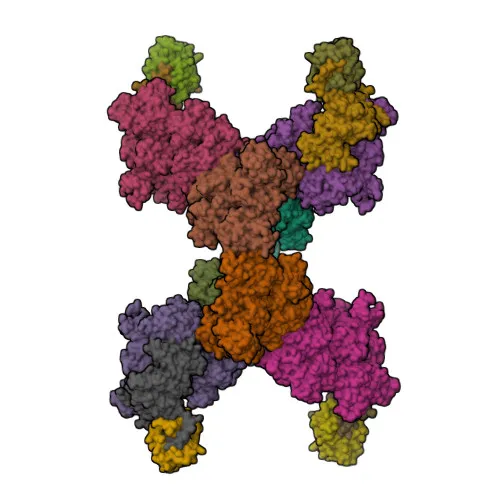
- A three‑dimensional structure of the protein has been solved, offering atomic‑level insight into its domain organization and potential regulatory interfaces.
Experimental Guidance and Technical Tips
- The immunogen (amino acids 600–820) spans a C‑terminal region of human PHKA1; verify antibody specificity using appropriate positive and negative controls (e.g., PHKA1‑knockout lysates) for your application.
- For Western blotting, typical working dilutions for rabbit polyclonal antibodies range from 1:500 to 1:5000; the optimal concentration must be determined empirically based on the sample type and detection system.
- In ELISA assays, this antibody can serve as a capture or detection reagent; assay conditions (coating concentration, blocking agent, incubation times) require end‑user optimization.
- The antibody is validated with human and mouse samples. For other species, assess sequence homology of the immunogen region and perform pilot western blots before large‑scale experiments.
- Shipment on ice bags may expose the antibody to mild temperature fluctuations; upon receipt, aliquot and store at −20 °C or −80 °C, avoiding repeated freeze–thaw cycles to maintain long‑term stability.
CamelBio: Your One-Stop Sourcing Bridge
CamelBio serves diagnostic manufacturers, clinical laboratories, and research institutes as a comprehensive provider of IVD raw materials, technical services, and consulting support. This anti-PHKA1 polyclonal antibody enables detailed studies of glycogen metabolism, muscle physiology, and glycogen storage diseases. Our integrated supply chain delivers validated antibody pairs, optimized monoclonal and polyclonal antibodies, bulk ancillary reagents, and hard‑to‑find targets—helping you move seamlessly from early‑stage development to clinical application.
REQUEST A QUOTE
Our professional team will reply to you within one business day. Please feel free to contact us!