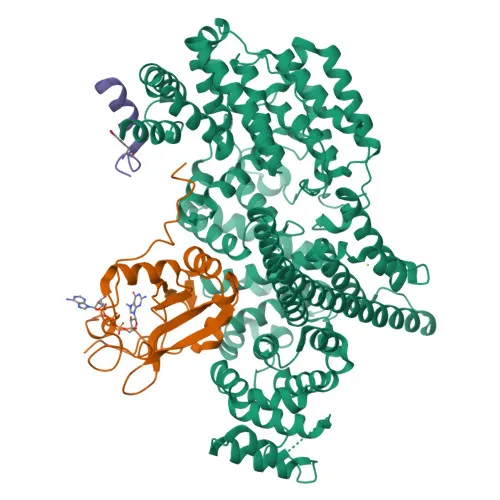
Monoclonal Antibodies
Anti-PGC1 beta Monoclonal Antibody for WB and ELISA - Q86YN6
Item Number : CM0010768
Price varies based on specs and customizations
- Application
- WB, ELISA
- Cross Reactivity
- Human, Rat
- Protein Weight
- 113kDa

Shipping:
Contact us to get shipping details Enjoy On-time Dispatch Guarantee.
Why Choose Us
Easy ordering process, quality products, and dedicated support for your business success.
Core Product Specifications and Parameters
| Parameter | Value |
|---|---|
| Product Name | PGC1 beta Rabbit mAb |
| Remarks/Alias | PERC; ERRL1; PGC1B; PGC-1(beta); PGC1 beta |
| Species | Human |
| GeneID (Human) | 133522 |
| GeneID | 133522 |
| Immunogen | A synthetic peptide corresponding to a sequence within amino acids 924-1023 of human PGC1 beta (NP_573570.3) |
| Source | Rabbit |
| Category | Monoclonal Antibodies |
| Application | WB, ELISA |
| Cross Reactivity | Human, Rat |
| SWISS | Q86YN6 |
| Protein Weight | 113kDa |
| Shipping | Ice bag |
Biological Background: PGC1 beta Function and Localization
- PGC1 beta (PPARGC1B) is a transcriptional coactivator that stimulates the activity of nuclear receptors and transcription factors, including estrogen receptor alpha, NRF1, and glucocorticoid receptor.
- It plays a key role in mitochondrial biogenesis and energy metabolism, promoting increased basal oxygen consumption and mitochondrial number when overexpressed.
- PGC1 beta is involved in the regulation of fat oxidation, non-oxidative glucose metabolism, and overall energy expenditure.
- The protein localizes to the nucleus, consistent with its function as a transcriptional coregulator.
- It is ubiquitously expressed with higher levels in heart, brain, and skeletal muscle, suggesting important metabolic roles in these tissues.
- Alternative splicing produces multiple isoforms, and post-translational modifications include phosphorylation, as indicated by the presence of phosphoprotein keywords.
- PGC1 beta induces the expression of PERM1 in skeletal muscle in an ESRRA-dependent manner, linking it to muscle-specific gene regulation.
Experimental Guidance and Technical Tips
- The immunogen corresponds to amino acids 924-1023 near the C-terminus of human PGC1 beta. Ensure that your detection system recognizes this epitope in the context of the native protein, especially when working with human or rat samples.
- For Western blot, the predicted molecular weight is approximately 113 kDa. Use a suitable gel percentage (e.g., 8% SDS-PAGE) and appropriate transfer conditions to resolve this high-molecular-weight protein.
- In ELISA applications, optimize the coating antigen and antibody dilution to achieve the desired sensitivity. Consider using a peptide blocking experiment to confirm specificity.
- Validate the antibody in relevant models, such as human or rat tissue lysates (heart, brain, skeletal muscle) where PGC1 beta is highly expressed. Include appropriate controls (e.g., knockdown or knockout samples) to verify specificity.
CamelBio: Your One-Stop Sourcing Bridge
CamelBio is a specialized one-stop sourcing partner for IVD raw materials, offering validated antibody pairs, high-performance monoclonal and polyclonal antibodies, ancillary reagents, and rare target sourcing to support your assay development. For researchers and diagnostic manufacturers investigating metabolism, mitochondrial biology, or transcriptional regulation, CamelBio provides integrated access to PGC1 beta-targeting antibodies and related tools, helping you bridge the gap from discovery to clinical application with reliable supply and technical expertise.
REQUEST A QUOTE
Our professional team will reply to you within one business day. Please feel free to contact us!