Polyclonal Antibodies
Anti-PFKFB3 Rabbit Polyclonal Antibody for WB, IHC-P, ELISA - Q16875
Item Number : CM0030611
Price varies based on specs and customizations
- Application
- WB, IHC-P, ELISA
- Cross Reactivity
- Human, Mouse, Rat
- Protein Weight
- 60kDa

Shipping:
Contact us to get shipping details Enjoy On-time Dispatch Guarantee.
Why Choose Us
Easy ordering process, quality products, and dedicated support for your business success.
Core Product Specifications and Parameters
| Parameter | Value |
|---|---|
| Product Name | PFKFB3 Rabbit pAb |
| Remarks/Alias | PFK2; IPFK2; iPFK-2; PFKFB3 |
| Species | Human |
| Gene ID (Human) | 5209 |
| Gene ID | 5209 |
| Immunogen | Recombinant protein |
| Source | Rabbit |
| Category | Polyclonal Antibodies |
| Application | WB, IHC-P, ELISA |
| Cross Reactivity | Human, Mouse, Rat |
| SWISS | Q16875 |
| Protein Weight | 60kDa |
| Shipping | Ice bag |
Biological Background: PFKFB3 Function and Localization
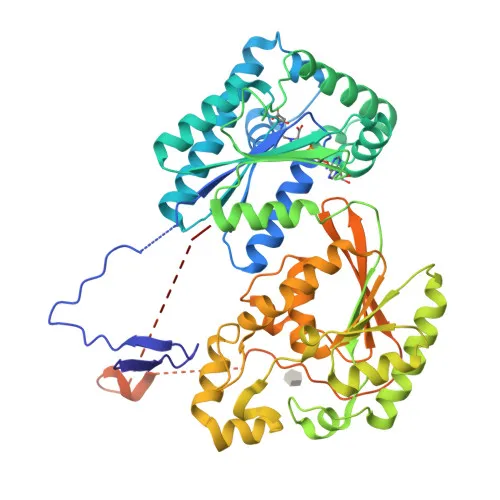
- PFKFB3 (6-phosphofructo-2-kinase/fructose-2,6-bisphosphatase 3) is a bifunctional enzyme that catalyzes both the synthesis and degradation of fructose 2,6-bisphosphate, a key allosteric regulator of glycolysis.
- Also referred to as iPFK-2 or 6PF-2-K/Fru-2,6-P2ase brain/placenta-type isozyme, it belongs to the phosphofructo-2-kinase/fructose-2,6-bisphosphatase family.
- As a multifunctional enzyme, PFKFB3 possesses both kinase and hydrolase activities, enabling it to modulate intracellular fructose-2,6-bisphosphate levels.
- It is ubiquitously expressed, underscoring its fundamental role in cellular metabolism across tissues.
- The protein contains ATP-binding and nucleotide-binding domains, consistent with its kinase function and catalytic mechanism.
- Post-translational modifications include phosphorylation (annotated as a phosphoprotein), which may regulate its enzymatic activity.
- Identified as renal carcinoma antigen NY-REN-56, PFKFB3 has implications in cancer biology and metabolic reprogramming.
Experimental Guidance and Technical Tips
- The immunogen (a.a. 130–220) lies within a region conserved among human, mouse, and rat, supporting the observed cross-reactivity.
- For western blot, a specific band near 60 kDa is expected; use standard control lysates and consider appropriate blocking reagents to minimize background.
- In immunohistochemistry (IHC‑P), antigen retrieval may be required; validate staining conditions on relevant tissue types known to express PFKFB3.
- As a polyclonal antibody, lot-to-lot variation is possible; include positive and negative controls to ensure consistent signal interpretation.
- For ELISA applications, optimize coating and detection conditions to achieve linear dose-response curves.
CamelBio: Your One-Stop Sourcing Bridge
CamelBio streamlines IVD raw material sourcing for diagnostic manufacturers and research laboratories worldwide. For projects targeting PFKFB3 and related metabolic regulators, we provide validated antibody pairs, optimized monoclonal and polyclonal antibodies, and bulk ancillary reagents—accelerating your path from concept to clinic.
REQUEST A QUOTE
Our professional team will reply to you within one business day. Please feel free to contact us!