Polyclonal Antibodies
Anti-PEN2/PSENEN Rabbit Polyclonal Antibody for WB, ELISA - Q9NZ42
Item Number : CM0014154
Price varies based on specs and customizations
- Application
- WB, ELISA
- Cross Reactivity
- Human, Mouse, Rat
- Protein Weight
- 12 kDa

Shipping:
Contact us to get shipping details Enjoy On-time Dispatch Guarantee.
Why Choose Us
Easy ordering process, quality products, and dedicated support for your business success.
Easy Process
Quality Assured
Dedicated Support
Core Product Specifications and Parameters
| Parameter | Value |
|---|---|
| Product Name | PEN2/PSENEN Rabbit pAb |
| Remarks/Alias | PEN2; PEN-2; MDS033; ACNINV2; MSTP064; PEN2/PSENEN |
| Species | Human |
| Gene ID (Human) | 55851 |
| Gene ID | 55851 |
| Immunogen | Synthetic Peptide: A synthetic peptide corresponding to a sequence within amino acids 1-101 of human PEN2/PSENEN (NP_758844.1). |
| Source | Rabbit |
| Category | Polyclonal Antibodies |
| Application | WB, ELISA |
| Cross Reactivity | Human, Mouse, Rat |
| SWISS | Q9NZ42 |
| Protein Weight | 12 kDa |
| Shipping | Ice bag |
Biological Background: PEN2/PSENEN Function and Localization
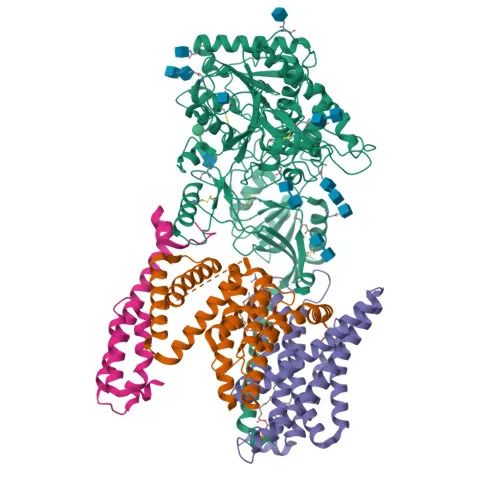
- PEN2/PSENEN (Presenilin enhancer protein 2) is an essential subunit of the gamma-secretase complex, a transmembrane endoprotease responsible for intramembrane cleavage of integral membrane proteins such as Notch receptors and amyloid-beta precursor protein (APP). This activity is critical for Notch and Wnt signaling cascades. Related references: PMID:12522139, PMID:12679784, PMID:12740439
- The protein is encoded by the PSENEN gene (Gene ID: 55851) and is also known by aliases PEN-2, MDS033, ACNINV2, and MSTP064, highlighting its relevance in multiple pathological contexts.
- As a gamma-secretase auxiliary component, PSENEN modulates presenilin endoproteolysis and overall protease activity, thereby regulating the processing of key regulatory proteins and influencing downstream signaling and cytosolic CTNNB1 levels.
- PSENEN has been shown to play an additional role as a regulator of AMP-activated protein kinase (AMPK) in response to calorie restriction; it binds metformin, facilitating V-ATPase complex inhibition on lysosomes and subsequent AMPK activation via the AXIN1-STK11/LKB1 axis.
- The protein localizes to multiple membrane compartments including the endoplasmic reticulum membrane, Golgi apparatus, Golgi stack membrane, and cell membrane, consistent with its function in transmembrane protein processing.
- It is widely expressed across tissues, with detection in leukocytes, lung, placenta, small intestine, liver, kidney, spleen, thymus, skeletal muscle, heart, and brain, reflecting its fundamental cellular roles.
- Keywords for PSENEN include 3D-structure, Cell membrane, Endoplasmic reticulum, Golgi apparatus, Membrane, Notch signaling pathway, and Transmembrane helix, underscoring its structural and functional characteristics.
Experimental Guidance and Technical Tips
- The immunogen for this antibody is a synthetic peptide corresponding to amino acids 1-101 of human PEN2/PSENEN (NP_758844.1). This N-terminal region may be suitable for detecting both full-length and processed forms. Researchers should consider the endogenous expression levels of PEN2 in their target samples, as it is ubiquitously expressed but may vary.
- For Western blot (WB), validate the antibody using positive controls such as cell lines or tissues known to express PEN2 (e.g., brain, liver, or leukocyte-derived cells). Optimize blocking and antibody titration to reduce background, given the predicted molecular weight of ~12 kDa.
- In ELISA applications, the synthetic peptide used as immunogen can serve as a positive control for standard curve generation, but assay conditions should be empirically optimized using recombinant protein or cell lysates to ensure specificity.
- Cross-reactivity has been reported for human, mouse, and rat. When analyzing samples from these species, confirm the antibody’s performance with appropriate species-specific controls and consider potential sequence differences in the target region.
CamelBio: Your One-Stop Sourcing Bridge
- CamelBio is your strategic partner in IVD raw material procurement, providing one-stop access to high-quality reagents including validated antibody pairs, optimized monoclonal and polyclonal antibodies, bulk ancillary reagents, and rare target sourcing. This anti-PEN2/PSENEN polyclonal antibody supports research into Alzheimer’s disease, Notch signaling, and gamma-secretase biology, and CamelBio can assist with technical consulting and customized supply solutions to accelerate your diagnostic development from concept to clinic.
REQUEST A QUOTE
Our professional team will reply to you within one business day. Please feel free to contact us!