Monoclonal Antibodies
Anti-PELP1 Rabbit Monoclonal Antibody for WB and ELISA - Q8IZL8
Item Number : CM0009047
Price varies based on specs and customizations
- Application
- WB, ELISA
- Cross Reactivity
- Human, Mouse, Rat
- Protein Weight
- 120kDa

Shipping:
Contact us to get shipping details Enjoy On-time Dispatch Guarantee.
Why Choose Us
Easy ordering process, quality products, and dedicated support for your business success.
Core Product Specifications and Parameters
| Parameter | Value |
|---|---|
| Product Name | PELP1 Rabbit mAb |
| Remarks/Alias | MNAR; P160; PELP1 |
| Species | Human |
| GeneID (Human) | 27043 |
| GeneID | 27043 |
| Immunogen | Synthetic Peptide: A synthetic peptide corresponding to a sequence within amino acids 1000-1100 of human PELP1 (Q8IZL8). |
| Source | Rabbit |
| Category | Monoclonal Antibodies |
| Application | WB, ELISA |
| Cross Reactivity | Human, Mouse, Rat |
| SWISS | Q8IZL8 |
| Protein Weight | 120kDa |
| Shipping | Ice bag |
Biological Background: PELP1 Function and Localization
- PELP1 (Proline-, glutamic acid- and leucine-rich protein 1), also known as MNAR and HMX3, is a dual-function transcriptional regulator that acts as a coactivator of estrogen receptor (ER)-mediated transcription and a corepressor of other nuclear hormone receptors and transcription factors. Related references: PMID:14963108
- In the nucleus, PELP1 activates ER target genes in a hormone-dependent manner, while in the cytosol it facilitates non-genomic ER signaling through interactions with SRC and PI3K, promoting E2-mediated cell cycle progression via RB1.
- PELP1 is the key stabilizing component of the Five Friends of Methylated CHTOP (5FMC) complex, which is recruited to ZNF148 to mediate desumoylation and subsequent transactivation of target genes.
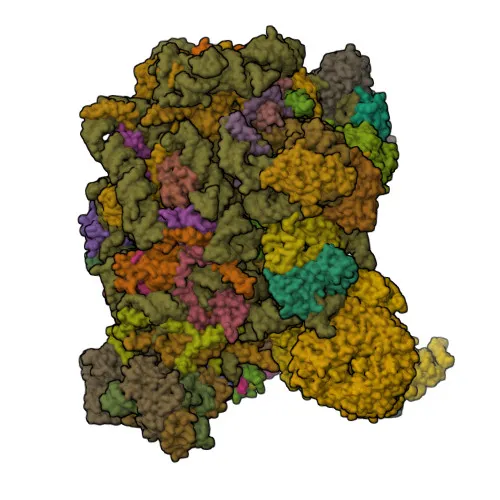
- As part of the PELP1 complex, it participates in nucleolar 28S rRNA maturation and the nucleoplasmic transit of pre-60S ribosomal subunits, regulating association of the remodeling factor MDN1. Related references: PMID:21326211
- PELP1 is implicated in cancer biology through interactions with oncogenes (SRC, PI3K, STAT3, EGFR) and modulation of E2-mediated cytoskeleton changes and cell migration, potentially promoting tumorigenesis and metastasis.
- Subcellular localization includes the nucleus (nucleolus and nucleoplasm) and cytoplasm, consistent with its roles in both genomic and non-genomic signaling.
- Post-translational modifications include acetylation, phosphorylation, and ubiquitination; it is widely expressed across tissues.
Experimental Guidance and Technical Tips
- The immunogen corresponds to residues 1000–1100 near the C-terminus; consider epitope accessibility in different applications and sample preparation methods.
- For western blot, the predicted molecular weight is approximately 120 kDa; use an appropriate gel percentage and ensure thorough transfer conditions.
- Validate antibody specificity in cell lines or tissues known to express PELP1; mouse and rat reactivity can be useful for cross-species studies.
- ELISA protocols may require optimization of coating antigen and antibody concentrations; consider pairing with a detection antibody for sandwich ELISA.
CamelBio: Your One-Stop Sourcing Bridge
CamelBio provides diagnostic manufacturers and research laboratories with one-stop access to IVD raw materials, technical services, and consulting—from concept to clinic. This anti-PELP1 monoclonal antibody supports investigations into transcriptional regulation and cancer biology, and we can assist with sourcing validated antibody pairs, optimized monoclonal/polyclonal antibodies, bulk ancillary reagents, and rare target raw materials to meet your development needs.
REQUEST A QUOTE
Our professional team will reply to you within one business day. Please feel free to contact us!