Polyclonal Antibodies
Anti-PDLIM5 Rabbit Polyclonal Antibody for WB, ELISA - Q96HC4
Item Number : CM0019234
Price varies based on specs and customizations
- Application
- WB, ELISA
- Cross Reactivity
- Human
- Protein Weight
- 64kDa

Shipping:
Contact us to get shipping details Enjoy On-time Dispatch Guarantee.
Why Choose Us
Easy ordering process, quality products, and dedicated support for your business success.
Core Product Specifications and Parameters
| Parameter | Value |
|---|---|
| Product Name | PDLIM5 Rabbit pAb |
| Remarks/Alias | L9; ENH; LIM; ENH1; PDLIM5 |
| Species | Human |
| Gene ID | 10611 |
| Immunogen | Synthetic peptide|A synthetic peptide corresponding to a sequence within amino acids 300-400 of human PDLIM5 (NP_006448.5). |
| Source | Rabbit |
| Category | Polyclonal Antibodies |
| Application | WB, ELISA |
| Cross Reactivity | Human |
| SWISS | Q96HC4 |
| Protein Weight | 64kDa |
| Shipping | Ice bag |
Biological Background: PDLIM5 Function and Localization
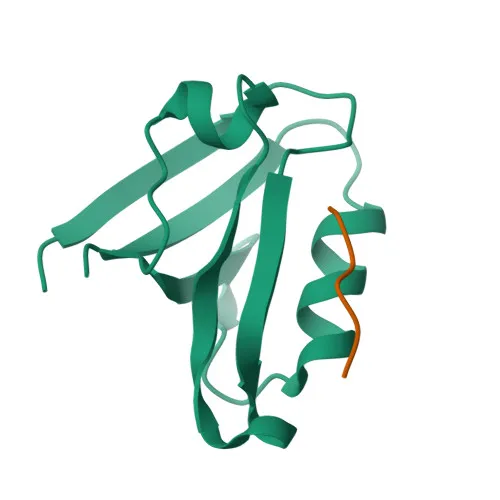
- PDLIM5 (PDZ and LIM domain protein 5), also known as Enigma homolog (ENH), ENH1, L9, and LIM, is a member of the PDZ-LIM protein family characterized by PDZ and LIM domains. It exists as multiple isoforms generated by alternative splicing, with isoform 1 containing LIM domains and isoform 2 lacking them.
- In the heart, isoform 1 scaffolds protein kinase C (PKC) to the Z-disk region, playing a crucial role in heart development and the regulation of cardiomyocyte expansion. Overexpression of PDLIM5 promotes cardiac hypertrophy.
- Isoforms lacking the LIM domains, such as isoform 2, may negatively modulate the scaffolding activity of isoform 1, suggesting a regulatory balance in cardiac function.
- In neurons, PDLIM5 contributes to the regulation of dendritic spine morphogenesis. Isoform 1 expression favors spine thinning and elongation, while the protein overall is required to restrain excitatory synapse growth.
- Subcellularly, PDLIM5 localizes to the postsynaptic density, presynaptic compartments, and cytoplasm (cytosol), consistent with roles in synaptic organization and intracellular signaling.
- Tissue specificity is prominent in heart and skeletal muscle, but expression is also commonly increased in the brain of patients with bipolar disorder, schizophrenia, and major depression.
- The protein contains LIM domains that coordinate zinc ions (metal-binding) and is subject to various post-translational modifications including acetylation, phosphorylation, and ubiquitination (isopeptide bond formation).
- Keywords associated with PDLIM5 include: 3D-structure, Alternative splicing, Cell projection, Cytoplasm, LIM domain, Metal-binding, Phosphoprotein, Synapse, Ubl conjugation, and Zinc, highlighting its structural and functional versatility.
Experimental Guidance and Technical Tips
- The immunogen is a synthetic peptide corresponding to amino acids 300–400 of human PDLIM5 (NP_006448.5). This region is located between the PDZ and LIM domains; consider that the antibody may recognize both isoforms if the epitope is conserved. Validate isoform specificity if required for your study.
- For Western blot, PDLIM5 has a predicted molecular weight of approximately 64 kDa. Use appropriate protein markers and consider starting with a dilution range like 1:500–1:2000, optimizing based on signal and background. Positive controls can include human heart or brain tissue lysates.
- For ELISA, the antibody can be used for target capture or detection. Pair with an appropriate enzyme-conjugated secondary antibody and validate with recombinant protein or biological samples.
- When working with human samples, be mindful of expression patterns: higher expression in heart and skeletal muscle, and increased in brain under certain pathological conditions. Include relevant controls to ensure specificity.
CamelBio: Your One-Stop Sourcing Bridge
CamelBio provides diagnostic manufacturers and research institutes with a streamlined one-stop platform for IVD raw-material sourcing, technical services, and consulting—from concept to clinic. This anti-PDLIM5 polyclonal antibody supports research into cardiac hypertrophy signaling and synaptic plasticity mechanisms. Complement your procurement with CamelBio’s validated antibody pairs, optimized monoclonal/polyclonal antibodies, bulk ancillary reagents, and expert assistance in sourcing rare targets.
REQUEST A QUOTE
Our professional team will reply to you within one business day. Please feel free to contact us!