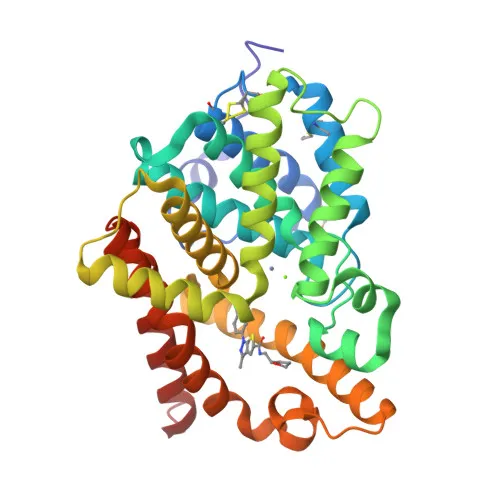
Monoclonal Antibodies
Anti-PDE10A Rabbit Monoclonal Antibody for WB, ELISA - Q9Y233
Item Number : CM0004398
Price varies based on specs and customizations
- Application
- WB, ELISA
- Cross Reactivity
- Mouse, Rat
- Protein Weight
- 88kDa

Shipping:
Contact us to get shipping details Enjoy On-time Dispatch Guarantee.
Why Choose Us
Easy ordering process, quality products, and dedicated support for your business success.
Core Product Specifications and Parameters
| Parameter | Value |
|---|---|
| Product Name | PDE10A Rabbit mAb |
| Remarks/Alias | ADSD2; IOLOD; HSPDE10A; PDE10A19; LINC00473; PDE10A |
| Species | Human |
| Gene ID | 10846 |
| Immunogen | Recombinant fusion protein containing a sequence corresponding to amino acids 439-779 of human PDE10A (NP_006652.1) |
| Source | Rabbit |
| Category | Monoclonal Antibodies |
| Application | WB, ELISA |
| Cross Reactivity | Mouse, Rat |
| SWISS | Q9Y233 |
| Protein Weight | 88kDa |
| Shipping | Ice bag |
Biological Background: PDE10A Function and Localization
-
PDE10A is a dual-specificity phosphodiesterase that hydrolyzes both cAMP and cGMP, exhibiting higher affinity and catalytic efficiency for cAMP. Related references: PMID:10373451 PMID:10393245 PMID:17389385
-
It plays a key role in intracellular signal transduction by modulating cyclic nucleotide concentrations. Related references: PMID:10373451 PMID:10393245 PMID:16330539
-
Highly expressed in the striatum, PDE10A critically regulates cAMP and cGMP levels to impact movement control and cognitive processes. Related references: PMID:27058447
-
Subcellularly, PDE10A localizes predominantly to the cytoplasm and cytosol.
-
Tissue distribution is most abundant in the putamen, caudate nucleus, and testis, with moderate expression in the thyroid, pituitary, thalamus, and cerebellum.
-
The enzyme contains regulatory GAF domains for cyclic nucleotide binding and allosteric control, and its catalytic activity depends on divalent metal ions.
-
Multiple isoforms arise from alternative splicing and alternative initiation, including the PDE10A19 variant, which may display distinct regulatory properties.
-
Post-translational modifications such as phosphorylation are documented, and disease-associated variants link PDE10A to neurological disorders.
Experimental Guidance and Technical Tips
- The immunogen covers the C-terminal region (aa 439–779) encompassing the catalytic domain, which is conserved across human, mouse, and rat, supporting the observed cross-reactivity.
- For Western blotting, a band near 88 kDa is expected, possibly corresponding to a specific isoform; additional bands representing other isoforms or post-translational modifications may also appear.
- When using ELISA, consider pairing with a detection antibody targeting a distinct epitope to avoid competition; validate the assay conditions with appropriate controls.
- Given the high expression in brain tissue, include relevant positive control lysates (e.g., striatum) to confirm antibody performance.
CamelBio: Your One-Stop Sourcing Bridge
CamelBio provides diagnostic manufacturers and research laboratories with comprehensive access to IVD raw materials, technical support, and consulting—from concept to clinic. Our PDE10A rabbit monoclonal antibody supports neuroscience and signal transduction research, with proven reactivity in key model organisms. We offer validated antibody pairs, bulk ancillary reagents, and rare-target sourcing to streamline your assay development and procurement needs.
REQUEST A QUOTE
Our professional team will reply to you within one business day. Please feel free to contact us!