Polyclonal Antibodies
Anti-PCYT2 Polyclonal Antibody for WB, ELISA - Q99447
Item Number : CM0015103
Price varies based on specs and customizations
- Application
- WB, ELISA
- Cross Reactivity
- Human, Mouse, Rat
- Protein Weight
- 44kDa

Shipping:
Contact us to get shipping details Enjoy On-time Dispatch Guarantee.
Why Choose Us
Easy ordering process, quality products, and dedicated support for your business success.
Core Product Specifications and Parameters
| Parameter | Specification |
|---|---|
| Product Name | PCYT2 Rabbit pAb |
| Remarks/Alias | ET, SPG82, PCYT2 |
| Species | Human |
| Gene ID (Human) | 5833 |
| Gene ID | 5833 |
| Immunogen | Recombinant fusion protein containing a sequence corresponding to amino acids 1-389 of human PCYT2 (NP_002852.1) |
| Source | Rabbit |
| Category | Polyclonal Antibodies |
| Application | WB, ELISA |
| Cross Reactivity | Human, Mouse, Rat |
| SWISS | Q99447 |
| Protein Weight | 44kDa |
| Shipping | Ice bag |
Biological Background: PCYT2 Function and Localization
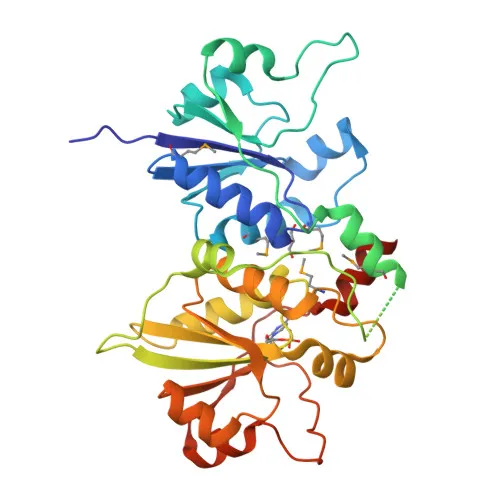
- PCYT2, also known as CTP:phosphoethanolamine cytidylyltransferase or phosphorylethanolamine transferase, catalyzes the conversion of phosphoethanolamine to CDP-ethanolamine, the second step in the CDP-ethanolamine pathway for phosphatidylethanolamine (PE) synthesis.
Related references:
PMID:31637422
PMID:9083101 - As a major inner-leaflet phospholipid, PE is critical for membrane structural integrity and functions, participating in cell division, cell fusion, blood coagulation, and apoptosis.
Related references:
PMID:31637422
PMID:9083101 - The enzyme shows strongest expression in liver, heart, and skeletal muscle, indicating a key role in tissues with high membrane turnover or metabolic activity.
- PCYT2 is classified as a nucleotidyltransferase and is involved in lipid biosynthesis, phospholipid biosynthesis, and lipid metabolism.
- The protein undergoes phosphorylation, suggesting its activity may be regulated by post-translational modification.
- Alternative splicing generates multiple PCYT2 isoforms, potentially contributing to tissue-specific or developmental regulation.
- Mutations in PCYT2 are associated with hereditary spastic paraplegia, a neurodegenerative disorder, linking PE metabolism to neuronal health.
Experimental Guidance and Technical Tips
- The immunogen corresponds to full-length human PCYT2 (amino acids 1–389), so the polyclonal antibody is expected to recognize native and denatured forms of the protein.
- For Western blot, a band of approximately 44 kDa is anticipated; however, alternative splicing variants may produce additional bands. Consider optimizing sample preparation and gel conditions.
- The antibody cross-reacts with mouse and rat PCYT2, enabling its use in rodent models, but epitope conservation should be verified for each species.
- In ELISA applications, this polyclonal antibody can serve as either a capture or detection reagent; however, pairing with a monoclonal antibody may enhance specificity in sandwich formats.
- Proper storage and handling during shipping (ice bag) are important to maintain antibody stability; avoid repeated freeze-thaw cycles.
CamelBio: Your One-Stop Sourcing Bridge
CamelBio provides diagnostic manufacturers, laboratories, and research institutes with streamlined access to IVD raw materials, including validated antibodies like this PCYT2 polyclonal antibody. Our sourcing portfolio covers lipid metabolism targets and rare-pathway reagents, supported by technical and supply chain solutions from concept to clinic. Whether you need antibody pairs, bulk ancillary reagents, or specialized raw materials, CamelBio is your partner for efficient and reliable procurement.
REQUEST A QUOTE
Our professional team will reply to you within one business day. Please feel free to contact us!