Polyclonal Antibodies
Anti-PCNA Rabbit Polyclonal Antibody for WB, IHC-P, ELISA - P12004
Item Number : CM0014020
Price varies based on specs and customizations
- Application
- WB, IHC-P, ELISA
- Cross Reactivity
- Human, Mouse, Rat
- Protein Weight
- 29kDa

Shipping:
Contact us to get shipping details Enjoy On-time Dispatch Guarantee.
Why Choose Us
Easy ordering process, quality products, and dedicated support for your business success.
Core Product Specifications and Parameters
| Parameter | Value |
|---|---|
| Product Name | PCNA Rabbit pAb |
| Remarks/Alias | ATLD2; PCNA |
| Species | Human |
| Gene ID (Human) | 5111 |
| Gene ID | 5111 |
| Immunogen | Synthetic peptide corresponding to amino acids 162-261 of human PCNA (NP_002583.1) |
| Source | Rabbit |
| Category | Polyclonal Antibodies |
| Application | WB, IHC-P, ELISA |
| Cross Reactivity | Human, Mouse, Rat |
| SWISS | P12004 |
| Protein Weight | 29kDa |
| Shipping | Ice bag |
Biological Background: PCNA Function and Localization
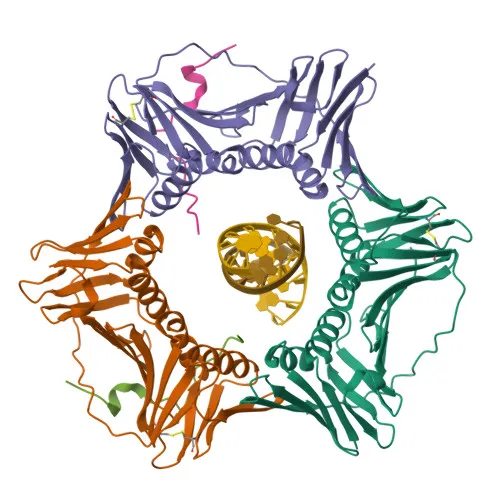
- PCNA is a DNA sliding clamp that confers processivity to DNA polymerases during DNA replication. Related references: PMID:35585232
- It acts as an auxiliary protein for DNA polymerase delta and epsilon, enhancing their processivity during elongation of the leading strand. Related references: PMID:35585232
- PCNA plays a crucial role in DNA damage response (DDR) by coordinating DNA replication with repair pathways, serving as a loading platform for DDR proteins. Related references: PMID:24939902
- Post-translational modifications of PCNA, including monoubiquitination and Lys-63-linked polyubiquitination, dictate the choice of DNA damage tolerance pathways: monoubiquitination recruits translesion synthesis polymerases, while polyubiquitination triggers error-free recombination-mediated repair. Related references: PMID:24695737
- PCNA stimulates the 3'-5' exonuclease and 3'-phosphodiesterase activities of APEX2, but not its AP endonuclease activity, and requires loading onto DNA for this function.
- Located predominantly in the nucleus, PCNA is a key component of the replication fork.
- Mutations in PCNA are associated with neurodegenerative disorders, deafness, and dwarfism.
- The protein undergoes extensive post-translational modifications including acetylation, methylation, phosphorylation, and ubiquitination, which regulate its diverse functions.
Experimental Guidance and Technical Tips
- The immunogen corresponds to a conserved region (aa 162-261) shared among human, mouse, and rat, consistent with the reported cross-reactivity. Validate reactivity in your specific sample matrix if using other species.
- For Western blot, expect a band at ~29 kDa; nuclear enrichment may improve signal intensity. Optimize primary antibody dilution using a titration series (e.g., starting at 1:500–1:2000).
- IHC-P may benefit from antigen retrieval; include positive (proliferative tissues) and negative (isotype control) controls to confirm specificity.
- ELISA can be employed to detect or quantify PCNA in cell lysates; ensure appropriate coating buffers and blocking conditions are optimized for your assay format.
- Consider using fresh or frozen samples and minimizing prolonged storage or repeated freeze-thaw cycles to preserve epitope integrity.
CamelBio: Your One-Stop Sourcing Bridge
CamelBio provides a comprehensive portfolio of IVD raw materials, offering validated antibody pairs, monoclonal and polyclonal antibodies, bulk ancillary reagents, and custom sourcing for rare targets. This anti-PCNA polyclonal antibody supports research in DNA replication, repair, cell proliferation, and cancer diagnostics development. Our integrated technical and supply chain solutions help accelerate your assay development from concept to clinic.
REQUEST A QUOTE
Our professional team will reply to you within one business day. Please feel free to contact us!