Polyclonal Antibodies
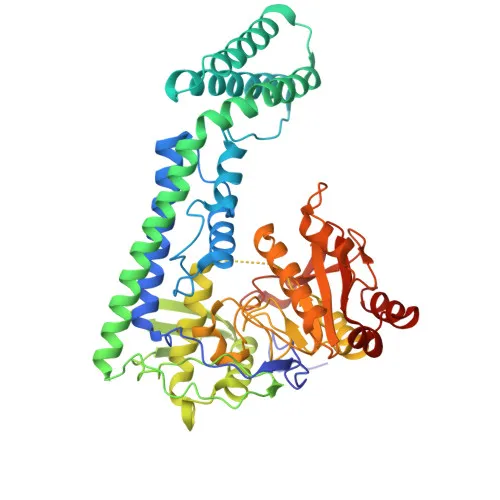
Anti-PCIF1 Rabbit Polyclonal Antibody for WB, IHC-P, IP, ELISA - Q9H4Z3
Item Number : CM0022997
Price varies based on specs and customizations
- Application
- WB, IHC-P, IP, ELISA
- Cross Reactivity
- Human, Mouse, Rat
- Protein Weight
- 81kDa

Shipping:
Contact us to get shipping details Enjoy On-time Dispatch Guarantee.
Why Choose Us
Easy ordering process, quality products, and dedicated support for your business success.
Core Product Specifications and Parameters
| Parameter | Value |
|---|---|
| Product Name | PCIF1 Rabbit pAb |
| Remarks/Alias | CAPAM; hCAPAM; hPCIF1; C20orf67; PPP1R121; PCIF1 |
| Species | Human |
| GeneID (Human) | 63935 |
| GeneID | 63935 |
| Immunogen | Recombinant fusion protein containing a sequence corresponding to amino acids 1-200 of human PCIF1 (NP_071387.1) |
| Source | Rabbit |
| Category | Polyclonal Antibodies |
| Application | WB, IHC-P, IP, ELISA |
| Cross Reactivity | Human, Mouse, Rat |
| SWISS | Q9H4Z3 |
| Protein Weight | 81kDa |
| Shipping | Ice bag |
Biological Background: PCIF1 Function and Localization
- PCIF1 (Phosphorylated CTD-interacting factor 1), also designated CAPAM (Cap-specific adenosine methyltransferase) or hCAPAM, is encoded by the PCIF1 gene (C20orf67) and functions as an mRNA (2'-O-methyladenosine-N(6)-)-methyltransferase. It is also known as protein phosphatase 1 regulatory subunit 121 (PPP1R121).
- Catalyzes the formation of N(6),2'-O-dimethyladenosine cap (m6A(m)) by methylating the adenosine at the second transcribed position of capped mRNAs.
Related references:
PMID:30467178
PMID:30487554
PMID:31279658 - Recruited to the early elongation complex of RNA polymerase II (RNAPII) via interaction with POLR2A, mediating co-transcriptional m6A(m) formation.
Related references:
PMID:30467178 - Subcellular localization is predominantly nuclear, consistent with its role in co-transcriptional mRNA processing.
- Ubiquitously expressed across tissues, reflecting its general function in mRNA cap modification.
- Post-translational modifications include phosphorylation (Phosphoprotein), and it belongs to the methyltransferase/transferase family of proteins.
Experimental Guidance and Technical Tips
- For western blotting (WB), a band of approximately 81 kDa may be detected; validate with appropriate positive and negative controls.
- In immunohistochemistry using paraffin-embedded sections (IHC-P), consider optimizing antigen retrieval conditions and antibody dilution to suit tissue and fixation methods.
- For immunoprecipitation (IP), verify that the lysis buffer and protocol preserve native PCIF1 interactions and conformation.
- As a polyclonal antibody, assess lot-to-lot consistency and consider validation of each new batch in the intended assay system.
- Cross-reactivity has been reported for human, mouse, and rat; when working with other species, confirm reactivity experimentally.
CamelBio: Your One-Stop Sourcing Bridge
CamelBio serves as a comprehensive sourcing partner for IVD raw materials, facilitating access to validated antibodies, bulk ancillary reagents, and rare target reagents from discovery to clinical application. This anti-PCIF1 polyclonal antibody supports research into mRNA cap methylation and gene expression regulation, areas of growing diagnostic interest. Whether you require monoclonal/polyclonal antibodies, optimized antibody pairs, or custom sourcing for emerging targets, CamelBio streamlines your procurement process from concept to clinic.
Product Datasheet
Anti-PCIF1 Rabbit Polyclonal Antibody for WB, IHC-P, IP, ELISA - Q9H4Z3
REQUEST A QUOTE
Our professional team will reply to you within one business day. Please feel free to contact us!