Polyclonal Antibodies
Anti-PCDH15 Rabbit Polyclonal Antibody for WB, IHC-P, ELISA - Q96QU1
Item Number : CM0018499
Price varies based on specs and customizations
- Application
- WB, IHC-P, ELISA
- Cross Reactivity
- Human, Mouse, Rat
- Protein Weight
- 216kDa

Shipping:
Contact us to get shipping details Enjoy On-time Dispatch Guarantee.
Why Choose Us
Easy ordering process, quality products, and dedicated support for your business success.
Core Product Specifications and Parameters
| Parameter | Value |
|---|---|
| Product Name | PCDH15 Rabbit pAb |
| Remarks/Alias | USH1F; CDHR15; DFNB23; PCDH15 |
| Species | Human |
| Gene ID (Human) | 65217 |
| Gene ID | 65217 |
| Immunogen | Recombinant fusion protein containing a sequence corresponding to amino acids 160-400 of human PCDH15 (NP_001136235.1) |
| Source | Rabbit |
| Category | Polyclonal Antibodies |
| Application | WB, IHC-P, ELISA |
| Cross Reactivity | Human, Mouse, Rat |
| SWISS | Q96QU1 |
| Protein Weight | 216kDa |
| Shipping | Ice bag |
Biological Background: Protocadherin-15 Function and Localization
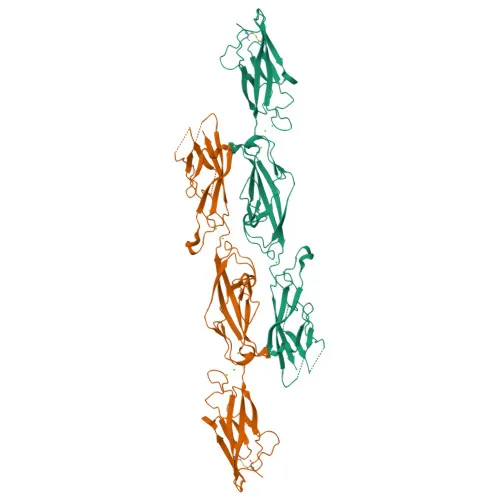
- Protocadherin-15 is a member of the cadherin superfamily, functioning as a calcium-dependent cell adhesion protein essential for normal retinal and cochlear function.
- Mutations in PCDH15 are associated with Usher syndrome type 1F (USH1F), a form of deaf-blindness, and non-syndromic deafness DFNB23, highlighting its critical role in hearing and vision.
- The protein exists in multiple isoforms generated by alternative splicing, including CD1, CD2, and CD3 subtypes, which exhibit distinct tissue expression patterns.
- Subcellular localization includes the cell membrane and secreted compartments; in retina and cochlea, it is found in synaptic layers, nerve fiber layers, and supporting cells.
- Tissue expression is broad, including brain, lung, kidney, spleen, and testis, with notable expression in cytotoxic tumor-derived T- and NK-cell lines but not in normal peripheral blood cells.
- The protein features extracellular cadherin repeats, a transmembrane helix, a signal peptide, and undergoes glycosylation and disulfide bond formation.
- Clinically relevant keywords include deafness, retinitis pigmentosa, non-syndromic deafness, and Usher syndrome, underscoring its importance in sensory disorders.
Experimental Guidance and Technical Tips
- The immunogen corresponds to amino acids 160–400 of human PCDH15, a region likely within the extracellular domain, which may be conserved across species given cross-reactivity with mouse and rat.
- For Western blot (WB), consider using reduced whole-cell lysates or tissue homogenates; a band around 216 kDa should be anticipated, but isoform-specific or cleavage products may appear.
- In immunohistochemistry (IHC-P), optimize antigen retrieval and antibody dilution; positive staining is expected in retina, cochlea, and testis.
- This polyclonal antibody may be suitable for ELISA-based quantification, though pairing with a capture antibody should be validated.
- Cross-reactivity with mouse and rat enables application in rodent models of Usher syndrome or hearing loss; confirm specificity in the relevant tissue context.
CamelBio: Your One-Stop Sourcing Bridge
CamelBio is a dedicated one-stop partner for diagnostic manufacturers and research institutions, providing high-quality IVD raw materials and technical support from concept to clinic. This anti-PCDH15 polyclonal antibody is ready for integration into assays studying hearing loss, vision disorders, and related sensory pathologies. Beyond individual antibodies, CamelBio can supply validated antibody pairs, optimized monoclonal/polyclonal reagents, bulk ancillary materials, and assist in sourcing rare target raw materials to accelerate your diagnostic development.
REQUEST A QUOTE
Our professional team will reply to you within one business day. Please feel free to contact us!