Polyclonal Antibodies
Anti-PCCB Rabbit Polyclonal Antibody for WB and ELISA - P05166
Item Number : CM0025095
Price varies based on specs and customizations
- Application
- WB, ELISA
- Cross Reactivity
- Human, Mouse
- Protein Weight
- 58kDa

Shipping:
Contact us to get shipping details Enjoy On-time Dispatch Guarantee.
Why Choose Us
Easy ordering process, quality products, and dedicated support for your business success.
Core Product Specifications and Parameters
| Parameter | Value |
|---|---|
| Product Name | PCCB Rabbit pAb |
| Remarks/Alias | PCCB |
| Species | Human |
| GeneID (Human) | 5096 |
| GeneID | 5096 |
| Immunogen | Recombinant fusion protein containing a sequence corresponding to amino acids 260-539 of human PCCB (NP_000523.2) |
| Source | Rabbit |
| Category | Polyclonal Antibodies |
| Application | WB, ELISA |
| Cross Reactivity | Human, Mouse |
| SWISS | P05166 |
| Protein Weight | 58kDa |
| Shipping | Ice bag |
Biological Background: PCCB Function and Localization
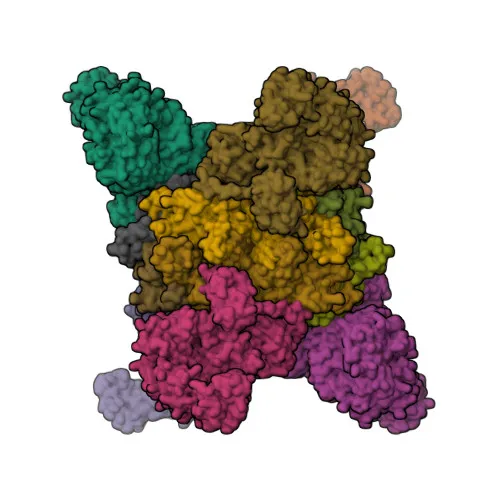
- PCCB encodes the beta subunit of propionyl-CoA carboxylase (PCC), a biotin-dependent mitochondrial enzyme essential for the catabolism of odd-chain fatty acids, cholesterol, and several amino acids (isoleucine, threonine, methionine, valine). Related references: PMID:15890657, PMID:6765947
- Within the PCC holoenzyme, the alpha subunit (PCCA) catalyzes the ATP-dependent carboxylation of the biotin cofactor, while the beta subunit (PCCB) transfers the activated carboxyl group from biotin to propionyl-CoA to generate (S)-methylmalonyl-CoA.
- PCCB also displays minor activity toward butyryl-CoA, converting it to ethylmalonyl-CoA, and can accept alternative substrates such as (2E)-butenoyl-CoA/crotonoyl-CoA. Related references: PMID:6765947
- The protein localizes to the mitochondrial matrix and contains a transit peptide for mitochondrial import.
- Post-translational modifications include acetylation and phosphorylation, which may regulate enzyme activity or stability.
- Mutations in PCCB are associated with propionic acidemia, a severe metabolic disorder characterized by the accumulation of toxic metabolites.
- Alternative splicing yields multiple transcript variants, potentially producing isoforms with distinct functional properties.
Experimental Guidance and Technical Tips
- Because the immunogen spans amino acids 260–539, the antibody likely recognizes a central to C-terminal epitope on PCCB; consider using mitochondrial-enriched fractions or whole-cell lysates from human or mouse tissues for Western blotting.
- For ELISA, test a dilution series of recombinant PCCB protein or tissue lysates to determine optimal antibody concentration.
- Validate band specificity by siRNA knockdown or using PCCB-deficient cell lines if available.
- The predicted molecular weight is 58 kDa, but post-translational modifications or precursor processing may shift the observed band.
CamelBio: Your One-Stop Sourcing Bridge
CamelBio stands as your comprehensive one-stop sourcing partner for IVD raw materials, offering validated antibody pairs, optimized polyclonal antibodies like this anti-PCCB antibody, bulk ancillary reagents, and rare target sourcing to accelerate your diagnostic and research workflows from concept to clinic. This antibody supports studies in mitochondrial metabolism, branched-chain amino acid catabolism, and inborn errors of metabolism such as propionic acidemia. For your complete raw-material needs, trust CamelBio's expert supply chain and technical support.
REQUEST A QUOTE
Our professional team will reply to you within one business day. Please feel free to contact us!