Monoclonal Antibodies
Anti-PARP1 Rabbit Monoclonal Antibody for WB, IF, IHC, ELISA - P09874
Item Number : CM0007772
Price varies based on specs and customizations
- Application
- WB, IF/ICC, IF-P, IHC-P, ELISA
- Cross Reactivity
- Human, Mouse, Rat
- Protein Weight
- 113kDa

Shipping:
Contact us to get shipping details Enjoy On-time Dispatch Guarantee.
Why Choose Us
Easy ordering process, quality products, and dedicated support for your business success.
Core Product Specifications and Parameters
| Parameter | Specification |
|---|---|
| Product Name | PARP1 Rabbit mAb |
| Remarks/Alias | PARP; PARS; PPOL; ADPRT; ARTD1; ADPRT1; PARP-1; ADPRT 1; pADPRT-1; Poly-PARP |
| Species | Human |
| Gene ID (Human) | 142 |
| Immunogen | Synthetic peptide corresponding to a sequence within amino acids 200-300 of human PARP1 (NP_001609.2) |
| Source | Rabbit |
| Category | Monoclonal Antibodies |
| Application | WB, IF/ICC, IF-P, IHC-P, ELISA |
| Cross Reactivity | Human, Mouse, Rat |
| SWISS | P09874 |
| Protein Weight | 113kDa |
| Shipping | Ice bag |
Biological Background: PARP1 Function and Localization
-
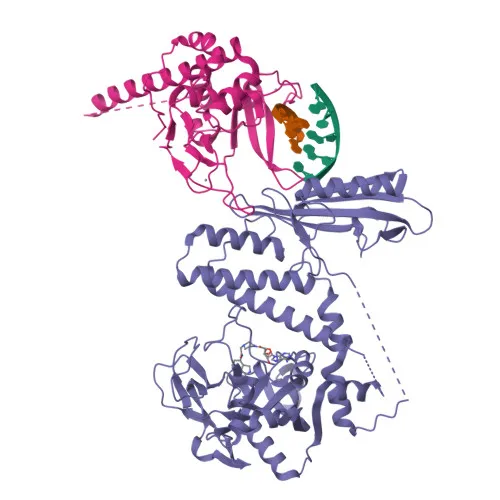
PARP1 functions as a poly-ADP-ribosyltransferase, catalyzing the transfer of ADP-ribose units from NAD+ to target proteins. This activity is central to DNA damage repair and maintenance of genomic integrity. Related references: PMID:17177976, PMID:18055453, PMID:18172500
-
Upon DNA strand break recognition, PARP1 recruits HPF1 to initiate serine ADP-ribosylation of histones (e.g., H2B at Ser6, H3 at Ser10), leading to chromatin decompaction and assembly of repair complexes. Related references: PMID:18172500, PMID:19344625, PMID:17177976
-
PARP1 participates in both base excision repair (BER) and double-strand break repair (DSBR) pathways. It cooperates with TIMELESS to promote homologous recombination by poly-ADP-ribosylating repair factors. Related references: PMID:26344098, PMID:30356214
-
Beyond DNA repair, PARP1 regulates transcription by binding to nucleosomes and altering chromatin architecture in a manner similar to histone H1, thereby repressing RNA polymerase II activity. Related references: PMID:15607977, PMID:22464733
-
PARP1 is a critical mediator of programmed cell death. Its caspase-3/7 cleavage product translocates to the cytoplasm, carrying poly-ADP-ribose chains that trigger AIFM1-dependent apoptosis. Related references: PMID:33168626
-
Subcellularly, PARP1 predominantly resides in the nucleus, nucleolus, and on chromosomes. Upon phosphorylation by PRKDC, it can shuttle to the cytoplasm where it modulates innate immune pathways, such as the cGAS-STING pathway. Related references: PMID:35460603
-
PARP1 catalyzes its own auto-poly-ADP-ribosylation, a major regulatory modification that controls its activity, protein interactions, and recruitment to DNA lesions. Related references: PMID:17396150, PMID:19764761, PMID:24906880
Experimental Guidance and Technical Tips
- The immunogen lies within amino acids 200–300 of human PARP1, a region containing the second zinc finger and part of the BRCT domain. The resulting rabbit monoclonal antibody is expected to recognize an epitope conserved across the listed reactive species (human, mouse, rat).
- For Western blot (WB), a predominant band at approximately 113 kDa should be detected. Consider using nuclear extracts as the sample source and validate specificity by siRNA-mediated knockdown of PARP1.
- In immunofluorescence (IF/ICC) and immunohistochemistry (IHC-P), anticipate nuclear or chromosomal staining patterns. As paraffin-embedded sections may require antigen retrieval, optimise citrate or EDTA-based heat-induced epitope retrieval protocols for your tissue.
- The antibody is reported for ELISA applications. For sandwich ELISA, pairing with a second clone targeting a distinct epitope is recommended; in‑house pairwise screening can identify optimal capture/detection combinations.
- Because PARP1 undergoes extensive post‑translational modifications and cleavage, consider the biological context (e.g., DNA damage induction, apoptosis) when interpreting results. Full‑length and cleaved forms may co‑exist depending on treatment conditions.
CamelBio: Your One-Stop Sourcing Bridge
CamelBio provides diagnostic manufacturers, laboratories, and research institutes with a streamlined, one-stop sourcing platform for IVD raw materials. Focusing on DNA damage, oncology, and neurodegenerative research, this anti-PARP1 monoclonal antibody is part of our extensive catalog—designed to accelerate your assay development with ready-to-use, high-quality reagents. Beyond individual antibodies, we offer validated antibody pairs, bulk ancillary reagents, and customized sourcing for rare targets, ensuring reliable supply from concept to clinic.
REQUEST A QUOTE
Our professional team will reply to you within one business day. Please feel free to contact us!