Polyclonal Antibodies
Anti-PARP1 Polyclonal Antibody for WB, IHC-P, IF/ICC, ELISA - P09874
Item Number : CM0012831
Price varies based on specs and customizations
- Application
- WB, IHC-P, IF/ICC, ELISA
- Cross Reactivity
- Human, Mouse, Rat
- Protein Weight
- 113kDa

Shipping:
Contact us to get shipping details Enjoy On-time Dispatch Guarantee.
Why Choose Us
Easy ordering process, quality products, and dedicated support for your business success.
Core Product Specifications and Parameters
| Parameter | Value |
|---|---|
| Product Name | PARP1 Rabbit pAb |
| Remarks/Alias | PARP; PARS; PPOL; ADPRT; ARTD1; ADPRT1; PARP-1; ADPRT 1; pADPRT-1; Poly-PARP; PARP1 |
| Species | Human |
| GeneID (Human) | 142 |
| GeneID | 142 |
| Immunogen | Recombinant fusion protein containing a sequence corresponding to amino acids 662-1014 of PARP1 (NP_001609.2) |
| Source | Rabbit |
| Category | Polyclonal Antibodies |
| Application | WB, IHC-P, IF/ICC, ELISA |
| Cross Reactivity | Human, Mouse, Rat |
| SWISS | P09874 |
| Protein Weight | 113kDa |
| Shipping | Ice bag |
Biological Background: PARP1 Function and Localization
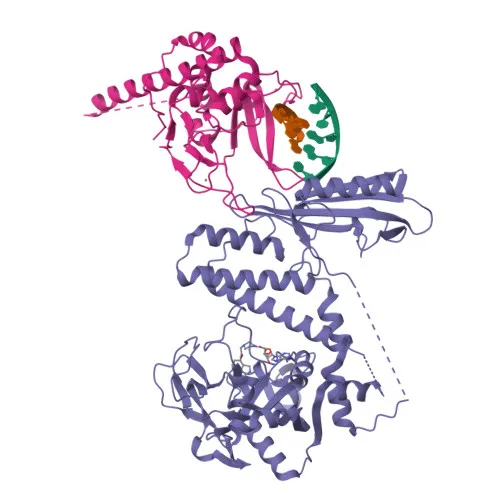
- PARP1 is a nuclear enzyme that catalyzes poly(ADP-ribosyl)ation of target proteins, playing a central role in DNA repair, genome maintenance, and cell death. Related references: PMID:17177976, PMID:18055453, PMID:18172500
- As a DNA damage sensor, PARP1 binds to single- and double-strand breaks and, together with HPF1, catalyzes serine ADP-ribosylation of histones and other chromatin proteins to promote chromatin relaxation and recruitment of repair factors. Related references: PMID:17177976, PMID:18172500, PMID:19344625, PMID:28190768, PMID:29954836
- PARP1 can also mediate glutamate/aspartate ADP-ribosylation via interaction with NMNAT1, and tyrosine ADP-ribosylation with HPF1, demonstrating cofactor-dependent residue specificity. Related references: PMID:25043379, PMID:28190768, PMID:29954836, PMID:30257210
- Beyond repair, PARP1 functions as a transcriptional regulator, acting both as a repressor (by modifying chromatin structure) and as a positive or negative elongation factor depending on the context. Related references: PMID:15607977, PMID:22464733, PMID:27256882, PMID:35393539
- PARP1 participates in programmed cell death pathways: its full-length protein is involved in parthanatos, while caspase-dependent cleavage generates an 89-kDa fragment that promotes AIFM1-mediated apoptosis. Related references: PMID:33168626
- Subcellularly, PARP1 primarily localizes to the nucleus and nucleolus but can translocate to the cytoplasm or bind chromosomes, especially during DNA damage or apoptosis.
- PARP1 contains multiple zinc-finger domains for DNA binding and a catalytic domain, and its activity is regulated by post-translational modifications including auto-ADP-ribosylation, acetylation, and phosphorylation.
Experimental Guidance and Technical Tips
- The immunogen corresponds to the C-terminal catalytic domain (aa 662-1014). Thus, the antibody may recognize both full-length PARP1 (~113 kDa) and the caspase-cleaved C-terminal fragment (~89 kDa) in WB. For apoptosis studies, consider using appropriate inducers and validate cleavage patterns.
- In IHC-P, expect predominantly nuclear staining; however, cytoplasmic or nucleolar signals may appear depending on cell state or tissue processing. Always include positive (e.g., proliferating cells) and negative controls.
- For IF/ICC, permeabilization and fixation protocols should be optimized, as PARP1 is tightly chromatin-bound. Triton X-100 or methanol fixation may be useful.
- ELISA applications may require antibody titration; recombinant or cell lysate antigens can be used.
CamelBio: Your One-Stop Sourcing Bridge
CamelBio provides diagnostic manufacturers, labs, and research institutes with one-stop access to IVD raw materials, technical services, and consulting—covering every stage from concept to clinic. Our PARP1 Rabbit Polyclonal Antibody supports research into DNA repair, genome stability, and oncology. Leveraging our extensive supply network, we offer validated antibody pairs, recombinant proteins, bulk ancillary reagents, and rare-target raw-material sourcing to accelerate your assay development.
REQUEST A QUOTE
Our professional team will reply to you within one business day. Please feel free to contact us!