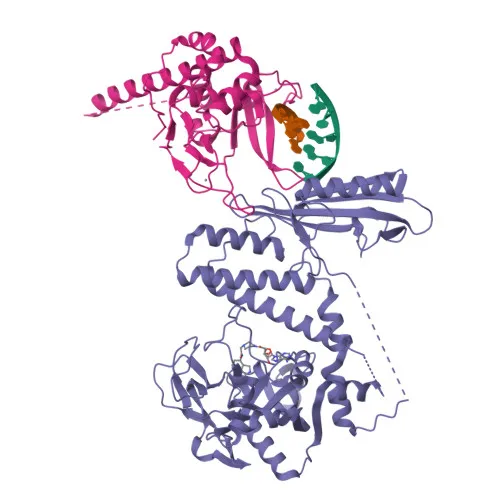
Polyclonal Antibodies
Anti-PARP1 Polyclonal Antibody for WB, IF/ICC, ELISA - P09874
Item Number : CM0017330
Price varies based on specs and customizations
- Application
- WB, IF/ICC, ELISA
- Cross Reactivity
- Human, Mouse, Rat
- Protein Weight
- 113kDa

Shipping:
Contact us to get shipping details Enjoy On-time Dispatch Guarantee.
Why Choose Us
Easy ordering process, quality products, and dedicated support for your business success.
Core Product Specifications and Parameters
| Parameter | Value |
|---|---|
| Product Name | PARP1 Rabbit pAb |
| Remarks/Alias | PARP; PARS; PPOL; ADPRT; ARTD1; ADPRT1; PARP-1; ADPRT 1; pADPRT-1; Poly-PARP; PARP1 |
| Species | Human |
| GeneID (Human) | 142 |
| Immunogen | Recombinant protein |
| Source | Rabbit |
| Category | Polyclonal Antibodies |
| Application | WB, IF/ICC, ELISA |
| Cross Reactivity | Human, Mouse, Rat |
| SWISS | P09874 |
| Protein Weight | 113kDa |
| Shipping | Ice bag |
Biological Background: PARP1 Function and Localization
- PARP1 is a highly conserved nuclear enzyme that catalyzes the transfer of ADP-ribose from NAD+ to target proteins, playing a pivotal role in DNA single-strand break repair via the base excision repair (BER) pathway. Related references: PMID:17177976, PMID:18055453, PMID:18172500
- It also participates in double-strand break repair by homologous recombination, promoting the recruitment of repair factors to damage sites. Related references: PMID:26344098, PMID:30356214
- In response to DNA damage, PARP1 mediates serine ADP-ribosylation of histones, facilitating chromatin decompaction and repair factor access; this activity is dependent on its cofactor HPF1. Related references: PMID:28190768, PMID:29954836, PMID:32028527
- Beyond DNA repair, PARP1 functions as a transcriptional regulator, repressing or activating transcription by modulating chromatin structure or elongation factors. Related references: PMID:15607977, PMID:22464733, PMID:27256882
- PARP1 is a key mediator of parthanatos, a caspase-independent cell death pathway; upon apoptosis, caspase-3/7 cleavage generates a fragment that translocates to the cytoplasm and triggers AIFM1-mediated cell death. Related references: PMID:33168626
- The protein predominantly localizes to the nucleus and chromosome, with additional presence in the nucleolus; it can also shuttle to the cytoplasm under certain conditions.
- PARP1 undergoes extensive post-translational modifications, especially auto-poly-ADP-ribosylation, which regulates its activity; it also contains multiple zinc-finger motifs critical for DNA binding.
Experimental Guidance and Technical Tips
- The immunogen (aa 81-390) lies in the DNA-binding domain; verify that the antibody recognizes both full-length and cleaved PARP1 if studying apoptosis.
- For Western blot, PARP1 has a predicted molecular weight of ~113 kDa; use appropriate transfer conditions for large proteins.
- In IF/ICC, ensure proper fixation and permeabilization to detect nuclear PARP1; co-stain with a DNA damage marker to confirm localization.
- For ELISA, titrate the antibody and use suitable blocking agents to minimize background.
- Lot-to-lot consistency should be validated, as this is a polyclonal antibody.
CamelBio: Your One-Stop Sourcing Bridge
CamelBio serves as a comprehensive one-stop sourcing partner for IVD manufacturers and research laboratories, providing access to validated antibody pairs, custom bulk antibodies, and ancillary critical reagents. For PARP1-focused projects—spanning DNA repair, oncology, and neurodegenerative research—our supply network ensures reliable raw materials from discovery to clinical application. Leverage our expertise to streamline your procurement of monoclonal/polyclonal antibodies and rare-target raw materials.
REQUEST A QUOTE
Our professional team will reply to you within one business day. Please feel free to contact us!