Polyclonal Antibodies
Anti-PARN Rabbit Polyclonal Antibody for WB, IF/ICC, ELISA - O95453
Item Number : CM0024851
Price varies based on specs and customizations
- Application
- WB, IF/ICC, ELISA
- Cross Reactivity
- Human
- Protein Weight
- 73kDa

Shipping:
Contact us to get shipping details Enjoy On-time Dispatch Guarantee.
Why Choose Us
Easy ordering process, quality products, and dedicated support for your business success.
Core Product Specifications and Parameters
| Parameter | Value |
|---|---|
| Product Name | PARN Rabbit pAb |
| Remarks/Alias | DAN; DKCB6; PFBMFT4; PARN |
| Species | Human |
| GeneID (Human) | 5073 |
| GeneID | 5073 |
| Immunogen | Recombinant fusion protein containing a sequence corresponding to amino acids 1-280 of human PARN (NP_002573.1). |
| Source | Rabbit |
| Category | Polyclonal Antibodies |
| Application | WB, IF/ICC, ELISA |
| Cross Reactivity | Human |
| SWISS | O95453 |
| Protein Weight | 73kDa |
| Shipping | Ice bag |
Biological Background: PARN Function and Localization
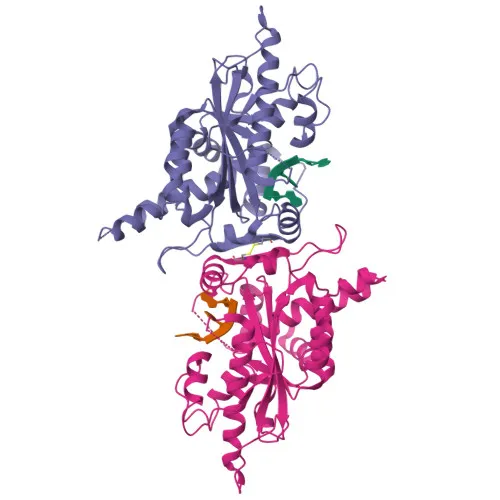
- PARN (Poly(A)-specific ribonuclease) is a 3'-exoribonuclease with strong preference for poly(A) tails of mRNAs, initiating deadenylation-dependent mRNA decay. Related references: PMID:10882133 PMID:11359775 PMID:12748283
- It interacts with both the 3'-poly(A) tail and the 5'-cap structure, a coupling essential for efficient deadenylation. Related references: PMID:10882133 PMID:11359775 PMID:12748283
- PARN participates in nonsense-mediated mRNA decay (NMD) and degradation of ARE-containing unstable mRNAs, possibly through interaction with KHSRP. Related references: PMID:10882133
- Beyond mRNAs, PARN can trim poly(A) tails of microRNAs (e.g., MIR21) and H/ACA box snoRNAs, influencing their stability. Related references: PMID:22442037 PMID:25049417
- The protein localizes to the nucleus, cytoplasm, and nucleolus, reflecting its multifaceted roles in RNA metabolism.
- PARN is ubiquitously expressed in human tissues and belongs to the deadenylating nuclease family; it requires magnesium as a cofactor.
- Post-translational modifications include acetylation and phosphorylation, and alternative splicing generates multiple isoforms.
- Mutations in PARN are associated with dyskeratosis congenita, linking it to telomere biology disorders.
Experimental Guidance and Technical Tips
- The immunogen spans the N-terminal 280 amino acids; consider epitope accessibility in your assay design. For WB, a starting dilution range of 1:500–1:2000 with a suitable secondary antibody is suggested, with optimization based on your sample’s expression level.
- In IF/ICC, fixation and permeabilization conditions (e.g., methanol vs. PFA/Triton) can influence antigen detection; validate in your cell line of interest. PARN’s nuclear/cytoplasmic distribution may require careful co-staining controls.
- For ELISA, the polyclonal nature may enhance signal capture; consider pairing with a monoclonal antibody for a sandwich ELISA. Validate with recombinant protein or cell lysates expressing human PARN.
- The predicted MW is ~73 kDa; confirm by running appropriate molecular weight markers and consider potential isoform-dependent shifts.
CamelBio: Your One-Stop Sourcing Bridge
CamelBio partners with diagnostic manufacturers, laboratories, and research institutes to provide comprehensive IVD raw-material solutions. This anti-PARN antibody supports studies in RNA biology, mRNA decay, and post-transcriptional regulation, complementing our portfolio of validated antibody pairs, optimized monoclonal/polyclonal reagents, and bulk ancillary materials. From target discovery to clinical application, we facilitate timely access to reliable raw materials tailored to your assay development needs.
REQUEST A QUOTE
Our professional team will reply to you within one business day. Please feel free to contact us!