Monoclonal Antibodies
Anti-pan-Trk Rabbit Monoclonal Antibody for WB, ELISA - P04629 / Q16620 / Q16288
Item Number : CM0007379
Price varies based on specs and customizations
- Application
- WB, ELISA
- Cross Reactivity
- Human, Mouse, Rat

Shipping:
Contact us to get shipping details Enjoy On-time Dispatch Guarantee.
Why Choose Us
Easy ordering process, quality products, and dedicated support for your business success.
Easy Process
Quality Assured
Dedicated Support
Core Product Specifications and Parameters
| Parameter | Value |
|---|---|
| Product Name | pan-Trk Rabbit mAb |
| Species | Human |
| Gene ID | 4914, 4915, 4916 |
| Immunogen | A synthesized peptide derived from human pan-Trk |
| Source | Rabbit |
| Category | Monoclonal Antibodies |
| Application | WB, ELISA |
| Cross Reactivity | Human, Mouse, Rat |
| SWISS | P04629, Q16620, Q16288 |
| Shipping | Ice bag |
Biological Background: pan-Trk (TrkA/TrkB/TrkC) Function and Localization
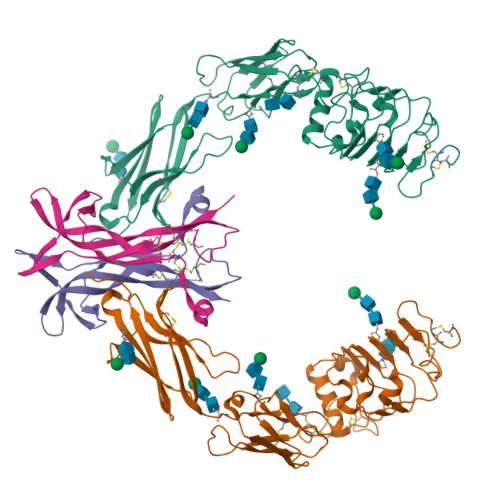
- Pan-Trk antibody recognizes the three members of the tropomyosin receptor kinase family: TrkA (encoded by NTRK1), TrkB (NTRK2), and TrkC (NTRK3), which serve as receptors for neurotrophins.
- TrkA is a high-affinity receptor for nerve growth factor (NGF) and plays a crucial role in the development, differentiation, and survival of sympathetic and sensory neurons. Upon NGF binding, TrkA homodimerizes and autophosphorylates, initiating intracellular signaling. Related references: PMID:1281417, PMID:15488758, PMID:17196528
- Through phosphorylation of adaptors like SHC1 and FRS2, TrkA activates the GRB2-Ras-MAPK and PI3K-AKT1 pathways, which govern cell growth, differentiation, and survival.
- TrkA localizes to the cell membrane and, upon ligand-mediated internalization, traffics through early, late, and recycling endosomes.
- Alternative splicing generates several isoforms: TrkA-I is widely expressed in non-neuronal tissues, TrkA-II is neuronal-specific, and TrkA-III (expressed in neural stem/progenitor cells) can exhibit oncogenic activity and promote angiogenesis.
- Chromosomal rearrangements involving NTRK1 result in oncogenic fusions, highlighting its role as a proto-oncogene.
Experimental Guidance and Technical Tips
- The immunogen is a synthetic peptide derived from human pan-Trk, suggesting recognition of a conserved epitope across TrkA/B/C. Validate reactivity in your specific sample system and consider optimizing antibody dilution for WB or ELISA.
- For western blotting, expect bands at ~140 kDa (TrkA), ~145 kDa (TrkB), and ~145 kDa (TrkC) based on published molecular weights; however, experimental conditions may shift migration.
- The antibody is recommended for human, mouse, and rat samples. Cross-reactivity with other species should be independently verified.
- Due to the expression of truncated or oncogenic isoforms, additional bands may be observed. Confirm band identity using appropriate controls or knockdown/knockout models.
CamelBio: Your One-Stop Sourcing Bridge
- As a specialized provider of IVD raw materials, CamelBio offers a comprehensive portfolio that includes validated antibody pairs, recombinant monoclonal antibodies, and bulk ancillary reagents—supporting your transition from concept to clinic.
- Our sourcing network helps diagnostic manufacturers and research laboratories secure reliable pan-Trk and other neurotrophin pathway reagents, simplifying supply chain complexities for rare or multi-target proteins.
- Whether you need optimized antibodies for WB/ELISA or seek custom bulk orders, CamelBio serves as your strategic sourcing partner, ensuring quality and consistency for neuroscience research and assay development.
REQUEST A QUOTE
Our professional team will reply to you within one business day. Please feel free to contact us!