Polyclonal Antibodies
Anti-pan-Trk Polyclonal Antibody for WB and ELISA - P04629/Q16620/Q16288
Item Number : CM0021455
Price varies based on specs and customizations
- Application
- WB, ELISA
- Cross Reactivity
- Mouse

Shipping:
Contact us to get shipping details Enjoy On-time Dispatch Guarantee.
Why Choose Us
Easy ordering process, quality products, and dedicated support for your business success.
Core Product Specifications and Parameters
| Parameter | Value |
|---|---|
| Product Name | pan-Trk Rabbit pAb |
| Species | Human |
| Gene ID (Human) | 4914/4915/4916 |
| Gene ID | 4914/4915/4916 |
| Immunogen | Synthetic peptide corresponding to a sequence within amino acids 697-796 of human pan-Trk (NP_002520.2) |
| Source | Rabbit |
| Category | Polyclonal Antibodies |
| Application | WB, ELISA |
| Cross Reactivity | Mouse |
| SWISS | P04629/Q16620/Q16288 |
| Shipping | Ice bag |
Biological Background: pan-Trk Function and Localization
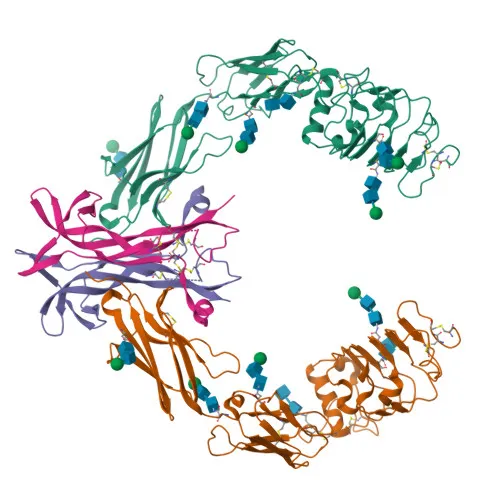
- NTRK1 encodes the high affinity nerve growth factor (NGF) receptor, a member of the neurotrophic tyrosine kinase receptor (TRK) family, also known as TrkA. Alternate names include TRK1-transforming tyrosine kinase protein and gp140trk.
- As a receptor tyrosine kinase, TrkA plays a critical role in the development and maturation of the central and peripheral nervous systems by regulating proliferation, differentiation, and survival of sympathetic and sensory neurons (PubMed:1281417, PubMed:15488758, PubMed:17196528).
Related references: PMID:1281417 PMID:15488758 PMID:17196528 - Upon NGF binding, TrkA homodimerizes and autophosphorylates, leading to recruitment and activation of downstream effectors including SHC1, FRS2, SH2B1, SH2B2, and PLCG1, which in turn activate the Ras-MAPK and PI3K-AKT signaling cascades, as well as NF-kappa-B transcription.
- Alternative splicing generates three major isoforms: TrkA-I (ubiquitous in non-neuronal tissues), TrkA-II (primarily neuronal), and TrkA-III (expressed in neural stem/progenitor cells); TrkA-III exhibits oncogenic activity when overexpressed.
- Subcellular localization includes the cell membrane, as well as early, late, and recycling endosome membranes, reflecting its dynamic signaling and trafficking.
- Key post-translational modifications include phosphorylation at multiple tyrosine residues, N-linked glycosylation, and ubiquitination, which regulate its activity and stability.
- TrkA is classified under keywords such as ATP-binding, kinase, proto-oncogene, and immunoglobulin domain-containing receptor, highlighting its enzymatic function and structural features.
Experimental Guidance and Technical Tips
- The immunogen is a synthetic peptide spanning amino acids 697–796 of human TrkA, corresponding to the intracellular domain. This region shares significant homology with TrkB and TrkC, supporting pan-Trk reactivity.
- For Western blot (WB), consider using whole-cell lysates from neuronal cell lines or tissues known to express Trk receptors (e.g., brain, DRG). Expect bands around 140–145 kDa due to glycosylation; validate in your specific sample system.
- The antibody demonstrates mouse cross-reactivity, allowing application in mouse models; however, optimize conditions for each species and experimental setup.
- For ELISA, the polyclonal nature makes it suitable as a capture or detection reagent; titer should be experimentally determined.
CamelBio: Your One-Stop Sourcing Bridge
As a premier IVD raw-material partner, CamelBio offers comprehensive access to validated antibody pairs, optimized monoclonal and polyclonal antibodies, and bulk ancillary reagents for diagnostic and research applications. This pan-Trk antibody supports investigations into neurotrophin signaling, neurodevelopment, and oncogenic kinase pathways. Contact us to leverage our one-stop sourcing capability for rare targets and custom raw-material solutions.
Product Datasheet
Anti-pan-Trk Polyclonal Antibody for WB and ELISA - P04629/Q16620/Q16288
REQUEST A QUOTE
Our professional team will reply to you within one business day. Please feel free to contact us!