Polyclonal Antibodies
Anti-PADI4 Polyclonal Antibody for WB, IHC-P, ELISA - Q9UM07
Item Number : CM0022598
Price varies based on specs and customizations
- Application
- WB, IHC-P, ELISA
- Cross Reactivity
- Human, Mouse, Rat
- Protein Weight
- 74kDa

Shipping:
Contact us to get shipping details Enjoy On-time Dispatch Guarantee.
Why Choose Us
Easy ordering process, quality products, and dedicated support for your business success.
Core Product Specifications and Parameters
| Parameter | Specification |
|---|---|
| Product Name | PADI4 Rabbit pAb |
| Remarks/Alias | PAD; PAD4; PDI4; PDI5; PADI5; PADI4 |
| Species | Human |
| GeneID (Human) | 23569 |
| GeneID | 23569 |
| Immunogen | Recombinant fusion protein containing a sequence corresponding to amino acids 290-663 of human PADI4 (NP_036519.2). |
| Source | Rabbit |
| Category | Polyclonal Antibodies |
| Application | WB, IHC-P, ELISA |
| Cross Reactivity | Human, Mouse, Rat |
| SWISS | Q9UM07 |
| Protein Weight | 74kDa |
| Shipping | Ice bag |
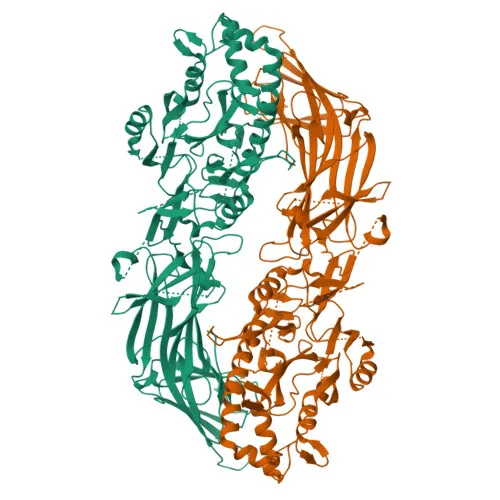
Biological Background: PADI4 Function and Localization
- PADI4 catalyzes the citrullination (deimination) of arginine residues on histones H1, H3, and H4, playing a key role in the histone code and regulation of stem cell maintenance. It specifically modifies H1 at Arg-54, H3 at Arg-2, Arg-8, Arg-17, and/or Arg-26, and H4 at Arg-3. Related references: PMID:15339660 PMID:15345777 PMID:16567635
- Citrullination of histone H3 by PADI4 prevents methylation by CARM1 and HRMT1L2/PRMT1, leading to transcriptional repression. Related references: PMID:15345777
- PADI4-mediated citrullination of H1 at Arg-54 (H1R54ci) causes H1 displacement from chromatin, resulting in global chromatin decondensation. This process promotes pluripotency and is critical during the innate immune response in neutrophils. Related references: PMID:15339660 PMID:15345777 PMID:16567635 PMID:18209087
- It is essential for the formation of neutrophil extracellular traps (NETs) by mediating histone H3 citrullination, chromatin decondensation, and nuclear membrane rupture. Related references: PMID:19153223 PMID:25622091 PMID:28574339
- PADI4 also citrullinates EP300/p300 at Arg-2142, which enhances interaction with NCOA2/GRIP1. Related references: PMID:15731352
- Subcellularly, PADI4 localizes to the cytoplasm, nucleus, and cytoplasmic granules.
- Tissue specificity: expressed in eosinophils and neutrophils, but not in peripheral monocytes or lymphocytes.
- Keywords highlight its roles as a calcium- and metal-binding hydrolase, chromatin regulator, and involvement in innate immunity and transcription regulation.
Experimental Guidance and Technical Tips
- The immunogen corresponds to amino acids 290–663, covering a large C-terminal region. The resulting polyclonal antibody should recognize multiple epitopes, potentially providing robust signal across applications.
- In WB, a band around 74 kDa is expected. Validate with an appropriate positive control, such as neutrophil or stem cell lysates.
- For IHC-P, consider using human, mouse, or rat tissue sections. Strong staining is anticipated in eosinophils and neutrophils; optimize antigen retrieval and antibody dilution.
- In ELISA, use recombinant or purified PADI4 protein to assess reactivity. Titrate antibody and detection reagents to establish a suitable working concentration.
CamelBio: Your One-Stop Sourcing Bridge
CamelBio is your one-stop sourcing partner for IVD raw materials, offering comprehensive support from concept to clinic. This PADI4 antibody supports research into chromatin remodeling, NETosis, and gene regulation. Beyond high-quality monoclonal and polyclonal antibodies, we supply validated antibody pairs, bulk ancillary reagents, and rare target raw materials to streamline your assay development.
REQUEST A QUOTE
Our professional team will reply to you within one business day. Please feel free to contact us!