Polyclonal Antibodies
Anti-p53 Rabbit Polyclonal Antibody for WB, IHC-P, IF/ICC, IP, ELISA - P02340
Item Number : CM0018896
Price varies based on specs and customizations
- Application
- WB, IHC-P, IF/ICC, IP, ELISA
- Cross Reactivity
- Human, Mouse
- Protein Weight
- 43kDa

Shipping:
Contact us to get shipping details Enjoy On-time Dispatch Guarantee.
Why Choose Us
Easy ordering process, quality products, and dedicated support for your business success.
Core Product Specifications and Parameters
| Parameter | Value |
|---|---|
| Product Name | p53 Rabbit pAb |
| Remarks/Alias | bbl; bfy; bhy; p44; p53; Tp53 |
| Species | Mouse |
| GeneID (Human) | 7157 |
| GeneID | 22059 |
| Immunogen | A synthetic peptide corresponding to a sequence within amino acids 290-390 of mouse p53 (NP_035770.2). |
| Source | Rabbit |
| Category | Polyclonal Antibodies |
| Application | WB, IHC-P, IF/ICC, IP, ELISA |
| Cross Reactivity | Human, Mouse |
| SWISS | P02340 |
| Protein Weight | 43kDa |
| Shipping | Ice bag |
Biological Background: p53 Function and Localization
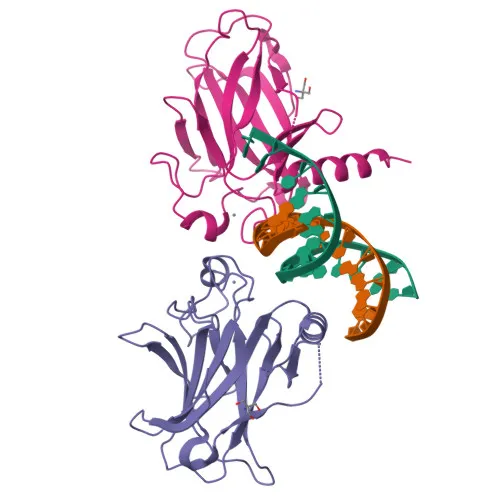
- Encoded by the Tp53 gene, cellular tumor antigen p53 (tumor suppressor p53) is a ~43 kDa multifunctional transcription factor.
- p53 acts as a critical tumor suppressor by inducing cell cycle arrest, DNA repair, and apoptosis upon binding to its target DNA sequence. Related references: PMID:19556538, PMID:20673990, PMID:22726440
- Negatively regulates cell division by controlling expression of genes, including cyclin-dependent kinase inhibitors.
- Pro-apoptotic function is modulated via interactions with ASPP family proteins (By similarity).
- Involved in transcription-independent oxidative stress-induced necrosis through cooperation with mitochondrial PPIF.
- Regulates the circadian clock by repressing CLOCK-BMAL1-mediated transcriptional activation of PER2. Related references: PMID:24051492
- Localizes to multiple subcellular compartments, including the nucleus, cytoplasm, mitochondria, and centrosome.
- Undergoes extensive post-translational modifications such as phosphorylation, acetylation, ubiquitination, and methylation, which regulate its stability and activity.
Experimental Guidance and Technical Tips
- The immunogen (aa 290-390 of mouse p53) targets the C-terminal region; validate specificity for p53 and potential cross-reactivity with p53 isoforms in your sample system.
- For Western blot (WB), expect a band around 43 kDa; optimize loading control and antibody dilution based on sample type.
- For immunohistochemistry (IHC-P), heat-induced antigen retrieval may enhance detection; consider using a polymer detection system for polyclonal antibodies.
- For immunoprecipitation (IP), the polyclonal nature may enrich p53 complexes; confirm with appropriate controls.
- For ELISA applications, determine optimal coating and detection conditions empirically.
CamelBio: Your One-Stop Sourcing Bridge
CamelBio offers comprehensive IVD raw-material sourcing solutions, connecting diagnostic manufacturers and researchers with high-quality reagents like this anti-p53 polyclonal antibody. Our portfolio includes validated antibody pairs, optimized monoclonal and polyclonal antibodies, and bulk ancillary reagents, supporting cancer, apoptosis, and cell cycle research. Whether you need rare target raw materials or large-scale supply, CamelBio streamlines your path from concept to clinic.
REQUEST A QUOTE
Our professional team will reply to you within one business day. Please feel free to contact us!