Polyclonal Antibodies
Anti-P4HA2 Rabbit Polyclonal Antibody for WB, IF/ICC, ELISA - O15460
Item Number : CM0026932
Price varies based on specs and customizations
- Application
- WB, IF/ICC, ELISA
- Cross Reactivity
- Human, Mouse, Rat
- Protein Weight
- 61kDa

Shipping:
Contact us to get shipping details Enjoy On-time Dispatch Guarantee.
Why Choose Us
Easy ordering process, quality products, and dedicated support for your business success.
Core Product Specifications and Parameters
| Parameter | Value |
|---|---|
| Product Name | P4HA2 Rabbit pAb |
| Remarks/Alias | MYP25; lncRNA-PE; P4HA2 |
| Species | Human |
| Gene ID (Human) | 8974 |
| Gene ID | 8974 |
| Immunogen | Recombinant protein|Recombinant fusion protein containing a sequence corresponding to amino acids 239-333 of human P4HA2 (NP_004190.1). |
| Source | Rabbit |
| Category | Polyclonal Antibodies |
| Application | WB, IF/ICC, ELISA |
| Cross Reactivity | Human, Mouse, Rat |
| SWISS | O15460 |
| Protein Weight | 61kDa |
| Shipping | Ice bag |
Biological Background: P4HA2 Function and Localization
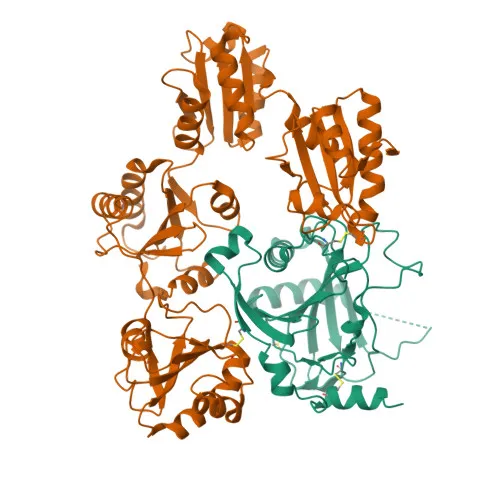
- Prolyl 4-hydroxylase subunit alpha-2 (P4HA2) is a key enzyme in collagen biosynthesis, catalyzing the hydroxylation of proline residues in -Xaa-Pro-Gly- sequences to form 4-hydroxyproline, which is essential for collagen triple-helix stability and function.
- P4HA2 is one of several alpha subunit isoforms that form heterotetrameric complexes with P4HB (beta subunit) to constitute active prolyl 4-hydroxylase; alternative splicing yields multiple transcript variants.
- The enzyme localizes predominantly to the endoplasmic reticulum lumen, where post-translational modification of nascent collagen polypeptides occurs.
- Its catalytic activity depends on cofactors iron (Fe²⁺), 2-oxoglutarate, molecular oxygen, and ascorbate (vitamin C), classifying it as a member of the 2-oxoglutarate-dependent dioxygenase family.
- Tissue expression profiling reveals highest levels in heart, placenta, lung, and pancreas, consistent with tissues rich in collagen type I and IV.
- Post-translational modifications include N-linked glycosylation; the protein is also annotated with iron and metal-binding domains, and its defects are associated with disease variants.
- The protein contains tetratricopeptide repeat (TPR) motifs, which are implicated in protein–protein interactions and assembly of the prolyl 4-hydroxylase complex.
Experimental Guidance and Technical Tips
- The immunogen corresponds to residues 239-333 of human P4HA2, a region that exhibits high sequence conservation among mammals; consider verifying alignment for your model organism.
- For Western blot (WB), an expected band around 61 kDa should be observed; use reducing conditions unless otherwise optimized.
- In immunofluorescence/ICC, anticipate ER-localized staining; co-staining with an ER marker is recommended.
- For ELISA, standardize coating antigen and antibody dilution in your assay system; cross-reactivity suggests utility for human, mouse, and rat samples.
- As collagen hydroxylation is a dynamic process, consider using P4HA2 detection in studies of fibrosis, cancer stroma remodeling, or connective tissue disorders.
CamelBio: Your One-Stop Sourcing Bridge
CamelBio serves as a comprehensive sourcing partner for IVD raw materials, offering validated antibody pairs, optimized monoclonal and polyclonal antibodies, bulk ancillary reagents, and rare target procurement. Our P4HA2 polyclonal antibody supports collagen biology and extracellular matrix investigations. Contact us for tailored supply solutions to meet your development and manufacturing needs.
REQUEST A QUOTE
Our professional team will reply to you within one business day. Please feel free to contact us!