Polyclonal Antibodies
Anti-p38 MAPK Polyclonal Antibody for WB, IHC-P, IF/ICC, IP, ELISA - Q16539
Item Number : CM0013074
Price varies based on specs and customizations
- Application
- WB, IHC-P, IF/ICC, IP, ELISA
- Cross Reactivity
- Human, Mouse, Rat
- Protein Weight
- 41kDa

Shipping:
Contact us to get shipping details Enjoy On-time Dispatch Guarantee.
Why Choose Us
Easy ordering process, quality products, and dedicated support for your business success.
Core Product Specifications and Parameters
| Parameter | Value |
|---|---|
| Product Name | p38 MAPK Rabbit pAb |
| Remarks/Alias | RK; p38; CSBP; EXIP; Mxi2; CSBP1; CSBP2; CSPB1; PRKM14; PRKM15; SAPK2A; p38ALPHA |
| Species | Human |
| Gene ID | 1432 |
| Immunogen | Recombinant fusion protein containing a sequence corresponding to amino acids 261-360 of human p38 MAPK (NP_620581.1) |
| Source | Rabbit |
| Category | Polyclonal Antibodies |
| Application | WB, IHC-P, IF/ICC, IP, ELISA |
| Cross Reactivity | Human, Mouse, Rat |
| SWISS | Q16539 |
| Protein Weight | 41kDa |
| Shipping | Ice bag |
Biological Background: p38 MAPK Function and Localization
-
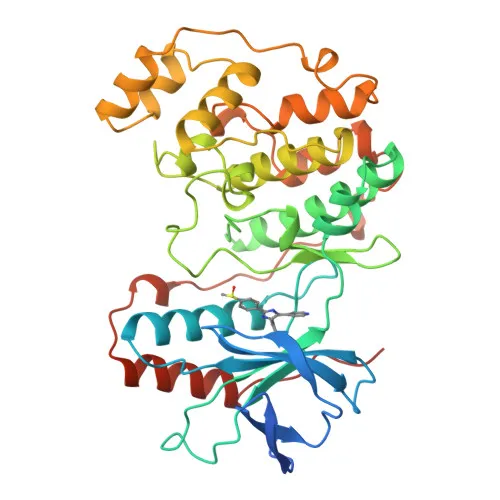
Mitogen-activated protein kinase 14 (MAPK14), commonly known as p38 alpha, is a stress-activated serine/threonine kinase belonging to the MAP kinase family. It exists as multiple isoforms including EXIP and MXI2, generated through alternative splicing.
-
Upon activation by extracellular signals such as pro-inflammatory cytokines or physical stress, p38 phosphorylates downstream kinases MSK1/2, which then regulate transcription factors (CREB1, NF-κB, STATs) and histone H3 (PubMed:9687510, PubMed:9792677). It also activates MK2/3 to control mRNA stability via ZFP36 and ELAVL1, and MNK1/2 to phosphorylate EIF4E2 for translation initiation (PubMed:11154262). Related references: PMID:9687510 PMID:9792677 PMID:11154262
-
p38 regulates protein turnover by phosphorylating the ubiquitin ligase SIAH2 (PubMed:17003045) and the apoptosis inhibitor CFLAR, and can inhibit autophagy by interfering with ATG9 trafficking (PubMed:19893488). Related references: PMID:17003045 PMID:19893488
-
In receptor dynamics, p38 drives clathrin-mediated EGFR internalization via phosphorylation of EGFR itself and RAB5A effectors (PubMed:16932740), and promotes ectodomain shedding of TGF-α family ligands by activating the metalloprotease ADAM17 (PubMed:20188673). Related references: PMID:16932740 PMID:20188673
-
Nuclear p38 directly phosphorylates transcription factors including ATF1, ATF2, ATF6, ELK1, TP53/p53, and MEF2A/C (PubMed:10330143, PubMed:9430721, PubMed:9858528), and enhances NF-κB accessibility at inflammatory gene promoters by increasing histone H3 phosphorylation at Ser-10. Related references: PMID:10330143 PMID:9430721 PMID:9858528
-
p38 contributes to cell cycle regulation by phosphorylating CDC25B/C, leading to a G2 delay after ultraviolet radiation (PubMed:11333986). It is also essential for developmental and stress-induced erythropoiesis through regulation of EPO gene expression (PubMed:10943842). Related references: PMID:11333986 PMID:10943842
-
During infection, M. tuberculosis EsxA can activate p38 in T-cells, resulting in inhibition of IFN-γ production (PubMed:21586573). Related references: PMID:21586573
-
p38 localizes to both the cytoplasm and nucleus. It is widely expressed, with highest levels in brain, heart, placenta, pancreas, and skeletal muscle, and lower levels in lung, liver, and kidney. Post-translational modifications include acetylation and ubiquitylation, and it is identified in proteomics studies.
Experimental Guidance and Technical Tips
- The immunogen (amino acids 261–360 of human p38) is conserved across human, mouse, and rat, consistent with the antibody’s cross-reactivity. Verify by sequence alignment before extending to other species.
- For Western blotting, use denaturing reducing conditions and a starting antibody dilution range of 1:500–1:2000; optimize with appropriate positive controls (e.g., HeLa, Jurkat).
- For IHC-P, antigen retrieval (e.g., citrate buffer, pH 6.0) may be needed; validate staining specificity with blocking peptide or knockout tissue controls.
- For IF/ICC, fix with 4% PFA and permeabilize with 0.1% Triton X-100; co-stain with nuclear/cytoplasmic markers.
- For IP, use 1–2 µg antibody per 500 µg protein lysate and capture with Protein A/G beads.
- For ELISA, the antibody may be used as capture or detection reagent; test pairing with a matched monoclonal antibody.
CamelBio: Your One-Stop Sourcing Bridge
CamelBio supplies diagnostic manufacturers and research labs with a comprehensive range of IVD raw materials, including validated antibodies targeting stress and inflammation pathways such as p38 MAPK. We offer one-stop access to antibody pairs, optimized polyclonal and monoclonal antibodies, bulk ancillary reagents, and customized sourcing for rare targets. Let CamelBio support your assay development from concept to clinic with reliable materials and technical expertise.
Product Datasheet
Anti-p38 MAPK Polyclonal Antibody for WB, IHC-P, IF/ICC, IP, ELISA - Q16539
REQUEST A QUOTE
Our professional team will reply to you within one business day. Please feel free to contact us!