Polyclonal Antibodies
Anti-P2RY14 Rabbit Polyclonal Antibody for WB, IHC-P, and ELISA - Q15391
Item Number : CM0027869
Price varies based on specs and customizations
- Application
- WB, IHC-P, ELISA
- Cross Reactivity
- Human, Mouse, Rat
- Protein Weight
- 39kDa

Shipping:
Contact us to get shipping details Enjoy On-time Dispatch Guarantee.
Why Choose Us
Easy ordering process, quality products, and dedicated support for your business success.
Core Product Specifications and Parameters
| Parameter | Value |
|---|---|
| Product Name | P2RY14 Rabbit pAb |
| Remarks/Alias | P2Y14; BPR105; GPR105; P2RY14 |
| Species | Human |
| GeneID (human) | 9934 |
| GeneID | 9934 |
| Immunogen | Recombinant fusion protein containing a sequence corresponding to amino acids 209-338 of human P2RY14 (NP_055694.3). |
| Source | Rabbit |
| Category | Polyclonal Antibodies |
| Application | WB, IHC-P, ELISA |
| Cross Reactivity | Human, Mouse, Rat |
| SWISS | Q15391 |
| Protein Weight | 39kDa |
| Shipping | Ice bag |
Biological Background: P2RY14 Function and Localization
- P2RY14 encodes the P2Y purinoceptor 14, also known as GPR105 or the UDP-glucose receptor, a G protein-coupled receptor (GPCR).
- Functions as a specific receptor for UDP-glucose and other UDP-sugars, coupling to G-proteins to transduce extracellular signals; it is not activated by ATP, ADP, UTP, or other nucleotides.
- Belongs to the P2Y receptor family of GPCRs, characterized by seven transmembrane domains and involvement in diverse physiological processes.
- Localized primarily at the cell membrane, consistent with its role as a plasma membrane receptor.
- Demonstrates distinct tissue expression: highest in placenta, adipose tissue, stomach, and intestine; moderate in brain, spleen, lung, and heart; and lowest in kidney.
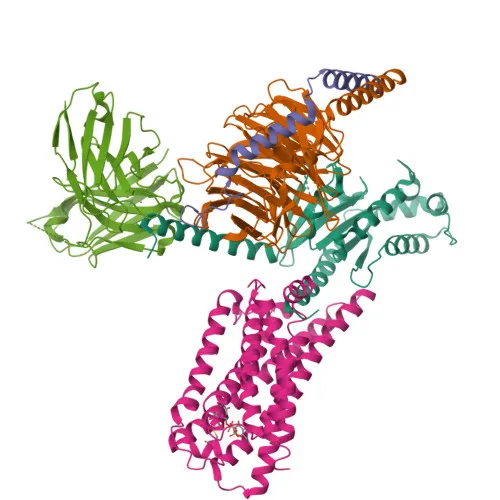
- Possesses structural features typical of class A GPCRs, including disulfide bonds, glycosylation sites, and a 3D structure (as indicated by UniProt keywords), with a calculated molecular weight of ~39 kDa.
- Plays potential roles in immune and inflammatory responses via UDP-glucose signaling, though precise physiological functions are still under investigation.
Experimental Guidance and Technical Tips
- The immunogen corresponds to amino acids 209–338 of human P2RY14, an intracellular region; this design may favor detection of denatured protein in western blotting.
- For IHC-P, consider optimizing fixation and antigen retrieval conditions to expose the intracellular epitope, especially in tissues like placenta or stomach where expression is high.
- Cross-reactivity with mouse and rat suggests sequence conservation in the immunogen region; validate the antibody in your model systems by comparing with appropriate controls.
- In WB, expect a band near 39 kDa; note that glycosylation or other modifications could shift the apparent molecular weight.
- ELISA can be used for quantification; include relevant standards and blank controls to ensure assay reliability.
CamelBio: Your One-Stop Sourcing Bridge
CamelBio serves as a comprehensive sourcing partner for IVD manufacturers and research labs, offering validated antibody pairs, optimized monoclonal/polyclonal antibodies, and bulk ancillary reagents. For targets like P2RY14 involved in GPCR signaling and nucleotide sensing, we help streamline procurement of rare-target raw materials and provide technical consultation from concept to clinic.
Product Datasheet
Anti-P2RY14 Rabbit Polyclonal Antibody for WB, IHC-P, and ELISA - Q15391
REQUEST A QUOTE
Our professional team will reply to you within one business day. Please feel free to contact us!