Monoclonal Antibodies
Anti-Oxytocin Receptor Monoclonal Antibody for WB, ELISA - P30559
Item Number : CM0003653
Price varies based on specs and customizations
- Application
- WB, ELISA
- Cross Reactivity
- Human, Mouse, Rat
- Protein Weight
- 43kDa

Shipping:
Contact us to get shipping details Enjoy On-time Dispatch Guarantee.
Why Choose Us
Easy ordering process, quality products, and dedicated support for your business success.
Core Product Specifications and Parameters
| Parameter | Value |
|---|---|
| Product Name | Oxytocin Receptor Rabbit mAb |
| Remarks/Alias | OTR; OT-R; Oxytocin Receptor |
| Species | Human |
| Gene ID (Human) | 5021 |
| Gene ID | 5021 |
| Immunogen | Synthetic peptide corresponding to amino acids 50-150 of human Oxytocin Receptor (P30559) |
| Source | Rabbit |
| Category | Monoclonal Antibodies |
| Application | WB, ELISA |
| Cross Reactivity | Human, Mouse, Rat |
| SWISS | P30559 |
| Protein Weight | 43kDa |
| Shipping | Ice bag |
Biological Background: Oxytocin Receptor Function and Localization
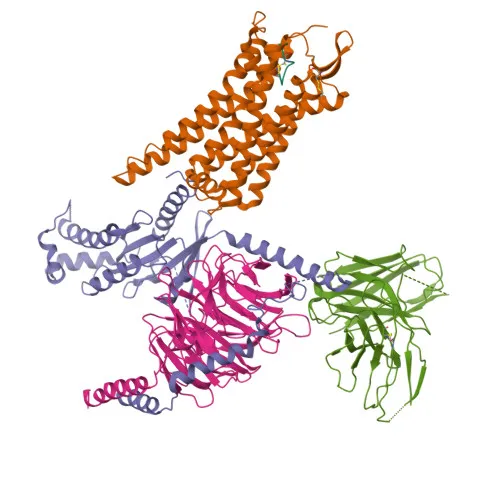
- The oxytocin receptor (OXTR) is a G protein-coupled receptor activated by oxytocin, a neuropeptide hormone that regulates social behavior and milk ejection. Related references: PMID:11923477 PMID:22069312 PMID:32832646
- Ligand binding induces a conformational change that primarily couples to G(q) proteins, stimulating phospholipase C to generate IP3 and DAG and trigger intracellular Ca2+ release. Related references: PMID:22069312 PMID:32832646 PMID:35104164
- At high oxytocin concentrations, OXTR can also couple to G(i) proteins, leading to inhibition of adenylate cyclase activity. Related references: PMID:22069312 PMID:35241813 PMID:35851571
- Central OXTR signaling in the brain modulates neural circuits that underlie maternal care, social cognition, and affiliative behaviors by altering ion channel activity and synaptic transmission. Related references: PMID:19934046 PMID:20647384 PMID:21896752
- Peripherally, oxytocin via OXTR promotes processes such as parturition, lactation, and osteoblast differentiation. Related references: PMID:6278592
- The receptor localizes to the cell membrane and contains seven transmembrane domains characteristic of GPCRs.
- OXTR is annotated with post-translational modifications including glycosylation and phosphorylation, as well as a disulfide bond, as indicated by UniProt keywords.
Experimental Guidance and Technical Tips
- For Western blotting, expect a band around 43 kDa under reducing conditions; include appropriate positive controls from human, mouse, or rat tissues/cells expressing OXTR.
- When using ELISA, the antibody can serve as a capture or detection reagent; validate pairing with another OXTR-specific antibody if developing a sandwich assay.
- Given the immunogen maps to an N-terminal region (aa 50–150), verify reactivity in both native and denatured sample formats relevant to your assay.
- Confirm antibody performance in your specific experimental system, as detection may vary with target expression levels and sample preparation.
CamelBio: Your One-Stop Sourcing Bridge
CamelBio provides diagnostic manufacturers, labs, and research institutes with one-stop access to IVD raw materials, technical services, and consulting—covering every stage from concept to clinic. This OXTR monoclonal antibody supports neuroscience and receptor pharmacology research, and we can supply validated antibody pairs, optimized monoclonal/polyclonal antibodies, and bulk ancillary reagents for your assay development. For rare or custom targets, our sourcing expertise ensures reliable supply chains.
REQUEST A QUOTE
Our professional team will reply to you within one business day. Please feel free to contact us!