Polyclonal Antibodies
Anti-OX40L Rabbit Polyclonal Antibody for WB, IF/ICC, ELISA - P23510
Item Number : CM0021687
Price varies based on specs and customizations
- Application
- WB, IF/ICC, ELISA
- Cross Reactivity
- Human, Mouse
- Protein Weight
- 21kDa

Shipping:
Contact us to get shipping details Enjoy On-time Dispatch Guarantee.
Why Choose Us
Easy ordering process, quality products, and dedicated support for your business success.
Core Product Specifications and Parameters
| Parameter | Specification |
|---|---|
| Product Name | OX40L Rabbit pAb |
| Remarks/Alias | GP34; CD252; OX4OL; TXGP1; CD134L; OX-40L; TNLG2B; OX40L |
| Species | Human |
| Gene ID (Human) | 7292 |
| Gene ID | 7292 |
| Immunogen | Recombinant protein|Recombinant fusion protein containing a sequence corresponding to amino acids 51-183 of human OX40L (NP_003317.1). |
| Source | Rabbit |
| Category | Polyclonal Antibodies |
| Application | WB, IF/ICC, ELISA |
| Cross Reactivity | Human, Mouse |
| SWISS | P23510 |
| Protein Weight | 21kDa |
| Shipping | Ice bag |
Biological Background: OX40L (TNFSF4) Function and Localization
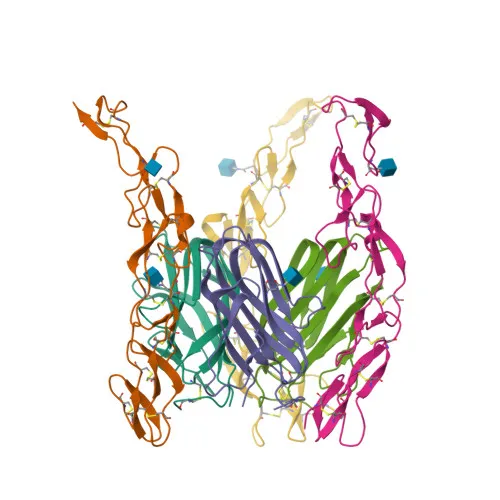
- OX40L, also known as TNFSF4, CD252, and glycoprotein Gp34, is a member of the tumor necrosis factor (TNF) ligand superfamily, functioning as a key co-stimulatory molecule in immune responses.
- It encodes a type II transmembrane protein primarily expressed on activated antigen-presenting cells (APCs), including B cells, dendritic cells, and macrophages.
- OX40L binds specifically to its receptor, TNFRSF4 (OX40), on activated T cells, triggering co-stimulatory signals that enhance T‑cell proliferation, survival, and effector cytokine production.
- The protein is localized to the cell membrane via an N‑terminal signal‑anchor sequence, with the C‑terminal TNF homology domain facing the extracellular space, enabling trimerization and receptor engagement.
- Post‑translational modifications, including glycosylation and disulfide bond formation, are critical for structural stability and bioactivity.
- Alternative splicing generates multiple isoforms, and genetic polymorphisms in the TNFSF4 gene have been associated with susceptibility to systemic lupus erythematosus (SLE) and other autoimmune disorders.
- The extracellular domain (roughly amino acids 51‑183) used for immunization corresponds to the receptor‑binding region, ensuring the antibody targets the functional part of the molecule.
Experimental Guidance and Technical Tips
- The immunogen covers the predicted extracellular domain (aa 51‑183), so the antibody should recognize both the membrane‑bound form and any soluble shed fragments of OX40L.
- For Western blotting, the theoretical molecular weight is ~21 kDa; however, glycosylation may cause a migration shift. Reducing conditions are recommended; validate with appropriate positive controls.
- In immunofluorescence/ICC, fixation and permeabilization protocols may need optimization, as the epitope is extracellular but could be affected by cross‑linking. Test both permeabilized and non‑permeabilized conditions.
- Reported cross‑reactivity with mouse OX40L allows use in murine models; verify performance in your specific experimental system.
- For ELISA applications, consider pairing this polyclonal antibody with a suitable capture/detection partner to build a robust sandwich assay.
CamelBio: Your One-Stop Sourcing Bridge
CamelBio supports diagnostic developers and researchers with comprehensive raw‑material sourcing, including a wide range of validated antibodies, recombinant proteins, and ancillary reagents. This anti‑OX40L polyclonal antibody is well‑suited for immune‑checkpoint research, autoimmune disease biomarker studies, and T‑cell activation assays. Whether you need bulk quantities, matched antibody pairs, or custom reagent sourcing, CamelBio streamlines your IVD supply chain from concept to clinic.
REQUEST A QUOTE
Our professional team will reply to you within one business day. Please feel free to contact us!