Polyclonal Antibodies
Anti-ORC1 Polyclonal Antibody for WB, ELISA - Q13415
Item Number : CM0016642
Price varies based on specs and customizations
- Application
- WB, ELISA
- Cross Reactivity
- Human
- Protein Weight
- 97kDa

Shipping:
Contact us to get shipping details Enjoy On-time Dispatch Guarantee.
Why Choose Us
Easy ordering process, quality products, and dedicated support for your business success.
Core Product Specifications and Parameters
| Parameter | Value |
|---|---|
| Product Name | ORC1 Rabbit pAb |
| Remarks/Alias | ORC1L; PARC1; HSORC1; ORC1 |
| Species | Human |
| Gene ID | 4998 |
| Immunogen | Recombinant fusion protein containing a sequence corresponding to amino acids 696-856 of human ORC1 (NP_001177748.1) |
| Source | Rabbit |
| Category | Polyclonal Antibodies |
| Application | WB, ELISA |
| Cross Reactivity | Human |
| SWISS | Q13415 |
| Protein Weight | 97kDa |
| Shipping | Ice bag |
Biological Background: ORC1 Function and Localization
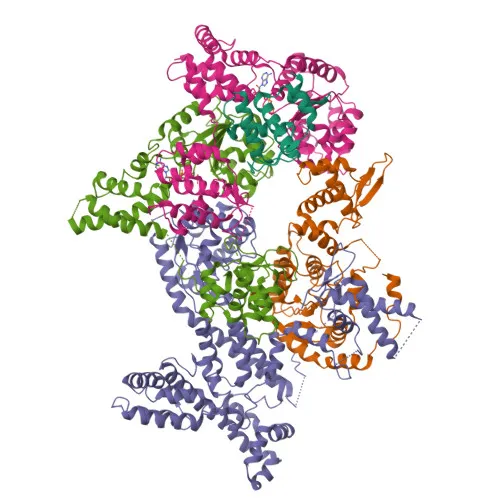
- ORC1 (Origin recognition complex subunit 1), also known as ORC1L, PARC1, or HSORC1, is the largest subunit of the origin recognition complex (ORC), which binds to origins of replication.
- ORC1 facilitates ATP-dependent DNA binding, a critical step in the recognition of replication origins.
- The ORC complex is essential for assembling the pre-replication complex (pre-RC) required to initiate DNA replication.
- ORC1 is localized exclusively in the nucleus, consistent with its role in DNA replication.
- Post-translational modifications of ORC1 include acetylation and phosphorylation, which may regulate its activity and cell cycle-dependent functions.
- Genetic variants of ORC1 are associated with Meier-Gorlin syndrome, a form of dwarfism, highlighting its broader developmental roles.
- ORC1 features ATP-binding and magnesium-binding domains, underscoring its nucleotide-dependent mechanisms.
Experimental Guidance and Technical Tips
- The immunogen corresponds to the C-terminal region (amino acids 696–856) of human ORC1, which may contain epitopes crucial for specific detection.
- For Western blot (WB), consider using nuclear extracts from human cell lines such as HeLa or HEK293, as ORC1 is a nuclear protein.
- Validate the antibody in the relevant sample system and include appropriate controls (e.g., siRNA knockdown or overexpression) to confirm specificity.
- For ELISA applications, optimize coating antigen concentration and antibody dilution using recombinant ORC1 protein or peptide.
- Due to the ~97 kDa protein weight, ensure gel electrophoresis and transfer conditions are suitable for high-molecular-weight proteins.
CamelBio: Your One-Stop Sourcing Bridge
CamelBio offers diagnostic manufacturers, laboratories, and research institutes comprehensive access to IVD raw materials, technical services, and consulting—from concept to clinic. This anti-ORC1 polyclonal antibody supports DNA replication and cell cycle research, aiding the development of diagnostics and therapeutics. Explore our portfolio of validated antibody pairs, optimized monoclonal and polyclonal antibodies, bulk ancillary reagents, and custom sourcing for rare target raw materials to accelerate your projects.
REQUEST A QUOTE
Our professional team will reply to you within one business day. Please feel free to contact us!