Polyclonal Antibodies
Anti-OPRK1 Rabbit Polyclonal Antibody for WB, IHC-P, IF/ICC, ELISA - P41145
Item Number : CM0014842
Price varies based on specs and customizations
- Application
- WB, IHC-P, IF/ICC, ELISA
- Cross Reactivity
- Human, Mouse, Rat
- Protein Weight
- 43kDa

Shipping:
Contact us to get shipping details Enjoy On-time Dispatch Guarantee.
Why Choose Us
Easy ordering process, quality products, and dedicated support for your business success.
Core Product Specifications and Parameters
| Parameter | Specification |
|---|---|
| Product Name | OPRK1 Rabbit pAb |
| Remarks/Alias | KOP; KOR; KOR1; OPRK; KOR-1; K-OR-1; OPRK1 |
| Species | Human |
| GeneID | 4986 |
| Immunogen | Synthetic peptide corresponding to a sequence within amino acids 280-380 of human OPRK1 (NP_000903.2) |
| Source | Rabbit |
| Category | Polyclonal Antibodies |
| Application | WB, IHC-P, IF/ICC, ELISA |
| Cross Reactivity | Human, Mouse, Rat |
| SWISS | P41145 |
| Protein Weight | 43kDa |
| Shipping | Ice bag |
Biological Background: OPRK1 Function and Localization
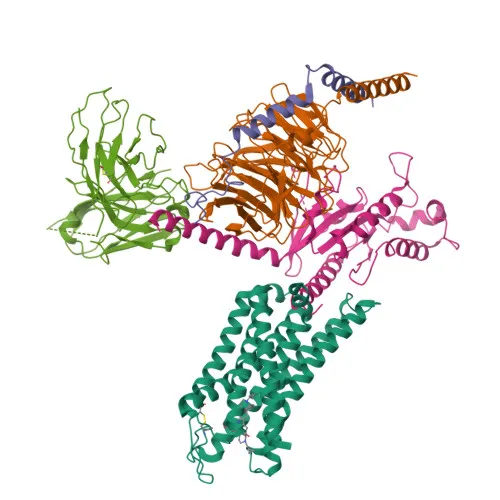
- OPRK1 encodes the kappa-type opioid receptor, a G protein-coupled receptor (GPCR) that binds endogenous opioids such as dynorphins and alpha-neoendorphins, as well as synthetic opioids and the diterpene salvinorin A.
- Upon ligand binding, OPRK1 undergoes conformational change and activates G proteins, inhibiting adenylate cyclase activity, reducing calcium ion currents, and increasing potassium ion conductance, which inhibits neurotransmitter release.
- OPRK1 plays a critical role in pain perception, mediating reduced physical activity upon synthetic opioid treatment, and regulating salivation.
- It may also be involved in arousal, autonomic, and neuroendocrine functions.
- The receptor is primarily localized at the cell membrane and is expressed in the brain and placenta.
- Post-translational modifications include glycosylation and palmitoylation, with disulfide bonds stabilizing its structure; alternative splicing generates multiple isoforms.
- Keywords: G protein-coupled receptor, transmembrane, behavior, glycoprotein, lipoprotein, palmitate.
Experimental Guidance and Technical Tips
- The immunogen corresponds to a synthetic peptide within the third intracellular loop region (amino acids 280-380), which may contribute to recognition of both unmodified and modified receptor forms.
- For Western blot, consider optimizing antibody dilution; a band at approximately 43 kDa is expected. Validate in relevant lysates.
- For IHC-P and IF/ICC, using brain or placental tissue sections may provide relevant positive controls; include appropriate fixation and antigen retrieval steps.
- Cross-reactivity with mouse and rat has been reported, but performance in these species should be verified under your specific experimental conditions.
CamelBio: Your One-Stop Sourcing Bridge
This anti-OPRK1 polyclonal antibody is a valuable reagent for neuroscience and opioid receptor research. As part of CamelBio’s comprehensive IVD raw material supply chain, we offer validated antibody pairs, optimized monoclonal and polyclonal antibodies, bulk ancillary reagents, and rare target raw-material sourcing—enabling seamless procurement from research to diagnostic development. Contact us to bridge your concept to clinic with reliable one-stop technical and supply support.
Product Datasheet
Anti-OPRK1 Rabbit Polyclonal Antibody for WB, IHC-P, IF/ICC, ELISA - P41145
REQUEST A QUOTE
Our professional team will reply to you within one business day. Please feel free to contact us!