Polyclonal Antibodies
Anti-OGG1 Rabbit Polyclonal Antibody for WB and ELISA - O15527
Item Number : CM0020808
Price varies based on specs and customizations
- Application
- WB, ELISA
- Cross Reactivity
- Human, Mouse
- Protein Weight
- 39kDa

Shipping:
Contact us to get shipping details Enjoy On-time Dispatch Guarantee.
Why Choose Us
Easy ordering process, quality products, and dedicated support for your business success.
Core Product Specifications and Parameters
| Parameter | Value |
|---|---|
| Product Name | OGG1 Rabbit pAb |
| Remarks/Alias | HMMH; MUTM; OGH1; HOGG1; OGG1 |
| Species | Human |
| GeneID (human) | 4968 |
| GeneID | 4968 |
| Immunogen | Recombinant fusion protein containing a sequence corresponding to amino acids 1-345 of human OGG1 (NP_002533.1) |
| Source | Rabbit |
| Category | Polyclonal Antibodies |
| Application | WB, ELISA |
| Cross Reactivity | Human, Mouse |
| SWISS | O15527 |
| Protein Weight | 39kDa |
| Shipping | Ice bag |
Biological Background: OGG1 Function and Localization
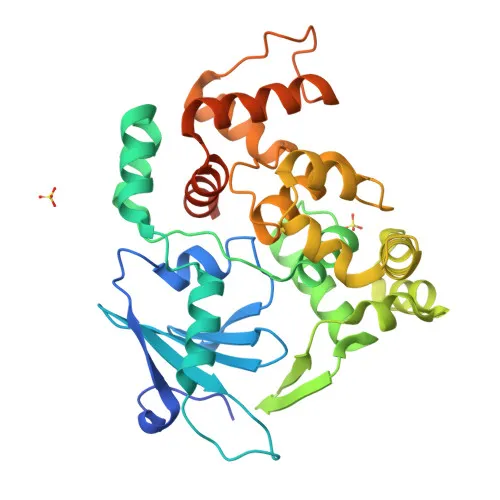
- OGG1 encodes an N-glycosylase/DNA lyase enzyme, also known as 8-oxoguanine DNA glycosylase, which plays a central role in the base excision repair (BER) pathway.
- The primary function of OGG1 is to recognize and excise 7,8-dihydro-8-oxoguanine (8-oxoG), a major oxidative DNA lesion, thereby initiating repair of damaged DNA.
- OGG1 also removes 2,6-diamino-4-hydroxy-5-N-methylformamidopyrimidine (FAPY) lesions and possesses a β-lyase activity that cleaves the DNA backbone 3' to the abasic site.
- The protein localizes to multiple subcellular compartments, including the nucleus (nucleoplasm, nuclear speckles, and nuclear matrix) and mitochondria, reflecting its role in repairing both nuclear and mitochondrial DNA.
- OGG1 expression is ubiquitous across human tissues, consistent with the essential nature of oxidative DNA damage repair in all cell types.
- Alternative splicing generates multiple isoforms of OGG1, which may differ in subcellular targeting or enzymatic activity.
- The protein is classified as a multifunctional enzyme with activities spanning hydrolase, lyase, and glycosidase functions, as highlighted by UniProt keywords.
Experimental Guidance and Technical Tips
- The immunogen used to raise this rabbit polyclonal antibody spans amino acids 1–345 of human OGG1 (full-length recombinant protein), which may allow recognition of multiple isoforms if epitopes are conserved.
- For Western blot applications, the expected band is approximately 39 kDa; however, alternative splicing variants or post-translational modifications could yield additional bands in some sample types.
- In ELISA assays, consider using recombinant OGG1 protein or cell lysates expressing the target, and validate specificity with appropriate controls (e.g., blocking peptide or knockout samples).
- When working with mouse samples, confirm reactivity under your specific conditions, as cross-reactivity has been reported but may vary depending on the assay format and sample preparation.
- To minimize background in Western blot, consider optimizing blocking conditions (e.g., 5% non-fat milk or BSA) and antibody dilution based on your expression system.
CamelBio: Your One-Stop Sourcing Bridge
CamelBio supports diagnostic manufacturers, laboratories, and research institutes with reliable access to IVD raw materials, including validated antibodies and ancillary reagents for DNA repair targets like OGG1. Whether you require bulk polyclonal antibodies, customized monoclonal pairings, or rare-target sourcing, our one-stop platform is designed to streamline your supply chain from concept to clinic. Contact our team to discuss your specific needs and scale your DNA damage research or diagnostic assay development efficiently.
REQUEST A QUOTE
Our professional team will reply to you within one business day. Please feel free to contact us!