Polyclonal Antibodies
Anti-OCRL Rabbit Polyclonal Antibody for WB, ELISA - Q01968
Item Number : CM0020931
Price varies based on specs and customizations
- Application
- WB, ELISA
- Cross Reactivity
- Human, Mouse, Rat
- Protein Weight
- 104kDa

Shipping:
Contact us to get shipping details Enjoy On-time Dispatch Guarantee.
Why Choose Us
Easy ordering process, quality products, and dedicated support for your business success.
Core Product Specifications and Parameters
| Parameter | Value |
|---|---|
| Product Name | [KO Validated] OCRL Rabbit pAb |
| Remarks/Alias | LOCR; DENT2; NPHL2; OCRL1; Dent-2; INPP5F; OCRL-1; RL |
| Species | Human |
| Gene ID (Human) | 4952 |
| Gene ID | 4952 |
| Immunogen | Recombinant fusion protein containing a sequence corresponding to amino acids 1-220 of human OCRL (NP_001578.2). |
| Source | Rabbit |
| Category | Polyclonal Antibodies |
| Application | WB, ELISA |
| Cross Reactivity | Human, Mouse, Rat |
| SWISS | Q01968 |
| Protein Weight | 104kDa |
| Shipping | Ice bag |
Biological Background: OCRL Function and Localization
-
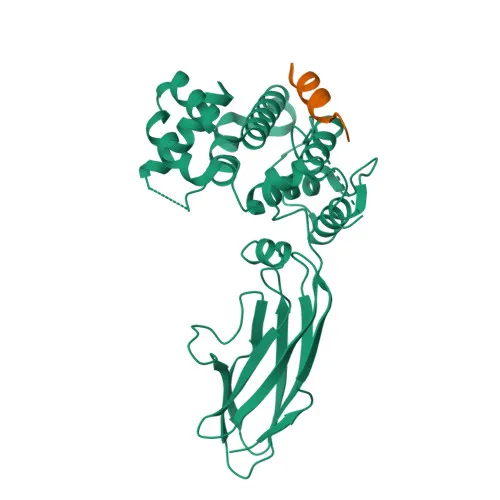
OCRL is an inositol polyphosphate 5-phosphatase that primarily hydrolyzes the 5-phosphate of phosphatidylinositol 4,5-bisphosphate (PtdIns(4,5)P2) and phosphatidylinositol-3,4,5-trisphosphate (PtdIns(3,4,5)P3), with the highest catalytic activity towards PtdIns(4,5)P2. Related references: PMID:10764818, PMID:15474001, PMID:7761412
-
It also hydrolyzes the 5-phosphate of inositol 1,4,5-trisphosphate (Ins(1,4,5)P3) and inositol 1,3,4,5-tetrakisphosphate (Ins(1,3,4,5)P4). Related references: PMID:15474001, PMID:40969890, PMID:7761412
-
Regulates endosomal trafficking by controlling the local pool of PtdIns(4,5)P2 on endosomes. Related references: PMID:21971085
-
Plays a critical role in primary cilia assembly. Related references: PMID:22228094, PMID:22543976
-
Involved in phagocytosis by hydrolyzing PtdIns(4,5)P2 to promote phagosome closure through attenuation of PI3K signaling. Related references: PMID:22072788
-
Localizes to multiple cellular compartments, including the trans-Golgi network, endosomes, lysosomes, clathrin-coated pits, and the primary cilium.
-
Highly expressed in brain, skeletal muscle, heart, kidney, lung, placenta, fibroblasts, and retinal tissues.
-
Mutations in OCRL cause Lowe syndrome (oculocerebrorenal syndrome) and Dent disease, characterized by cataracts, renal dysfunction, and neurological abnormalities.
Experimental Guidance and Technical Tips
- For Western blotting, expect a band around 104 kDa corresponding to full-length OCRL. Use a positive control lysate from brain, kidney, or retinal tissues.
- The immunogen covers amino acids 1–220 of human OCRL; thus, the antibody may recognize both full-length and N-terminal-containing isoforms. Verify detection of known isoforms in your sample system.
- When working with mouse or rat samples, confirm sequence homology of the immunogen region to ensure cross-reactivity.
- For ELISA, consider using the recombinant immunogen or purified OCRL protein as a standard.
- Optimize the antibody dilution for your specific application and sample type; perform a dose-response curve if needed.
CamelBio: Your One-Stop Sourcing Bridge
CamelBio offers diagnostic manufacturers and research laboratories a comprehensive range of IVD raw materials, including validated antibody pairs, optimized polyclonal antibodies, and ancillary reagents. The OCRL antibody targets a critical enzyme in phospholipid metabolism and ciliary biology, serving as a valuable tool for research into Lowe syndrome and related ciliopathies. Our one-stop sourcing platform streamlines procurement, from concept to clinic, with reliable supply and technical consultation.
REQUEST A QUOTE
Our professional team will reply to you within one business day. Please feel free to contact us!