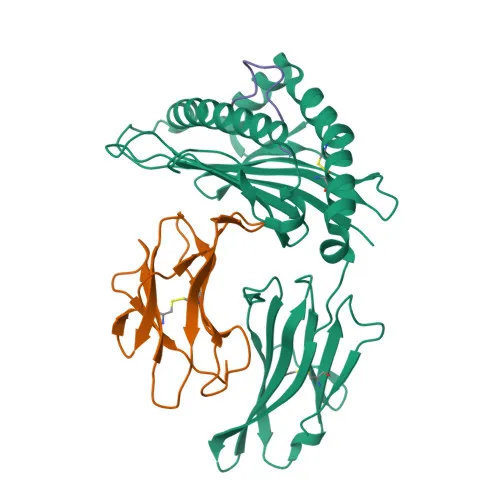
Polyclonal Antibodies
Anti-NY-ESO-1 Polyclonal Antibody for WB, IHC-P, ELISA - P78358
Item Number : CM0026725
Price varies based on specs and customizations
- Application
- WB, IHC-P, ELISA
- Cross Reactivity
- Human
- Protein Weight
- 18kDa

Shipping:
Contact us to get shipping details Enjoy On-time Dispatch Guarantee.
Why Choose Us
Easy ordering process, quality products, and dedicated support for your business success.
Core Product Specifications and Parameters
| Parameter | Value |
|---|---|
| Product Name | NY-ESO-1 Rabbit pAb |
| Remarks/Alias | CTAG; ESO1; CT6.1; CTAG1; LAGE-2; LAGE2B; NY-ESO-1 |
| Species | Human |
| GeneID (Human) | 1485 |
| GeneID | 1485 |
| Immunogen | A synthetic peptide corresponding to a sequence within amino acids 1-100 of human NY-ESO-1 (NP_001318.1) |
| Source | Rabbit |
| Category | Polyclonal Antibodies |
| Application | WB, IHC-P, ELISA |
| Cross Reactivity | Human |
| SWISS | P78358 |
| Protein Weight | 18kDa |
| Shipping | Ice bag |
Biological Background: NY-ESO-1 Function and Localization
- Cancer/testis antigen 1 (NY-ESO-1, also designated CTAG1, CT6.1, or LAGE-2) is a 180-amino acid protein with a calculated molecular weight of approximately 18 kDa (UniProt entry P78358).
- The NY-ESO-1 antigen is encoded by the CTAG1A and CTAG1B genes, which produce alternatively spliced transcripts (UniProt keyword "Alternative splicing").
- NY-ESO-1 is classified as a cancer/testis antigen; its normal expression is restricted to testis and ovary, while it is aberrantly expressed in a wide variety of cancers.
- Subcellularly, NY-ESO-1 localizes to the cytoplasm (UniProt SUBCELLULAR LOCATION: Cytoplasm).
- In the adult testis, strong expression is detected in spermatogonia and primary spermatocytes, but not in post-meiotic cells or somatic cells (at protein level).
- Fetal testis expression begins at 18 weeks and persists until birth; it is also detected in uterine myometrium.
- No molecular function has been annotated for NY-ESO-1 in UniProt, but its restricted expression pattern suggests a role in germ cell biology and cancer immunology.
Experimental Guidance and Technical Tips
- This antibody was generated against a synthetic peptide spanning the N-terminal region (amino acids 1–100) of human NY-ESO-1; it is polyclonal and may recognize epitopes within this region.
- For Western blotting, a band of approximately 18 kDa is expected; consider using total cell lysates from NY-ESO-1-positive cancer cell lines or testis tissue as positive controls, and NY-ESO-1-negative cell lines as negative controls.
- In immunohistochemistry (IHC-P), antigen retrieval optimization may be necessary; nuclear/cytoplasmic staining patterns may vary depending on the sample; include isotype controls.
- For ELISA, consider direct or sandwich formats; the peptide immunogen may be used as a positive control to validate assay specificity.
- Because endogenous NY-ESO-1 expression is restricted to germ cells and cancers, ensure proper tissue-specific and cancer-type controls are included in each experiment.
CamelBio: Your One-Stop Sourcing Bridge
CamelBio supports diagnostic manufacturers and research institutes with integrated access to IVD raw materials, including validated polyclonal and monoclonal antibodies, antibody pairs, and ancillary reagents. For NY-ESO-1, a key cancer/testis antigen target, CamelBio can source bulk-quantity antibodies optimized for ELISA, immunohistochemistry, and blotting applications, as well as assist with custom reagent development and rare-target procurement to accelerate your assay development pipeline.
REQUEST A QUOTE
Our professional team will reply to you within one business day. Please feel free to contact us!