Polyclonal Antibodies
Anti-NTPCR Rabbit Polyclonal Antibody for WB, IF/ICC, ELISA - Q9BSD7
Item Number : CM0018617
Price varies based on specs and customizations
- Application
- WB, IF/ICC, ELISA
- Cross Reactivity
- Human, Mouse
- Protein Weight
- 21kDa

Shipping:
Contact us to get shipping details Enjoy On-time Dispatch Guarantee.
Why Choose Us
Easy ordering process, quality products, and dedicated support for your business success.
Core Product Specifications and Parameters
| Parameter | Value |
|---|---|
| Product Name | NTPCR Rabbit pAb |
| Remarks/Alias | THEP1, C1orf57, HCR-NTPase, NTPCR |
| Species | Human |
| GeneID (Human) | 84284 |
| GeneID | 84284 |
| Immunogen | Recombinant fusion protein containing a sequence corresponding to amino acids 91-190 of human NTPCR (NP_115700.1) |
| Source | Rabbit |
| Category | Polyclonal Antibodies |
| Application | WB, IF/ICC, ELISA |
| Cross Reactivity | Human, Mouse |
| SWISS | Q9BSD7 |
| Protein Weight | 21kDa |
| Shipping | Ice bag |
Biological Background: NTPCR Function and Localization
- NTPCR (Cancer-related nucleoside-triphosphatase), also known as THEP1, C1orf57, and HCR-NTPase, is a nucleotide phosphatase enzyme.
- It catalyzes the hydrolysis of nucleoside triphosphates (ATP, GTP, CTP, TTP, UTP) and, with lower efficiency, nucleoside diphosphates.
- The protein is classified as a hydrolase with ATP-binding and nucleotide-binding capabilities, suggesting a role in cellular nucleotide metabolism.
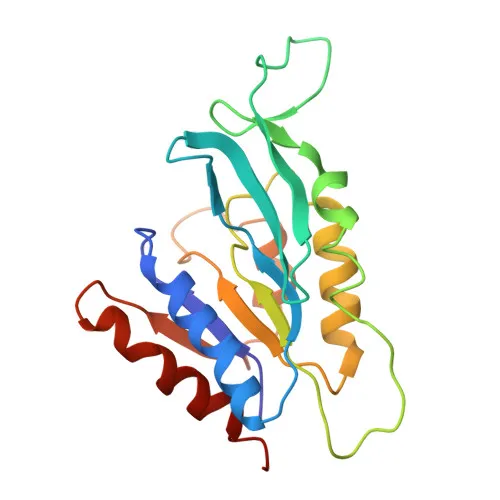
- According to UniProt keywords, NTPCR has a known 3D-structure and undergoes acetylation, a common post-translational modification.
- It is identified as a reference proteome component in humans, indicating its conserved functional importance.
- While detailed subcellular localization and tissue specificity are not yet fully characterized, its association with cancer (as implied by its name and some publications) makes it a target of interest in oncology research.
Experimental Guidance and Technical Tips
- The immunogen corresponds to amino acids 91–190 of human NTPCR, a region that may provide target specificity; validate in the relevant sample system.
- For Western blot (WB), a band around 21 kDa is expected. Optimize primary antibody dilution empirically (e.g., 1:500–1:2000) and use appropriate loading controls.
- For immunofluorescence (IF/ICC), test fixation and permeabilization conditions; include a negative control (e.g., secondary antibody only) to assess non-specific binding.
- ELISA performance may require pairing with a detection antibody; consider checkerboard titrations to determine optimal concentrations.
- Because this is a polyclonal antibody, lot-to-lot consistency should be verified with a reference standard if used in quantitative assays.
- Cross-reactivity with mouse is reported, but cross-reactivity with other species has not been tested; confirm if your model organism is not human or mouse.
CamelBio: Your One-Stop Sourcing Bridge
CamelBio offers diagnostic manufacturers, labs, and research institutes streamlined access to premium IVD raw materials, supporting your development from concept to clinic. This anti-NTPCR rabbit polyclonal antibody exemplifies our capability to supply validated antibodies for cancer-related and nucleotide metabolism research. Beyond off-the-shelf products, we can source optimized monoclonal/polyclonal antibodies, validated antibody pairs for ELISA, and bulk ancillary reagents to meet your specific assay requirements.
REQUEST A QUOTE
Our professional team will reply to you within one business day. Please feel free to contact us!